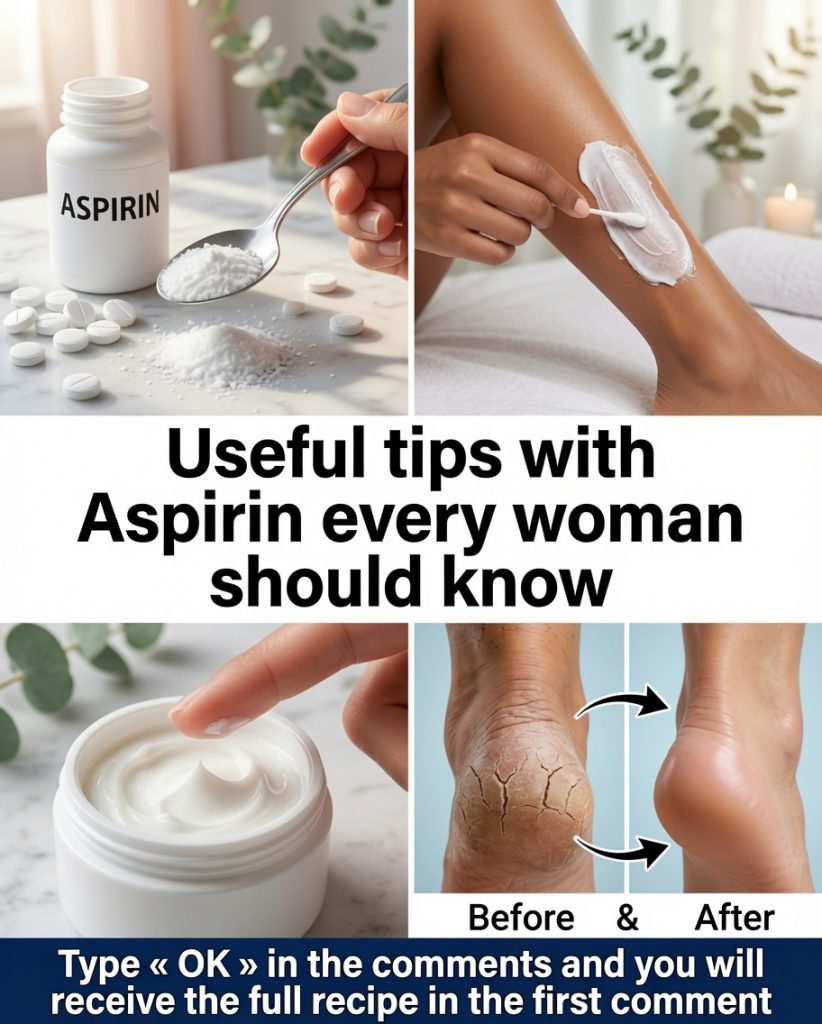
But did you know that crushed aspirin has also been used in a variety of DIY skincare routines? While scientific evidence for many of these beauty uses is limited, some people enjoy incorporating aspirin into occasional homemade treatments because it contains acetylsalicylic acid, a compound related to salicylic acid, which is commonly found in many skincare products.
It’s important to remember that homemade aspirin masks are not a replacement for dermatologist-approved skincare, and they may not be suitable for everyone. If you decide to try them, always perform a patch test first and discontinue use if irritation occurs.
Let’s explore five popular aspirin beauty hacks and how to use them safely.
💊 Why Is Aspirin Used in DIY Skincare?
Aspirin contains acetylsalicylic acid, which has anti-inflammatory properties when taken as a medication. In homemade skincare, some people believe crushed aspirin may help gently exfoliate the skin and temporarily improve its appearance.
Although many of these uses are based on personal experiences rather than strong clinical evidence, aspirin continues to appear in DIY beauty routines around the world.
✨ 1. Aspirin Paste for the Appearance of Stretch Marks
Stretch marks are extremely common and may appear after pregnancy, rapid growth, or weight changes.
While no topical treatment can completely remove stretch marks, keeping the skin well moisturized may help improve its overall appearance.
How to Prepare
Ingredients
2 aspirin tablets
1 teaspoon water or fragrance-free moisturizer
Directions
Crush the tablets into a fine powder.
Mix with water or moisturizer until a smooth paste forms.
Apply to the affected area.
Leave on for 10–15 minutes.
Rinse thoroughly and apply a moisturizer.
This treatment may help leave the skin feeling softer, but visible changes to stretch marks usually require time and consistent skincare.
🦶 2. Aspirin Foot Paste for Rough, Dry Heels
Dry, cracked heels are a common concern, especially during colder months.
Combined with moisturizing and gentle exfoliation, some people use an aspirin paste as part of their weekly foot-care routine.
Ingredients
5–7 aspirin tablets
A small amount of water
A few drops of lemon juice (optional)
Directions
Crush the tablets.
Mix into a thick paste.
Apply to clean heels.
Wrap feet with a warm towel for about 15 minutes.
Gently exfoliate with a pumice stone.
Finish with a rich foot cream.
For best results, repeat once a week and moisturize daily.
🌿 3. Spot Treatment for Occasional Blemishes
Some people use crushed aspirin as a short-contact spot treatment for occasional pimples.
How to Use
Crush one aspirin tablet.
Mix with a few drops of water.
Apply only to the blemish.
Leave on for 5–10 minutes.
Rinse well.
If irritation develops, discontinue use immediately.
Persistent or severe acne should be evaluated by a dermatologist, who can recommend treatments with stronger evidence of effectiveness.
✨ 4. A Gentle DIY Face Mask
Some DIY skincare enthusiasts enjoy combining aspirin with soothing ingredients like yogurt or honey to create a temporary exfoliating mask.
Ingredients
3–4 aspirin tablets
1 tablespoon plain yogurt or honey
Directions
Crush the aspirin.
Mix until smooth.
Apply a thin layer, avoiding the eyes and lips.
Leave on for about 10 minutes.
Rinse with lukewarm water.
Follow with a moisturizer and sunscreen during the day.
This mask should be used only occasionally rather than as a daily routine.
🌸 5. A Simple Weekly Skin Refresh
Healthy-looking skin depends on more than any single ingredient.
If you enjoy DIY skincare, aspirin may be one part of a broader routine that includes:
Gentle cleansing
Daily moisturizing
Sunscreen
Drinking enough water
Eating a balanced diet
Getting adequate sleep
These habits have a greater long-term impact on skin health than any homemade mask.
Safety Tips Before Using Aspirin on Your Skin
Before trying any DIY aspirin treatment, remember these precautions:
✔ Perform a patch test on a small area of skin.
✔ Do not apply to broken, sunburned, or irritated skin.
✔ Avoid the eye area.
✔ Limit use to occasional treatments to reduce the risk of irritation.
✔ Stop immediately if redness, burning, or itching develops.
People with an allergy to aspirin or salicylates should not use aspirin-based skincare.
Frequently Asked Questions
Can I use aspirin on my skin every day?
Daily use is generally not recommended, as frequent application may increase the risk of dryness or irritation.
Can aspirin remove dark spots?
There is no strong evidence that homemade aspirin masks can remove dark spots. Consistent sun protection and dermatologist-recommended skincare products are more reliable options.
Is aspirin suitable for every skin type?
No. People with sensitive skin, eczema, rosacea, aspirin allergies, or damaged skin may experience irritation.
Can homemade aspirin masks replace professional skincare?
No. They are optional DIY treatments and should never replace evidence-based skincare or professional medical advice.
Final Thoughts 🌟
Aspirin is best known as a medication for pain relief, but it has also become a popular ingredient in homemade beauty recipes. While some people enjoy using it in DIY skincare routines for rough heels, occasional blemishes, or gentle exfoliation, results vary, and scientific evidence supporting these cosmetic uses remains limited.
The healthiest-looking skin is usually the result of consistent daily habits—gentle cleansing, moisturizing, sun protection, a balanced diet, hydration, and good sleep.
If you choose to experiment with homemade skincare, use aspirin carefully, keep expectations realistic, and always listen to your skin.
Disclaimer: This article is for educational purposes only and is not medical advice. Homemade aspirin skincare treatments are not intended to diagnose, treat, cure, or prevent any medical condition. If you have persistent skin concerns or sensitive skin, consult a qualified dermatologist before trying new skincare products or home remedies.