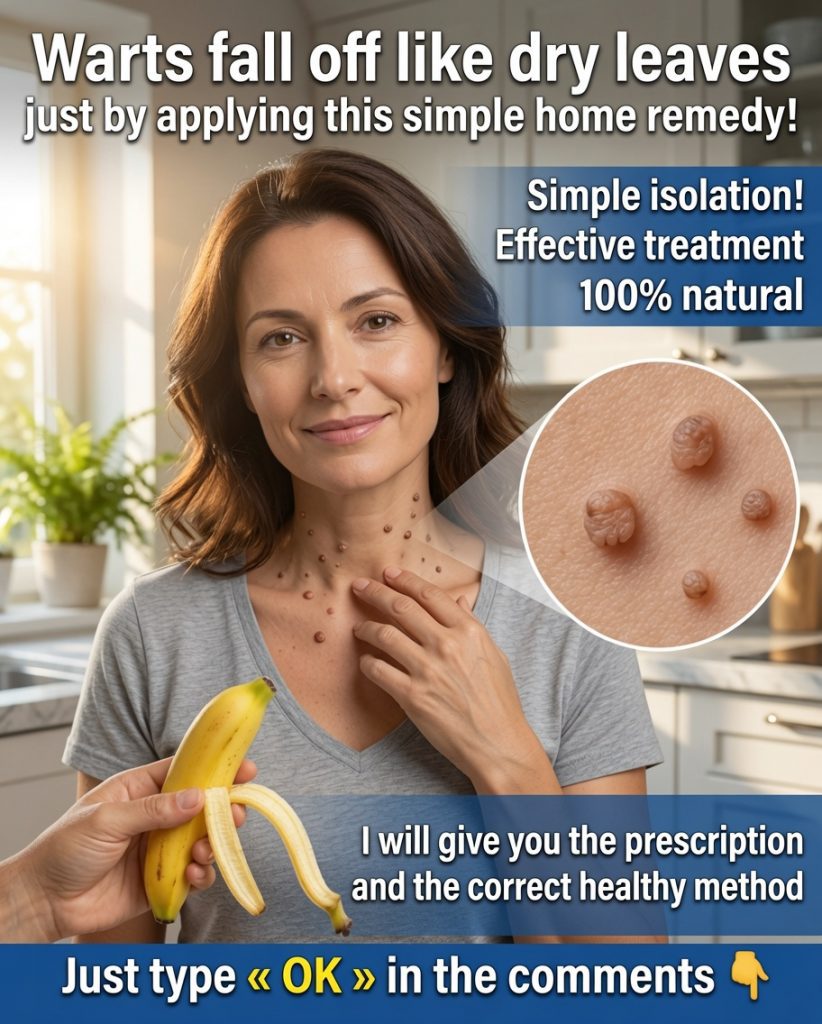
Because of this, many people look for gentle, affordable home remedies before considering medical treatment. One traditional remedy that continues to circulate online is using banana peel on warts.
But does it actually work? Let’s explore what science says, why people use it, and how to try it safely.
What Are Warts?
Warts are small, rough skin growths caused by certain strains of the human papillomavirus (HPV). The virus triggers rapid growth of skin cells, creating the raised bumps we recognize as warts.
Although they can look concerning, most common warts are not dangerous.
Important Facts About Warts
They are very common, especially in children and teenagers.
They are caused by a viral infection of the skin.
Many disappear on their own without treatment.
Some may persist for months or even years.
Warts can spread through direct skin contact or shared personal items.
The body’s immune system often clears the virus naturally over time, although the process can be slow.
Why Do People Use Banana Peel?
Banana peel has been used in traditional home care for many years because it contains naturally occurring plant compounds that may help keep skin soft and hydrated.
People who recommend this remedy believe banana peel may:
Help soften the outer layer of the wart
Maintain moisture around the affected skin
Provide natural antioxidants
Contain mild plant acids that may support gentle skin renewal
However, it’s important to understand the evidence.
What Does the Research Say?
At present, there is no strong scientific evidence proving that banana peel can reliably remove warts.
Most positive reports are based on personal experiences rather than well-designed clinical studies.
Since many warts disappear naturally over time, it can be difficult to know whether improvement is due to the banana peel or the body’s own immune response.
For this reason, banana peel should be viewed as a traditional home remedy—not a guaranteed treatment.
How to Use Banana Peel on a Wart
If you’d like to try this method, it is generally considered low risk for healthy skin.
You’ll Need
A ripe banana
Medical tape or a small adhesive bandage
Directions
Cut a small piece of fresh banana peel.
Place the inside (white side) of the peel directly against the wart.
Secure it with medical tape or a bandage.
Leave it in place for several hours or overnight.
Remove it in the morning and gently wash the area.
Repeat daily for several weeks if desired.
Consistency is often considered more important than expecting immediate results.
What Results Can You Expect?
Experiences vary from person to person.
Some individuals report:
The wart becoming softer over time
A gradual reduction in size
Drying of the wart before it falls away
Others notice:
No visible change
Slow improvement that may simply reflect the wart’s natural healing process
Patience is essential, as skin changes typically occur gradually rather than overnight.
Tips for Healthy Skin During Treatment
Whether you try banana peel or not, good skin care can help protect the affected area.
Consider these simple habits:
✅ Keep the skin clean and dry.
✅ Avoid picking or scratching the wart.
✅ Wash your hands after touching it.
✅ Do not share towels, nail clippers, or razors.
✅ Cover the wart if it’s likely to rub against other skin or surfaces.
These measures may also help reduce the chance of spreading the virus.
Is Banana Peel Safe?
For most people, applying banana peel to intact skin is considered a gentle home practice.
However, keep these precautions in mind:
Use it only on small, common warts.
Do not apply it to broken, bleeding, or infected skin.
Stop using it if redness, itching, or irritation develops.
Always use a clean piece of fresh banana peel.
Maintain good hygiene throughout the process.
Natural remedies are not automatically suitable for everyone.
When Should You See a Healthcare Professional?
Home remedies are not appropriate for every situation.
Seek medical advice if:
The wart is painful.
It grows rapidly or changes appearance.
It bleeds frequently.
It develops signs of infection.
It appears on the face, genitals, or another sensitive area.
You have diabetes, poor circulation, or a weakened immune system.
You’re unsure whether the growth is actually a wart.
The wart persists despite several months of home care.
A healthcare professional can recommend evidence-based treatment options if needed.
Other Common Wart Treatments
If a wart does not improve on its own, medical treatments may include:
Over-the-counter salicylic acid products
Cryotherapy (freezing the wart)
Prescription topical medications
Minor in-office procedures performed by a dermatologist
These treatments generally have stronger scientific support than home remedies.
Frequently Asked Questions
Can banana peel remove every type of wart?
No. There is no evidence that it works for all wart types, and results vary widely.
How long should I try it?
Some people use it consistently for several weeks. If there is no improvement or the wart worsens, consult a healthcare professional.
Can I use green bananas?
Most traditional home remedies recommend using a ripe banana because the peel is softer and easier to apply.
Is banana peel a substitute for medical treatment?
No. It is simply a traditional home remedy that some people choose to try. It should not replace professional medical advice or treatment when needed.
Final Thoughts
Banana peel is an inexpensive, gentle, and widely available home remedy that many people have used in an attempt to manage common warts.
While there is no strong scientific evidence confirming that it reliably removes warts, some individuals report gradual improvement with regular use. Because many warts naturally disappear over time, it’s difficult to know whether the peel itself is responsible for any changes.
If you decide to try this traditional remedy, be patient, practice good skin hygiene, and monitor the area carefully. Most importantly, don’t hesitate to seek medical advice if a wart becomes painful, changes rapidly, or simply doesn’t improve.
Sometimes, the best approach combines simple home care with professional guidance to keep your skin healthy and comfortable.