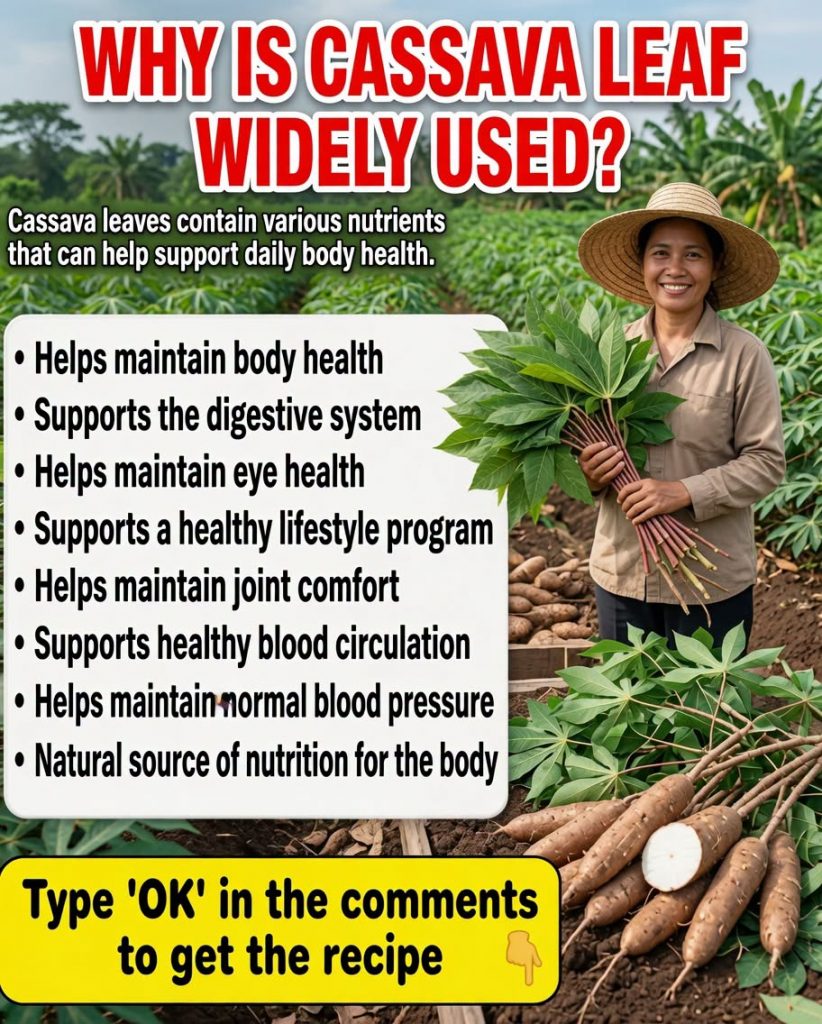
When people think about nutritious leafy greens, spinach, kale, and collard greens usually come to mind. Yet in many tropical regions, cassava leaves have been enjoyed for generations as a wholesome part of traditional cuisine.
Rich in vitamins, minerals, plant protein, and antioxidants, properly prepared cassava leaves may be a valuable addition to a balanced diet. The key is understanding how to prepare them safely and how they can fit into a healthy lifestyle.
Let’s explore why these remarkable leaves continue to be appreciated around the world.
🌱 What Are Cassava Leaves?
Cassava leaves come from the cassava plant (Manihot esculenta), a crop widely grown throughout Africa, Asia, and South America.
While cassava roots are well known as a source of carbohydrates, the leaves provide a completely different nutritional profile, offering a variety of essential nutrients.
When cooked correctly, they become tender, flavorful, and suitable for soups, stews, and vegetable dishes.
🥬 Nutritional Highlights
Cassava leaves naturally contain several important nutrients, including:
✅ Vitamin A (beta-carotene)
✅ Vitamin C
✅ Vitamin K
✅ Folate
✅ Calcium
✅ Iron
✅ Magnesium
✅ Potassium
✅ Plant-based protein
They also provide beneficial plant compounds such as flavonoids and polyphenols that help support overall wellness.
💚 1. May Support a Healthy Immune System
Vitamin C and antioxidant compounds help protect cells from everyday oxidative stress.
Including antioxidant-rich vegetables as part of a varied diet may contribute to normal immune function.
👁️ 2. Supports Healthy Vision
Cassava leaves are naturally rich in beta-carotene, which the body converts into vitamin A.
Vitamin A plays an important role in maintaining normal vision, particularly in low-light conditions.
❤️ 3. Helps Support Heart Health
A diet rich in leafy green vegetables has long been associated with cardiovascular wellness.
Cassava leaves provide:
• Potassium
• Magnesium
• Fiber
These nutrients contribute to normal heart and muscle function when consumed as part of a balanced eating pattern.
💪 4. A Good Plant Protein Source
Compared with many leafy vegetables, cassava leaves contain a relatively high amount of plant protein.
Protein contributes to:
• Muscle maintenance
• Tissue repair
• Healthy growth
This makes cassava leaves especially valuable in plant-based diets.
🦴 5. Supports Bone Health
Cassava leaves contain:
✔ Calcium
✔ Magnesium
✔ Vitamin K
These nutrients all play roles in maintaining healthy bones throughout life.
🌾 6. Provides Dietary Fiber
Fiber supports:
• Healthy digestion
• Regular bowel movements
• A feeling of fullness after meals
Eating more fiber-rich vegetables may also help support a balanced eating routine.
🌿 7. Rich in Natural Antioxidants
Cassava leaves contain numerous plant compounds that help protect cells from oxidative stress.
Antioxidants are an important part of many nutritious diets because they support the body’s natural defense systems.
🍲 Traditional Culinary Uses
Around the world, cassava leaves are commonly prepared in dishes such as:
🥣 Vegetable soups
🍛 Coconut milk stews
🥬 Mixed leafy green dishes
🍚 Rice accompaniments
🥥 Traditional African recipes
🌶️ Southeast Asian curries
Their mild earthy flavor pairs well with garlic, onions, tomatoes, herbs, and spices.
👩🍳 Safe Preparation Is Essential
Unlike many leafy vegetables, cassava leaves should never be eaten raw.
Fresh cassava leaves naturally contain compounds called cyanogenic glycosides, which must be reduced through proper cooking.
Traditional preparation usually involves:
Washing the leaves thoroughly.
Chopping or crushing them.
Boiling in plenty of water.
Discarding the cooking water.
Cooking again until completely tender.
Following traditional preparation methods greatly reduces these naturally occurring compounds and makes the leaves suitable for eating.
🍽️ Simple Cassava Leaf Recipe
Ingredients
• 3 cups chopped cassava leaves
• 2 cloves garlic
• 1 onion
• 1 tomato
• 1 tablespoon olive oil
• Salt and pepper to taste
Directions
Boil cassava leaves for about 15–20 minutes.
Drain completely.
Repeat boiling with fresh water if desired.
Sauté onion and garlic in olive oil.
Add tomatoes.
Stir in the cooked cassava leaves.
Simmer for another 10–15 minutes.
Serve warm with rice, beans, fish, or grilled chicken.
⚠️ Important Safety Notes
Cassava leaves are nutritious when prepared correctly, but remember:
• Never eat them raw.
• Always cook thoroughly.
• Purchase from reliable food suppliers.
• Individuals with medical conditions or special dietary needs should consult a healthcare professional before making major dietary changes.
Frequently Asked Questions
Can you eat cassava leaves every day?
When properly cooked and enjoyed as part of a varied diet, cassava leaves can be included alongside other nutritious vegetables.
Are cassava leaves healthier than spinach?
Both vegetables offer valuable nutrients. Each has its own unique nutritional profile, making variety the best approach.
Do cassava leaves contain protein?
Yes. Compared with many leafy greens, cassava leaves provide a relatively higher amount of plant-based protein.
Can children eat cassava leaves?
Properly cooked cassava leaves are commonly eaten in many cultures. Preparation should always follow traditional safety practices.
Final Thoughts
Cassava leaves have earned their place in traditional cuisines for generations thanks to their impressive nutritional value and versatility. Rich in vitamins, minerals, antioxidants, fiber, and plant protein, they can be a flavorful way to diversify your meals when prepared safely.
Rather than looking for a single “superfood,” building a diet filled with a wide variety of vegetables, fruits, whole grains, legumes, and healthy proteins remains one of the best long-term strategies for supporting overall wellness.
🌿 Sometimes, the simplest traditional foods continue to offer the greatest nutritional value.
