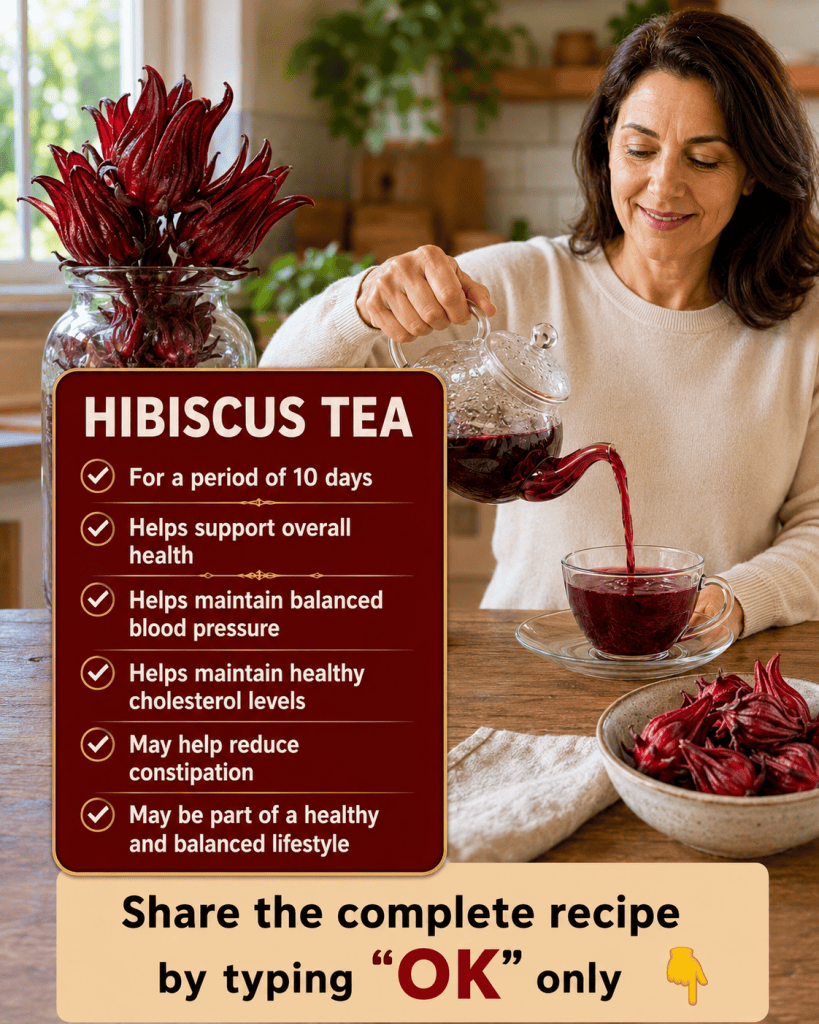
Discover Why Hibiscus Tea Has Become One of the Most Popular Herbal Drinks
If you’re looking for a refreshing, naturally caffeine-free beverage that fits into a healthy lifestyle, hibiscus tea may be worth adding to your daily routine.
Made from the vibrant crimson petals of the hibiscus flower, this herbal infusion is appreciated not only for its pleasantly tart flavor but also for its rich content of antioxidants and naturally occurring plant compounds. Around the world, many people enjoy hibiscus tea as part of a balanced lifestyle to help support hydration, healthy circulation, and overall wellness.
While hibiscus tea is not a cure or treatment for any disease, research suggests it may provide several supportive health benefits when combined with nutritious eating habits and regular physical activity.
🌿 What Makes Hibiscus Tea Special?
Hibiscus flowers naturally contain several beneficial compounds, including:
| Nutrient or Compound | Potential Role |
|---|---|
| Anthocyanins | Powerful natural antioxidants that help protect cells from oxidative stress |
| Flavonoids | Support healthy circulation and cardiovascular wellness |
| Vitamin C | Helps support normal immune function |
| Organic acids | Contribute to the tea’s refreshing taste and digestive support |
| Natural diuretic properties | May help the body eliminate excess fluids |
| Low in calories | Fits well into balanced weight-management plans |
These compounds have made hibiscus one of the most widely studied herbal teas.
🍵 Why Do People Drink Hibiscus Tea?
Many people include hibiscus tea in their daily wellness routine because it may help support:
- Healthy hydration
- Normal digestion
- Natural elimination of excess fluids
- Cardiovascular wellness
- Healthy blood pressure already within the normal range
- Weight-management efforts
- General feelings of lightness and vitality
🌺 20 Potential Benefits of Hibiscus Tea
Although research is ongoing, hibiscus tea may help support:
1. Natural Fluid Balance
Its mild natural diuretic properties may help reduce temporary water retention.
2. Kidney Wellness
By supporting the body’s natural fluid balance, hibiscus tea may complement overall kidney health in healthy individuals.
3. Healthy Blood Pressure
Several clinical studies suggest hibiscus tea may help support healthy blood pressure levels already within the normal range.
However, it should never replace prescribed blood pressure medications.
4. Heart Health
Its antioxidant compounds may support healthy blood vessel function.
5. Antioxidant Protection
Hibiscus is naturally rich in antioxidants that help protect cells from oxidative stress.
6. Digestive Comfort
Many people enjoy hibiscus tea after meals because it may help support comfortable digestion.
7. Healthy Metabolism
Some studies suggest hibiscus may complement healthy metabolic function when combined with regular exercise.
8. Reduced Feelings of Bloating
Its natural diuretic effect may help reduce temporary water retention.
9. Cellular Wellness
Plant antioxidants help defend cells against free radicals.
10. Refreshing Hydration
Served hot or iced, hibiscus tea is a flavorful alternative to sugary beverages.
11. Supports Natural Detoxification
Healthy hydration supports the body’s normal waste elimination processes.
12. May Promote Fullness
Drinking unsweetened herbal tea between meals may help some individuals feel more satisfied.
13. Healthy Circulation
Flavonoids may contribute to healthy blood vessel function.
14. Everyday Energy
Proper hydration often helps people feel refreshed throughout the day.
15. Blood Sugar-Friendly Beverage
Unsweetened hibiscus tea contains virtually no calories or added sugar.
16. Lightness and Comfort
Many people report feeling less heavy after replacing sugary drinks with herbal tea.
17. Liver Support
Antioxidants may help support normal liver function by protecting cells from oxidative stress.
18. Hydration
Staying hydrated supports many important body functions.
19. Healthy-Looking Skin
Good hydration and antioxidants contribute to healthy-looking skin.
20. Overall Wellness
Regularly choosing nutritious beverages is one simple habit that supports long-term health.
🌿 A Refreshing Hibiscus Wellness Tea Recipe
This flavorful herbal infusion combines several ingredients known for their antioxidant and digestive-supporting properties.
Ingredients
- 2 tablespoons dried hibiscus flowers
- 1 liter (4 cups) water
- 1 small piece fresh ginger
- 1 cinnamon stick
- Juice of ½ lemon
- 1 teaspoon flaxseeds (optional)
Instructions
Step 1
Pour the water into a saucepan.
Step 2
Add:
- Hibiscus flowers
- Fresh ginger
- Cinnamon stick
Step 3
Bring to a gentle boil and simmer for about 10 minutes.
Step 4
Remove from heat and allow the tea to steep for another 10 minutes.
Step 5
Strain the tea.
Step 6
When the tea has cooled slightly, stir in the fresh lemon juice.
Step 7
If desired, add the flaxseeds just before serving.
Step 8
Store any remaining tea in a glass container in the refrigerator for up to two days.
☕ How to Enjoy Hibiscus Tea
For moderate consumption, many people enjoy:
- One cup in the morning
- One cup after lunch
It is generally a good idea to enjoy herbal teas in moderation and vary your beverage choices over time.
For best results, combine hibiscus tea with:
- Plenty of water
- A balanced diet rich in fruits and vegetables
- Regular physical activity
- Adequate sleep
- Limited intake of highly processed foods
🌺 Can Hibiscus Tea Help with Weight Management?
Hibiscus tea is not a weight-loss miracle.
However, it may support healthy weight-management goals because it:
- Is naturally low in calories
- Can replace sugar-sweetened beverages
- May help reduce temporary water retention
- Supports hydration
- May contribute to feelings of fullness when enjoyed between meals
Sustainable weight management depends on consistent healthy eating and regular physical activity.
❤️ Why Is Hibiscus Often Linked to Healthy Blood Pressure?
Researchers believe that the natural antioxidants and plant compounds found in hibiscus may support healthy blood vessel function and circulation.
Some clinical studies have reported modest improvements in blood pressure among certain participants. However, hibiscus tea should be viewed as a supportive dietary choice rather than a medical treatment.
Anyone taking medication for high blood pressure should consult a healthcare professional before drinking hibiscus tea regularly, as it may enhance the effects of some medications.
💡 Tips to Maximize the Benefits
Avoid Added Sugar
Enjoy hibiscus tea unsweetened whenever possible.
Drink It Fresh
Freshly brewed tea retains its vibrant flavor and aroma.
Stay Active
Pair your tea with regular exercise for overall wellness.
Reduce Excess Salt
Lower sodium intake may help minimize water retention.
Be Consistent
Healthy habits practiced regularly often provide the greatest long-term benefits.
⚠️ Important Precautions
Hibiscus tea is generally safe for most healthy adults when consumed in moderation.
However, extra caution is advised if you:
- Are pregnant or breastfeeding
- Have naturally low blood pressure
- Take medications for blood pressure
- Take diabetes medications
- Have advanced kidney disease
- Have chronic medical conditions requiring regular treatment
Always consult your healthcare provider before making significant changes to your diet if you have ongoing health concerns or take prescription medications.
Frequently Asked Questions
Can I drink hibiscus tea every day?
Many healthy adults enjoy one or two cups daily in moderation. Individual needs may vary.
Is it better hot or cold?
Both are excellent. Hot tea is comforting, while iced hibiscus tea is especially refreshing during warm weather.
Does hibiscus tea detox the body?
Your liver and kidneys naturally detoxify the body. Staying hydrated with beverages like hibiscus tea may support these normal processes, but the tea itself is not a detox treatment.
Can hibiscus tea cure high blood pressure?
No. While some studies suggest it may help support healthy blood pressure levels, it should never replace prescribed medication or medical advice.
Final Thoughts
Hibiscus tea is a delicious, naturally caffeine-free herbal beverage rich in antioxidants and beneficial plant compounds. When enjoyed as part of a balanced lifestyle, it may support hydration, digestive comfort, healthy circulation, and overall wellness. Some research also suggests potential benefits for maintaining healthy blood pressure and complementing weight-management efforts, though more research is still needed.
Rather than viewing hibiscus tea as a miracle solution, think of it as one enjoyable habit that can contribute to a healthy routine alongside nutritious food, regular exercise, quality sleep, and appropriate medical care. A simple cup of hibiscus tea may be a refreshing step toward everyday well-being. 🌺🍵