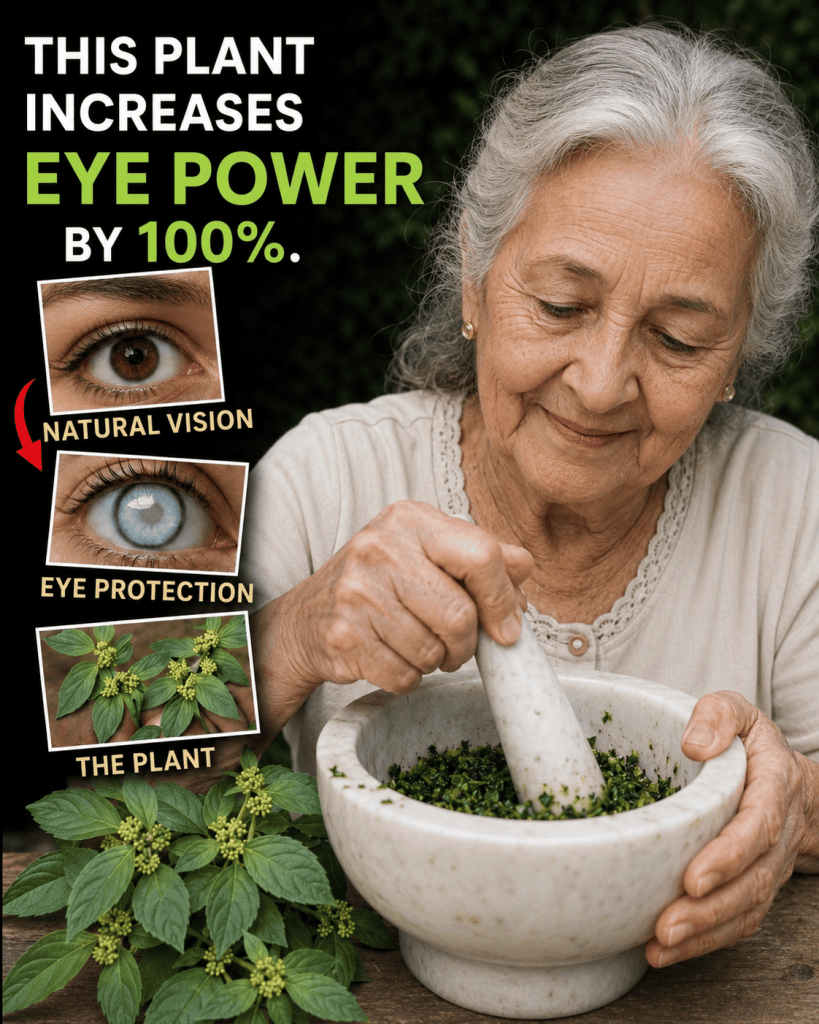
Modern life places extraordinary demands on our eyes. Hours spent looking at computer screens, smartphones, and tablets can leave many people experiencing tired, dry, or irritated eyes by the end of the day. While lubricating eye drops may provide temporary relief, many people are also curious about traditional herbal practices that have been passed down through generations.
One plant that occasionally appears in traditional wellness discussions is Euphorbia hirta, sometimes called the large-leaf asthma plant or milkweed herb. Although it has a long history in folk medicine, it is important to understand both its traditional uses and its safety limitations before considering it.
Keep reading to learn what traditional herbal practices say about this fascinating plant—and why caution is just as important as curiosity.
What Is Euphorbia hirta?
Euphorbia hirta is a wild herb commonly found in tropical and subtropical regions. It often grows naturally in gardens, roadsides, and open fields.
The plant is recognizable by:
- Oval leaves covered with tiny hairs
- A reddish central vein running through each leaf
- Pinkish-red stems
- Tiny clustered flowers
- A white, milky sap released when the stem or leaves are broken
Although it may look like an ordinary weed, this herb has been included in traditional herbal practices across Asia, Africa, and other regions for generations.
Important: The white sap can irritate the skin and eyes, making careful handling essential.
Traditional Associations with Eye Comfort
In several traditional herbal systems, Euphorbia hirta has been associated with supporting relaxation after prolonged visual strain.
Historically, practitioners sometimes used the leaves externally as part of herbal compresses placed over closed eyelids to encourage a soothing sensation after long periods of reading or outdoor work.
However, these historical practices never involved placing the plant or its sap directly into the eyes.
This distinction is extremely important.
Why Safety Comes First
The milky latex produced by plants in the Euphorbia family is well known for its irritating properties.
Direct exposure may cause:
- Eye irritation
- Burning sensations
- Redness
- Inflammation
- Temporary vision discomfort
Because of these risks, modern health professionals strongly recommend avoiding any direct contact between Euphorbia sap and the eyes.
Anyone handling the plant should wash their hands thoroughly afterward.
Traditional Properties Attributed to the Plant
According to traditional herbal knowledge, Euphorbia hirta has long been valued for several naturally occurring plant compounds.
These include:
- Naturally occurring flavonoids
- Polyphenols
- Plant antioxidants
- Traditional soothing properties
These characteristics have contributed to its historical popularity in herbal traditions.
However, scientific research in humans remains limited, so these traditional uses should not be interpreted as proven medical benefits.
Traditional External Uses
Historically, several gentle external applications have been described.
1. Warm Leaf Compress
Fresh leaves were washed thoroughly and gently warmed before being placed over closed eyelids for approximately 10–15 minutes.
This traditional practice was intended to promote relaxation after visual fatigue.
2. Herbal Infusion
Some traditions prepared a mild herbal tea using carefully processed plant material as part of general wellness routines.
This was viewed as supporting overall well-being rather than specifically treating eye conditions.
3. Temple Compress
Crushed leaves were sometimes applied to the temples rather than near the eyes.
Traditional practitioners believed this could provide a cooling or relaxing sensation during periods of mild tension.
Traditional Uses at a Glance
| Traditional Method | Traditional Purpose | Common Situation |
|---|---|---|
| Warm leaf compress | Relaxation of closed eyelids | Screen-related eye fatigue |
| Herbal infusion | General wellness support | Daily wellness routine |
| Temple application | Cooling, soothing sensation | Mild tension |
Why This Herb Has Become Popular Online
Social media has introduced millions of people to traditional herbal remedies, including Euphorbia hirta.
Unfortunately, many posts make dramatic claims that are not supported by reliable scientific evidence.
It’s important to remember:
- There is no instant solution for healthy vision.
- Eye health depends on many lifestyle factors.
- Traditional use does not automatically mean a treatment is scientifically proven.
- Potential safety risks are often overlooked in viral posts.
Approaching herbal traditions with balanced expectations helps people make more informed decisions.
Everyday Habits That Support Comfortable Eyes
Many evidence-based habits can help reduce everyday eye strain, including:
- Following the 20-20-20 rule (every 20 minutes, look 20 feet away for 20 seconds)
- Taking regular screen breaks
- Staying well hydrated
- Maintaining good room lighting
- Getting enough sleep
- Scheduling routine eye examinations
- Using lubricating eye drops if recommended by an eye care professional
These simple habits are often more effective for everyday comfort than relying on unverified remedies.
If You Choose to Explore Traditional Herbs
If you’re interested in learning about herbs like Euphorbia hirta, consider these precautions:
- Correctly identify the plant before handling it.
- Wear gloves if sensitive to plant sap.
- Wash hands thoroughly after contact.
- Never allow the sap to enter the eyes.
- Avoid applying crushed leaves near the eye itself.
- Consult a qualified healthcare professional before trying unfamiliar herbal practices.
Safety should always come first.
Final Thoughts
Euphorbia hirta has earned a place in traditional herbal medicine through generations of cultural use, particularly as an external herbal support for relaxation after eye strain. Even so, its milky sap can be irritating and should never be placed directly into the eyes.
For long-term eye comfort, healthy daily habits, appropriate eye care, and guidance from qualified professionals remain the safest and most reliable approach.
Traditional knowledge can be appreciated as part of cultural wellness practices—but it should always be balanced with modern safety recommendations.
Frequently Asked Questions
Is Euphorbia hirta safe for the eyes?
The plant’s milky sap can irritate the eyes. Traditional practices involved only external applications on closed eyelids, never direct eye contact.
Can this herb improve eyesight?
There is currently no strong scientific evidence showing that Euphorbia hirta improves vision or treats eye diseases.
What are safer ways to reduce eye fatigue?
Healthy screen habits, the 20-20-20 rule, adequate hydration, sufficient sleep, proper lighting, and eye drops recommended by an eye care professional are widely accepted strategies.
Disclaimer: This article is intended for educational and informational purposes only. It does not provide medical advice, diagnosis, or treatment. Euphorbia hirta produces a milky sap that may irritate the skin and eyes. Never place the sap or any part of the plant directly into the eyes. Consult a qualified healthcare professional before using any herbal remedy.
