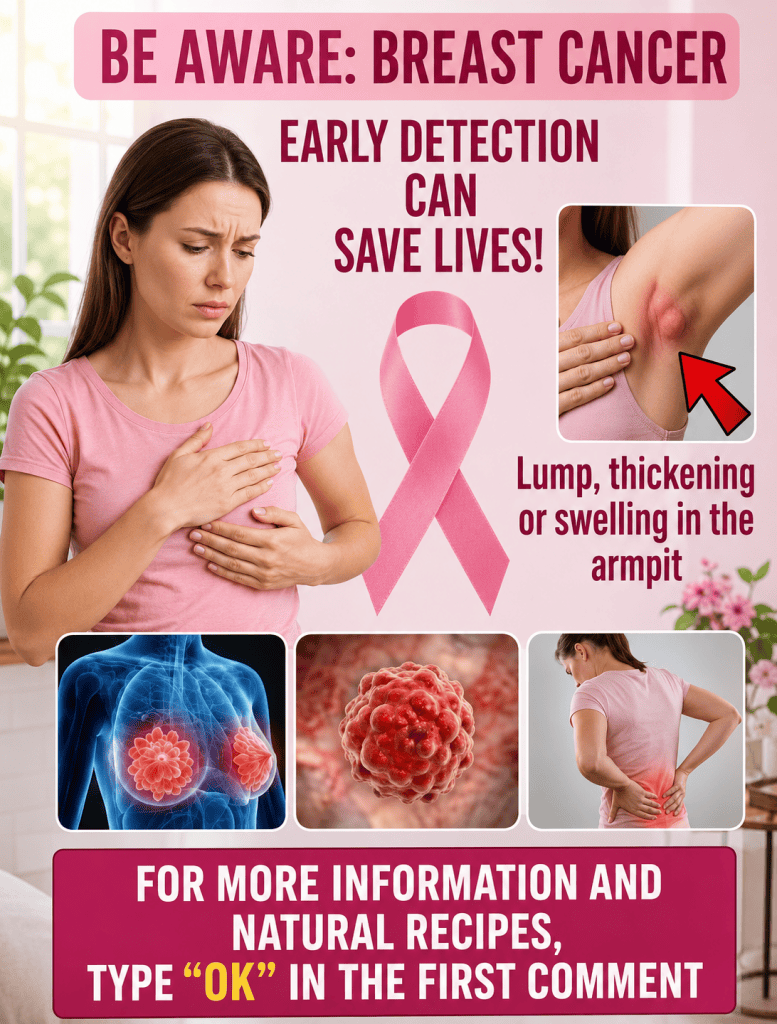
Many people notice small changes in their breasts and assume they’re caused by hormones, aging, stress, or temporary irritation. In the middle of a busy life, it’s easy to think, “It will probably go away on its own.”
While many breast changes are harmless, some may be early signs of breast cancer that deserve prompt medical evaluation. Recognizing these warning signs early can make a significant difference because breast cancer is often more treatable when found at an early stage.
Awareness isn’t about creating fear—it’s about giving yourself the opportunity to act early if something doesn’t seem right.
Why Early Detection Matters
Breast cancer often begins silently, developing inside the milk ducts or lobules before obvious symptoms appear.
When breast cancer is detected before it spreads beyond the breast, treatment is generally more effective, and outcomes are often much better. That’s why regular screening, breast awareness, and paying attention to changes in your body are so important.
Remember:
- Most breast changes are not cancer.
- However, persistent or unusual changes should always be evaluated by a healthcare professional.
Knowing what to look for empowers you to seek medical advice sooner rather than later.
1. A New Lump or Thickened Area
One of the most recognized warning signs is a new lump in the breast or underarm.
Although many breast lumps are non-cancerous, a lump deserves medical evaluation if it is:
- Hard or firm
- Irregular in shape
- Fixed in place
- Different from the surrounding tissue
- Still present after your menstrual cycle
Not every cancer causes pain, so a painless lump should never be ignored.
2. Unexplained Changes in Breast Size or Shape
A sudden change affecting one breast—without pregnancy, weight changes, or hormonal reasons—may warrant further assessment.
Watch for:
- One breast appearing noticeably larger
- A change in contour
- New fullness or heaviness
- Visible asymmetry that wasn’t present before
If the change persists for more than a couple of weeks, schedule a medical evaluation.
3. Skin Dimpling or an “Orange Peel” Appearance
Healthy breast skin is normally smooth.
If you notice skin that appears:
- Dimpled
- Puckered
- Thickened
- Similar to the texture of an orange peel (peau d’orange)
it’s important to have it examined promptly.
These changes may occur when lymphatic drainage within the breast becomes affected.
4. Persistent Redness, Warmth, or Swelling
Redness that doesn’t improve—or breast skin that feels unusually warm or swollen—should not simply be dismissed as irritation.
Although infections can cause similar symptoms, persistent redness may also require evaluation to rule out inflammatory breast cancer, a rare but aggressive form of breast cancer.
Seek medical care promptly if redness develops quickly or continues despite treatment.
5. Persistent Breast or Nipple Pain
Most breast pain is related to hormonal changes and is not caused by cancer.
However, pain deserves attention if it is:
- Localized to one area
- Persistent
- Unrelated to your menstrual cycle
- Accompanied by another breast change
Persistent pain should always be discussed with your healthcare provider.
6. Nipple Turning Inward (New Nipple Inversion)
Some people naturally have inverted nipples from birth.
However, a nipple that suddenly begins pulling inward after previously pointing outward should be evaluated.
New nipple inversion may indicate changes occurring beneath the surface of the breast.
7. Flaking, Scaling, or Thickened Skin Around the Nipple
Persistent irritation involving the nipple or areola may appear as:
- Redness
- Dryness
- Scaling
- Crusting
- Thickened skin
These symptoms may have harmless causes, but they can also be associated with a rare condition called Paget disease of the breast.
Any persistent nipple skin change deserves medical evaluation.
8. Unusual Nipple Discharge
Discharge from the nipple outside of breastfeeding should always be discussed with a healthcare professional.
Pay particular attention if the discharge is:
- Bloody
- Clear and spontaneous
- Coming from only one breast
- Occurring without squeezing the nipple
Most causes are not cancer, but evaluation is important.
9. Swollen Lymph Nodes Under the Arm or Near the Collarbone
Breast tissue extends into the underarm area.
Enlarged lymph nodes may sometimes be the first noticeable sign that something requires further investigation.
Seek medical advice if you notice:
- Hard swollen glands
- Persistent enlargement
- Swelling accompanied by a breast lump
10. Persistent Itching or Irritation That Doesn’t Improve
Occasional itching is common.
However, itching that continues for weeks—especially when combined with redness, swelling, warmth, or skin changes—should not be ignored.
Persistent symptoms deserve professional assessment to determine the underlying cause.
A Simple Breast Health Routine
Becoming familiar with your normal breast appearance makes it easier to notice changes.
Healthy habits include:
✔ Perform regular breast self-awareness checks.
✔ Attend recommended clinical breast exams.
✔ Follow mammogram screening recommendations based on your age and individual risk.
✔ Record any new changes with notes or photos if recommended by your healthcare provider.
✔ Know your family medical history.
These habits can help you identify changes early.
Who May Have a Higher Risk?
Several factors may increase breast cancer risk, including:
- Increasing age
- A family history of breast or ovarian cancer
- Certain inherited gene mutations (such as BRCA1 or BRCA2)
- Dense breast tissue
- Previous chest radiation
- Certain hormonal factors
Having risk factors does not mean you will develop breast cancer, but it may influence your screening plan.
When Should You Seek Medical Care Immediately?
Contact a healthcare professional promptly if you notice:
- A new breast lump
- Bloody nipple discharge
- Rapid swelling or redness
- Skin dimpling
- New nipple inversion
- Enlarged lymph nodes
- Persistent breast changes lasting more than two weeks
Prompt evaluation does not necessarily mean cancer is present—but it is the safest approach.
Frequently Asked Questions
Does every breast lump mean cancer?
No. Many breast lumps are benign, such as cysts or fibroadenomas. However, every new or persistent lump should be evaluated by a healthcare professional.
Can men develop breast cancer?
Yes. Although uncommon, men can develop breast cancer. Any breast lump, nipple discharge, or skin change in men should also be assessed by a doctor.
When should mammograms begin?
Screening recommendations vary depending on age, personal risk factors, and national guidelines. Discuss the most appropriate screening schedule with your healthcare provider.
Final Thoughts
Most breast changes are not cancer, but recognizing the warning signs and seeking timely medical evaluation can make a meaningful difference.
Rather than ignoring persistent symptoms or hoping they disappear, pay attention to your body and seek professional advice whenever something feels unusual.
Early awareness, regular screening, and prompt medical care remain some of the most effective tools for protecting breast health.
Medical Disclaimer: This article is for educational purposes only and does not provide medical advice, diagnosis, or treatment. If you notice a new lump, persistent breast changes, nipple discharge, skin changes, or any concerning symptoms, consult a qualified healthcare professional as soon as possible. Regular screening and professional evaluation are essential for early detection.