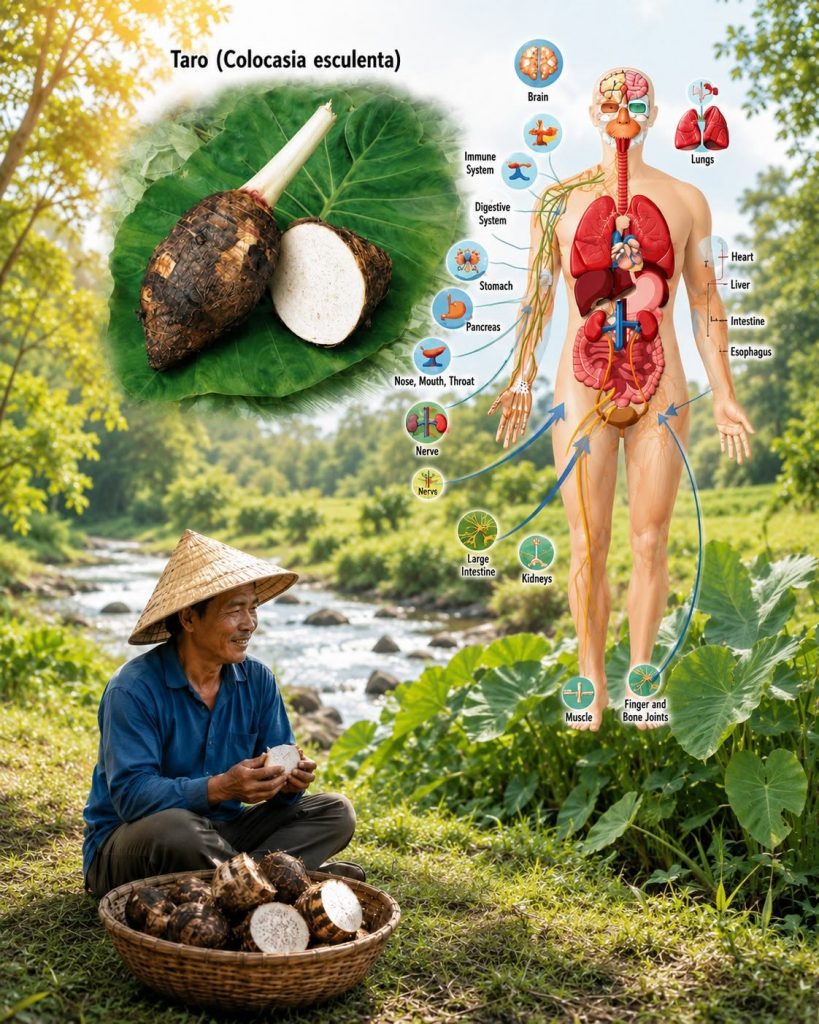
The Humble Taro Root That Has Nourished Generations Naturally 🌿
For centuries, taro root has been a treasured food in many cultures around the world. Known scientifically as Colocasia esculenta, this starchy root vegetable has long been appreciated not only for its rich texture and comforting taste, but also for the nutrients it brings to a balanced lifestyle.
Today, more people are rediscovering taro as a gentle, natural addition to healthy eating routines — especially those looking for wholesome foods that may support digestion, energy, and overall wellness.
While taro is not a miracle cure, its nutritional profile makes it a valuable ingredient in many traditional diets.
🌱 What Makes Taro Root So Special?
Taro root is naturally rich in:
- Dietary fiber
- Potassium
- Magnesium
- Vitamin E
- Resistant starch
- Antioxidant compounds
Its soft texture and mild flavor make it versatile in soups, stews, boiled dishes, and even healthy snacks.
Unlike heavily processed foods, taro provides slow-releasing carbohydrates that may help support steady energy throughout the day.
💚 Potential Benefits of Taro Root
1. May Support Healthy Digestion
Taro contains fiber and resistant starch that can help support gut health and comfortable digestion when eaten as part of a balanced diet.
2. Helps Promote Natural Energy
Because it is a complex carbohydrate, taro may provide sustained energy without the sudden spikes often linked to highly refined foods.
3. Rich in Antioxidants
Taro contains plant compounds that help protect the body from everyday oxidative stress.
4. May Support Heart-Friendly Nutrition
Foods naturally rich in potassium and fiber are commonly included in heart-conscious eating plans.
5. Naturally Gluten-Free
For people seeking gluten-free alternatives, cooked taro can be a comforting and satisfying option.
🍲 Simple Ways to Enjoy Taro
Taro root can be enjoyed in many delicious ways:
- Boiled and mashed
- Added to soups and stews
- Steamed with vegetables
- Blended into creamy recipes
- Cooked into chips or healthy snacks
⚠️ Important: Taro should always be cooked before eating, as raw taro contains natural compounds that may irritate the mouth and throat.
🌿 A Traditional Food Worth Rediscovering
In many rural communities, taro has been valued for generations as a nourishing staple food. Its ability to grow in warm, wet climates made it an important crop long before modern processed foods became common.
Today, people are once again turning toward simple, plant-based ingredients that support a more natural lifestyle — and taro is one of those timeless foods gaining renewed attention.
✨ Final Thoughts
Sometimes the most powerful foods are the ones quietly growing close to nature. Taro root may not be trendy everywhere yet, but its long history, comforting flavor, and nourishing nutrients make it a wonderful addition to a healthy lifestyle.
Small, consistent choices — including adding more whole foods to your meals — can make a meaningful difference over time. 🌱