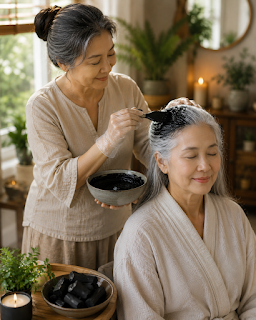
Gray hair is a natural part of life, but many people look for softer ways to blend silver strands without frequent chemical coloring. In recent years, charcoal-based hair masks and temporary tints have gained attention online as a more natural-looking option for dark hair tones.
Advertisements
While charcoal is not a permanent dye and does not reverse gray hair, some people use it as a temporary cosmetic approach to help soften contrast and create a fuller appearance.
Let’s explore how it works and how to use it safely.
Why Charcoal Became Popular in Hair Care
Activated charcoal is known for its porous structure and is often used in beauty products designed for cleansing and oil control.
In hair routines, charcoal is sometimes added to:
✔ Temporary tint masks
✔ Scalp cleansers
✔ Detox hair treatments
✔ Dark-toned cosmetic blends
Rather than changing the internal pigment of the hair like permanent dyes, charcoal-based products may sit on the outer surface and create a temporary visual darkening effect.
This means the result is usually:
- Softer contrast around gray strands
- Less noticeable silver under certain lighting
- A more blended appearance
- Gradual fading after washing
Temporary Color vs Permanent Hair Dye
Many people confuse charcoal tinting with traditional coloring.
Here is the difference:
Permanent Hair Dye
- Often uses oxidation processes
- Can penetrate deeper into the hair structure
- Usually lasts longer
- May involve stronger ingredients
Charcoal Hair Masks
- Mostly surface-level cosmetic effect
- Temporary appearance change
- Washes out gradually
- Less commitment
This makes charcoal interesting for people who want subtle blending rather than full coverage.
Simple DIY Charcoal Hair Mask Idea
Ingredients
⚫ 1–2 teaspoons cosmetic-grade activated charcoal
🥥 2 tablespoons aloe vera gel or hair conditioner
🧴 Optional small amount of coconut oil
Directions
- Mix until a smooth paste forms.
- Avoid making the mixture too watery.
- Apply to selected gray areas or strands.
- Leave for 10–20 minutes.
- Rinse gently.
Always perform a patch test first.
Why Texture Matters
The consistency of the mixture can influence results.
Too thin:
❌ May drip easily
❌ Less even application
❌ Reduced adherence
Too thick:
❌ Clumping
❌ Uneven color appearance
❌ Difficult rinsing
A creamy texture usually works better.
Areas Where Gray Hair Is Often Most Noticeable
People often focus on:
- Hairline silver strands
- Temples
- Part line
- Crown area
- Short side sections
Because these spots catch more light, even small changes in contrast can appear more noticeable.
A temporary tint may help soften the visual difference rather than completely hide gray hair.
Benefits People Often Look For
Many users choose charcoal hair masks because they want:
✨ Less maintenance pressure
✨ No strong salon smell
✨ Temporary experimentation
✨ A softer transition
✨ Flexible use between color appointments
The goal is usually blending, not dramatic transformation.
Important Safety Notes
Activated charcoal should not automatically be assumed safe for all hair types.
Keep in mind:
⚠ Use cosmetic-grade products only
⚠ Avoid inhaling loose powder
⚠ Patch test before use
⚠ Stop if irritation occurs
⚠ Avoid eye contact
People with scalp conditions should consult a professional before trying new treatments.
Healthy Hair Support Goes Beyond Color
Hair appearance is influenced by many factors:
🥗 Nutrition
💧 Hydration
😴 Sleep
🧘 Stress management
🧴 Gentle hair care
No mask can replace overall hair wellness.
Final Thoughts
Charcoal hair tinting has become popular because it offers a temporary and low-commitment way to soften the appearance of gray hair.
It does not eliminate gray strands, permanently color the hair, or reverse aging.
Instead, it may provide a subtle cosmetic effect that some people enjoy between salon visits or as part of a gentle beauty routine.
Sometimes the goal is not hiding every silver strand.
It is simply feeling a little more comfortable when you catch your reflection in the mirror.
Disclaimer: This article is for educational purposes only and is not medical or cosmetic advice. Results vary, and individual hair responses may differ.