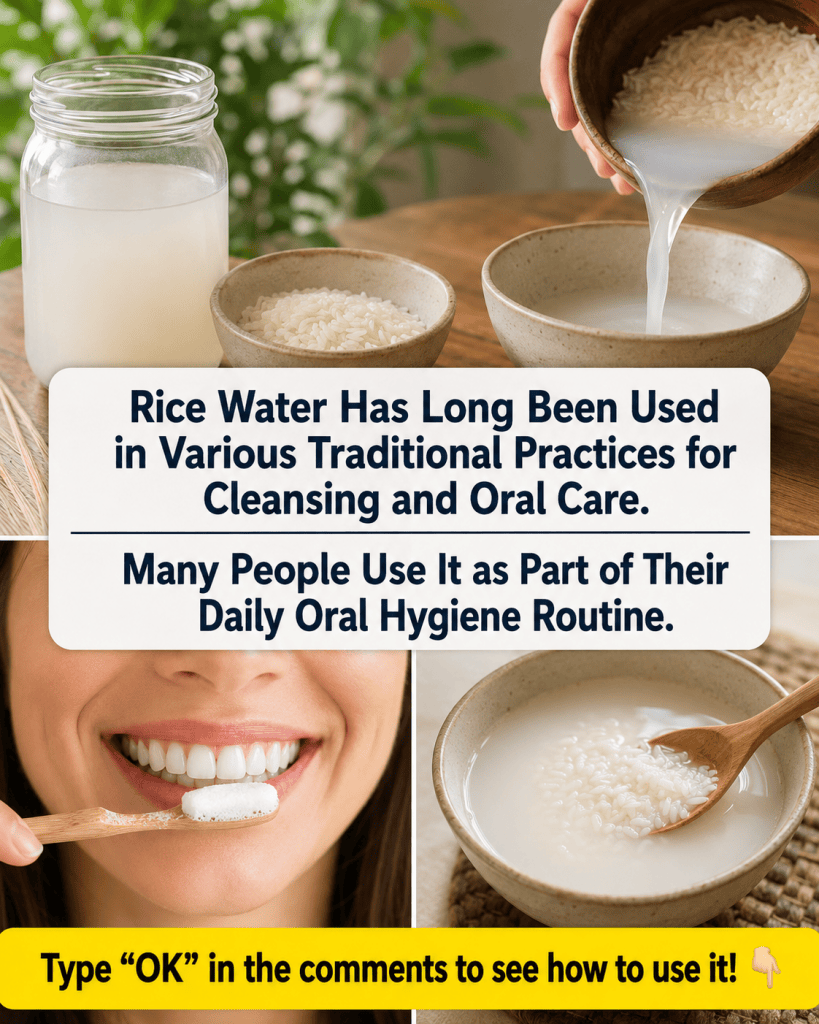
Could the Secret to Fresher-Looking Teeth Be Hiding in Your Kitchen?
Most people pour rice water down the drain without giving it a second thought. Yet for generations, rice water has been used in traditional beauty and personal care routines across many parts of Asia.
Today, this simple ingredient is gaining renewed attention—not as a miracle solution, but as a gentle addition to everyday oral care. Rich in naturally occurring starches, vitamins, minerals, and plant compounds, freshly prepared rice water may help leave your mouth feeling clean and refreshed when used alongside regular brushing and flossing.
If you’re looking for an inexpensive, eco-friendly way to complement your oral hygiene routine, rice water may be worth exploring.
Important: Rice water is not a replacement for toothpaste, flossing, or professional dental care. It should be used only as a complementary part of a healthy oral hygiene routine.
🌾 Why Is Rice Water Becoming Popular?
Rice water is the cloudy liquid left after rinsing or soaking uncooked rice.
Although it has long been used in traditional hair and skincare practices, many people are now exploring its role as a gentle mouth rinse because of its naturally occurring nutrients and mild cleansing properties.
It’s affordable, easy to prepare, and requires only one common kitchen ingredient.
🍚 What’s Inside Rice Water?
Fresh rice water naturally contains small amounts of:
- B vitamins
- Magnesium
- Amino acids
- Antioxidant compounds
- Natural starches
These components contribute to its mild texture and make it a popular ingredient in traditional wellness practices.
Why Some People Include Rice Water in Their Oral Care Routine
When used responsibly as part of a complete oral hygiene routine, rice water may help:
- Leave the mouth feeling refreshed
- Gently rinse away surface debris
- Support a clean-feeling smile
- Complement daily brushing and flossing
- Encourage sustainable use of kitchen ingredients
While some people report brighter-looking teeth after consistent use, scientific evidence supporting rice water as a teeth-whitening treatment remains limited.
🦷 How to Prepare a Simple Rice Water Mouth Rinse
Ingredients
- ½ cup uncooked rice (white or brown)
- 1 cup clean water
Optional:
- A very small pinch of sea salt (used occasionally, not daily)
Directions
- Place the uncooked rice in a bowl.
- Add clean water.
- Gently stir for about 30 seconds.
- Strain the cloudy liquid into a clean container.
- Use immediately for the freshest preparation.
If you have leftover rice water, refrigerate it and use it within 24 hours.
How to Use It
After brushing your teeth:
- Swish the rice water around your mouth for 1–2 minutes.
- Gently spit it out.
- Rinse with clean water if desired.
Some people also choose to dip a soft toothbrush into the rice water and brush gently for about two minutes.
Always brush gently to protect your enamel and gums.
Potential Benefits
Although research is still limited, many people enjoy rice water because it may help:
🌿 Freshen the Mouth
Rinsing may leave the mouth feeling cleaner and refreshed.
✨ Reduce Surface Build-Up
Gentle rinsing may help remove loose food particles and everyday surface residue.
😊 Support a Brighter-Looking Smile
Consistent oral hygiene—including brushing, flossing, and regular dental cleanings—remains the most effective approach for maintaining naturally bright teeth.
Rice water may serve as a simple complementary step for some individuals.
💚 Gentle on the Mouth
Unlike some abrasive DIY whitening methods, plain rice water is generally mild when used appropriately.
🌍 Eco-Friendly and Budget-Friendly
Using rice water helps reduce kitchen waste while creating a simple homemade addition to your wellness routine.
Tips for the Best Results
For a safe and effective routine:
- Use freshly prepared rice water whenever possible.
- Choose high-quality rice and rinse it well before use.
- Continue brushing twice daily with fluoride toothpaste.
- Floss every day.
- Drink plenty of water.
- Limit foods and drinks that commonly stain teeth, such as coffee, tea, and tobacco.
- Visit your dentist regularly for professional cleanings.
Healthy habits make the biggest difference over time.
Important Precautions
Keep these recommendations in mind:
- Limit rice water use to 2–3 times per week.
- If adding sea salt, use only a very small amount and only occasionally to avoid unnecessary abrasion.
- Stop using the rinse if irritation develops.
- People with tooth sensitivity, enamel erosion, gum disease, or untreated cavities should consult a dental professional before trying homemade oral care remedies.
- Rice water should never replace fluoride toothpaste or professional dental treatment.
Frequently Asked Questions
Can rice water naturally whiten teeth?
Rice water may help remove some everyday surface residue and leave teeth looking cleaner, but it is not a proven whitening treatment. Professional dental care remains the most effective option for significant tooth whitening.
Can I use it every day?
Using rice water a few times per week is generally sufficient as a complementary rinse. Daily brushing and flossing remain the foundation of good oral hygiene.
Should I use white or brown rice?
Either can be used. Choose clean, good-quality rice and prepare fresh rice water each time whenever possible.
Final Thoughts
Rice water is a simple, inexpensive ingredient that has been appreciated in traditional wellness practices for generations. While it isn’t a miracle solution for whitening teeth or removing tartar, it can be an enjoyable addition to a consistent oral hygiene routine when used responsibly.
A healthy smile is built through daily habits: brushing with fluoride toothpaste, flossing, eating a balanced diet, staying hydrated, and scheduling regular dental checkups.
Sometimes, the simplest kitchen ingredients can remind us that good self-care doesn’t have to be complicated—it simply needs to be consistent.
Disclaimer
This article is for educational and informational purposes only. It is not intended to diagnose, treat, cure, or prevent any disease. Rice water is not a substitute for professional dental care. Always consult your dentist if you experience tooth pain, gum bleeding, persistent bad breath, loose teeth, or other oral health concerns.