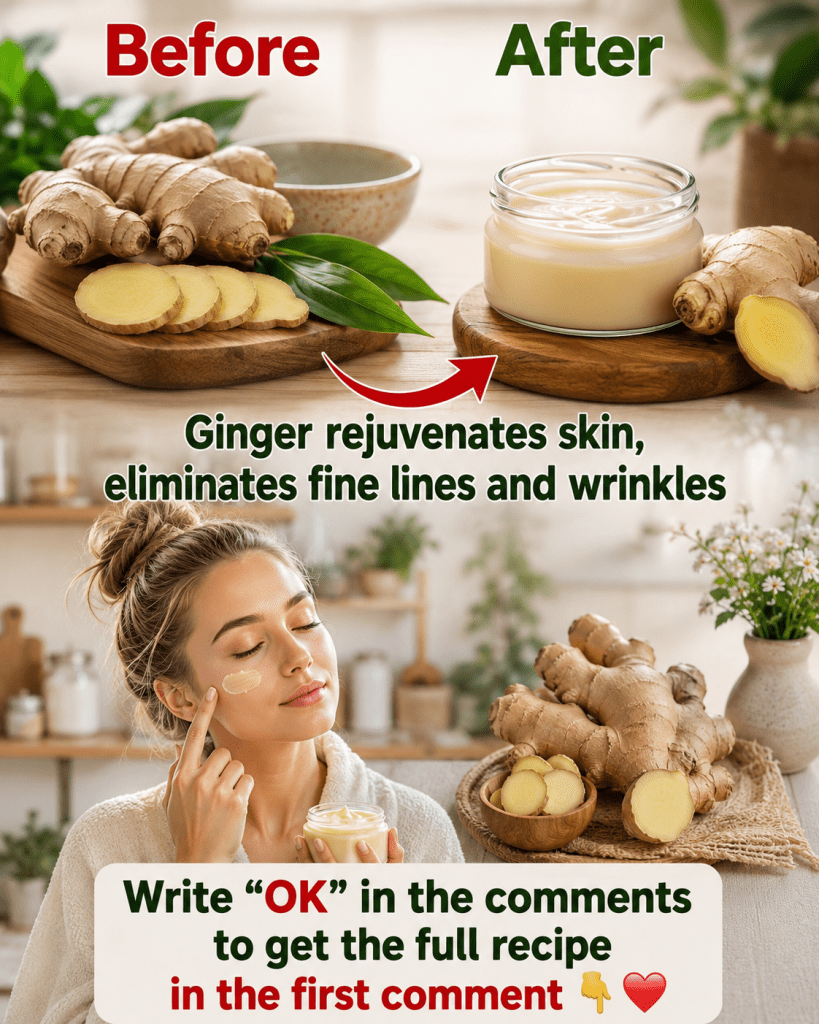
Could One Simple Kitchen Ingredient Become Part of Your Skincare Routine?
Have you ever looked in the mirror and wished your skin appeared a little brighter, smoother, or more refreshed?
Daily exposure to sunlight, pollution, stress, lack of sleep, and the natural aging process can gradually affect the appearance of your skin. While there is no magic ingredient that can instantly transform your complexion, many people enjoy incorporating natural botanicals into their skincare routines.
One ingredient that has been valued for centuries is ginger.
Known worldwide as a flavorful spice, ginger has also been traditionally used in homemade beauty rituals across many cultures. Rich in naturally occurring antioxidants and beneficial plant compounds, it may help support healthy-looking skin when paired with a consistent skincare routine and healthy lifestyle.
Let’s explore why ginger continues to be a favorite in natural beauty care.
🌟 Why Is Ginger Popular in Natural Skincare?
✨ Naturally Rich in Antioxidants
Ginger contains antioxidant compounds that may help protect the skin from everyday environmental stressors, which can influence how skin looks over time.
Supporting the skin’s natural defenses is one important part of maintaining a fresh, youthful-looking complexion.
💚 Helps Support Healthy-Looking Skin
The naturally occurring plant compounds found in ginger have made it a popular ingredient in traditional skincare.
While results vary from person to person, many people enjoy using ginger as part of a balanced skincare routine designed to support healthy-looking skin.
🌸 May Help Promote a More Even-Looking Complexion
Homemade ginger treatments are often used with the goal of helping skin appear brighter and more refreshed.
Although ginger is not a skin-lightening treatment, gentle skincare combined with healthy habits may contribute to a more even-looking complexion over time.
💧 Provides a Refreshing Sensation
Fresh ginger can leave the skin feeling clean and invigorated, making it a popular ingredient in DIY face masks and scrubs.
🧖♀️ Three Simple Ginger Skincare Recipes
1. Ginger and Honey Face Mask
Ingredients
- 1 teaspoon freshly grated ginger
- 1 tablespoon raw honey
- A few drops of fresh lemon juice (optional)
Directions
- Mix all ingredients into a smooth paste.
- Apply to clean skin.
- Leave on for about 15 minutes.
- Rinse with lukewarm water.
- Gently pat your skin dry.
Why People Like It
Honey helps attract moisture, while ginger adds antioxidant-rich plant compounds. Together, they may leave the skin looking refreshed and feeling soft.
2. Fresh Ginger Spot Application
Directions
- Slice a thin piece of fresh ginger.
- Gently massage it over the desired area for 2–3 minutes.
- Leave the natural juice on the skin for approximately 10 minutes.
- Rinse thoroughly with water.
Important: Always perform a patch test first, as fresh ginger may cause irritation for sensitive skin.
3. Gentle Ginger Exfoliating Scrub
Ingredients
- 1 tablespoon grated fresh ginger
- 1 tablespoon sugar
- 1 teaspoon coconut oil
Directions
- Mix all ingredients thoroughly.
- Massage onto damp skin using gentle circular motions for 1–2 minutes.
- Rinse with lukewarm water.
- Follow with your favorite moisturizer.
This gentle exfoliation may help remove dead skin cells, leaving the skin feeling smoother and looking brighter.
🌿 Why Do Many People Enjoy Natural Skincare?
Natural skincare recipes remain popular because they are:
- Easy to prepare
- Made with familiar kitchen ingredients
- Budget-friendly
- Simple to incorporate into an existing skincare routine
However, natural ingredients are not automatically suitable for everyone. Individual skin types vary, and what works well for one person may not work for another.
Tips for Getting the Best Results
To complement your ginger skincare routine:
- Cleanse your face gently every day.
- Wear sunscreen when outdoors.
- Stay well hydrated.
- Eat a balanced diet rich in colorful fruits and vegetables.
- Get enough sleep each night.
- Moisturize regularly.
Healthy skin is usually the result of consistent daily habits rather than any single product or ingredient.
Frequently Asked Questions
How often can I use ginger on my skin?
Many people choose to use homemade ginger masks or scrubs once or twice per week. If irritation develops, discontinue use.
Can ginger remove dark spots?
There is limited scientific evidence showing that ginger alone removes dark spots. However, its antioxidant content may help support an overall healthy-looking complexion when used consistently as part of a balanced skincare routine.
Is ginger suitable for sensitive skin?
Not always. Fresh ginger can be stimulating and may cause irritation in some individuals. Always perform a patch test before applying it to larger areas.
Can I use fresh ginger every day?
Daily topical use may be too strong for some skin types. Using ginger once or twice weekly is often a gentler approach.
Final Thoughts
Ginger has earned its place in traditional beauty care thanks to its naturally occurring antioxidants and beneficial plant compounds.
While it isn’t a miracle cure or a replacement for professional skincare treatments, it can be an enjoyable addition to a thoughtful self-care routine.
Combined with proper cleansing, hydration, sun protection, and a healthy lifestyle, simple homemade ginger recipes may help support skin that looks fresh, smooth, and naturally radiant.
Sometimes, the simplest ingredients found in your kitchen can inspire the most relaxing self-care rituals.
⚠️ Disclaimer
This article is intended for informational and educational purposes only and should not be considered medical or dermatological advice. Natural remedies may not be suitable for everyone. Always perform a patch test before using any homemade skincare treatment, discontinue use if irritation occurs, and consult a qualified dermatologist if you have sensitive skin, allergies, or existing skin conditions.