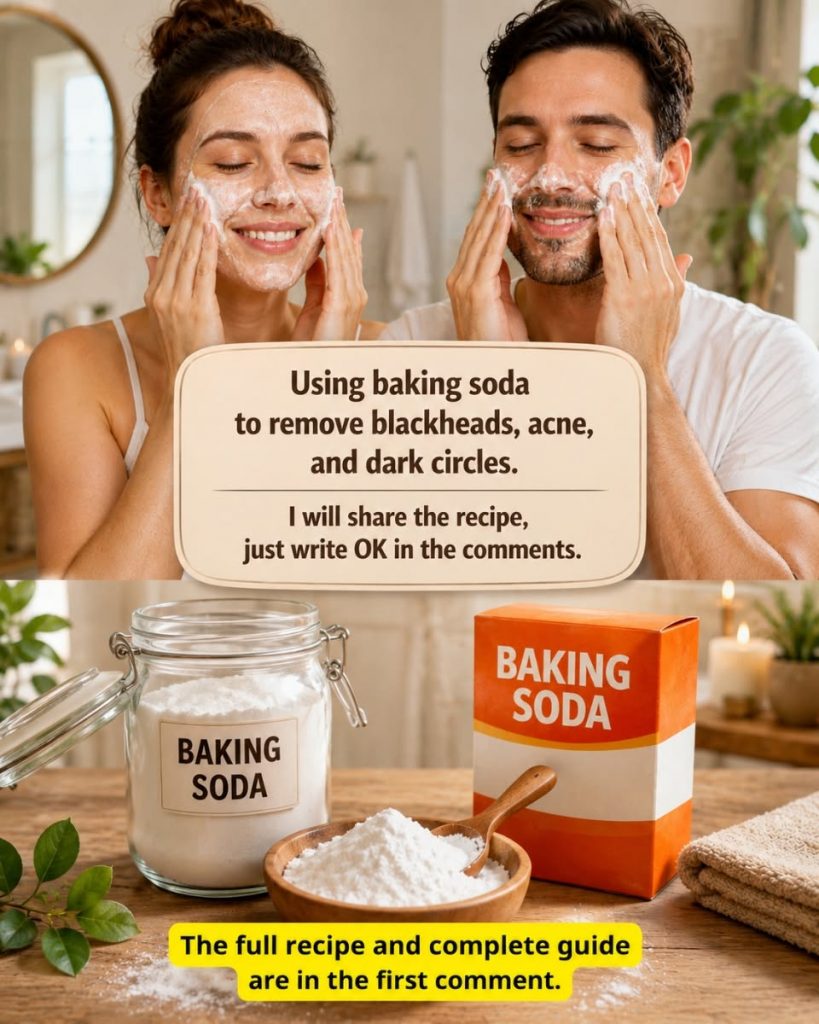
But while many people share positive experiences online, it’s important to understand that facial skin is delicate and can react differently depending on skin type and frequency of use.
In this article, you’ll learn how baking soda works on the skin, the possible benefits, potential risks, and safer ways to use it occasionally in a gentle skincare routine.
🧴 What Is Baking Soda and How Does It Work on the Skin?
Baking soda, also known as sodium bicarbonate, is a fine white powder with alkaline properties. Its pH level is usually around 8–9, while healthy skin naturally maintains a more acidic pH between 4.5 and 5.5.
This difference is one reason why moderation is so important.
When mixed with water or moisturizing ingredients, baking soda may act as:
- A mild physical exfoliator
- A temporary oil remover
- A surface cleanser
Its tiny particles can help remove dead skin cells from the outer layer of the skin, leaving the face feeling softer and smoother.
However, it’s important to keep realistic expectations:
- It does not deeply penetrate the skin
- It does not permanently remove dark spots
- It does not stop wrinkle formation
- It does not change melanin production
Most effects are temporary and surface-level.
✨ Potential Benefits Some People Report
Although baking soda is not considered an official dermatological treatment, some people use it occasionally because they notice short-term cosmetic improvements.
1. Gentle Surface Exfoliation
By removing dead skin buildup, skin may appear:
- Smoother
- Brighter
- Fresher-looking
This temporary exfoliating effect can improve the appearance of uneven texture.
2. A “Deep Clean” Feeling
Some users enjoy the sensation of removing excess oil and impurities from the skin surface, especially after a long day.
3. Affordable and Easy to Find
Baking soda is inexpensive and widely available in supermarkets and pharmacies.
4. Can Be Combined with Gentle Ingredients
Some people mix baking soda with ingredients like:
- Honey 🍯
- Coconut oil 🥥
- Milk
- Aloe vera gel
These ingredients may help soften the exfoliating effect.
⚠️ Risks and Side Effects to Consider
Dermatologists often recommend caution because baking soda can easily disrupt the skin barrier if overused.
1. Dryness and Tightness
Because baking soda is alkaline, it may weaken the skin’s natural protective barrier, causing:
- Dry skin
- Tightness
- Flaking
2. Irritation and Redness
Sensitive skin types may experience:
- Burning sensations
- Itching
- Redness
- Inflammation
3. Increased Sun Sensitivity
Exfoliated skin can become more vulnerable to UV rays, making sunscreen especially important after use.
4. May Worsen Certain Skin Conditions
Baking soda is generally not recommended for people with:
- Rosacea
- Eczema
- Dermatitis
- Inflamed acne
If irritation occurs, stop use immediately.
🧼 Safer Ways to Use Baking Soda Occasionally
If you decide to try baking soda on the face, gentle application is essential.
✔ Use no more than once per week
✔ Avoid aggressive scrubbing
✔ Stay away from the eye and lip area
✔ Always moisturize afterward
🧪 Simple Baking Soda Scrub
Ingredients
- 1 teaspoon baking soda
- 2–3 teaspoons water
Instructions
- Mix into a soft paste
- Wash your face first
- Apply using gentle circular motions
- Avoid sensitive areas
- Massage for only 1–2 minutes
- Rinse with lukewarm water
- Apply moisturizer afterward
🍯 Baking Soda and Honey Mask
Honey may help provide moisture and comfort to the skin.
Ingredients
- 1 teaspoon baking soda
- 1 tablespoon honey
Instructions
- Mix into a smooth paste
- Apply to clean skin
- Leave on for 3–5 minutes
- Rinse thoroughly
This version is often considered gentler than using baking soda alone.
🥥 Baking Soda with Coconut Oil
Some people with dry skin prefer combining:
- 1 teaspoon baking soda
- 1 teaspoon coconut oil
⚠️ Note: Coconut oil may clog pores in acne-prone skin.
📝 Important Safety Tips
1️⃣ Always Patch Test First
Test on a small area of skin before applying to the full face.
2️⃣ Avoid Overuse
Using baking soda too frequently can damage the skin barrier.
3️⃣ Don’t Mix with Strong Acids the Same Day
Avoid combining baking soda with ingredients like:
- Lemon juice
- Vinegar
- Strong exfoliating acids
This may increase irritation.
4️⃣ Moisturize After Use
Hydration helps support the skin barrier after exfoliation.
5️⃣ Wear Sunscreen ☀️
Freshly exfoliated skin can become more sensitive to sunlight.
⚖️ Baking Soda vs. Chemical Exfoliants
| Feature | Baking Soda | AHA/BHA Exfoliants |
|---|---|---|
| Type | Physical exfoliation | Chemical exfoliation |
| Cost | Low | Moderate |
| Scientific support | Limited | Stronger |
| Risk of irritation | Higher if overused | Usually more controlled |
Many skincare professionals prefer AHA and BHA products because they are formulated to work at safer, more balanced pH levels.
❓ Frequently Asked Questions
Can baking soda permanently remove dark spots?
No. It may temporarily brighten the surface of the skin, but it does not permanently remove pigmentation.
Can it be used every day?
No. Daily use may irritate and weaken the skin barrier.
Does it remove wrinkles?
Not permanently. It mainly provides temporary surface exfoliation.
🌟 Final Thoughts
Baking soda can sometimes be used as an occasional DIY exfoliator when applied carefully and gently.
✔ Some people notice temporary improvements in:
- Skin texture
- Smoothness
- Surface brightness
❌ However, excessive use may lead to dryness, irritation, and skin sensitivity — especially for delicate skin types.
Healthy skin usually depends more on simple long-term habits such as:
- Gentle cleansing
- Consistent moisturizing
- Daily sun protection
- Balanced skincare routines
✨ In the end, a simple and consistent routine is often the best approach for maintaining naturally healthy and glowing skin over time.