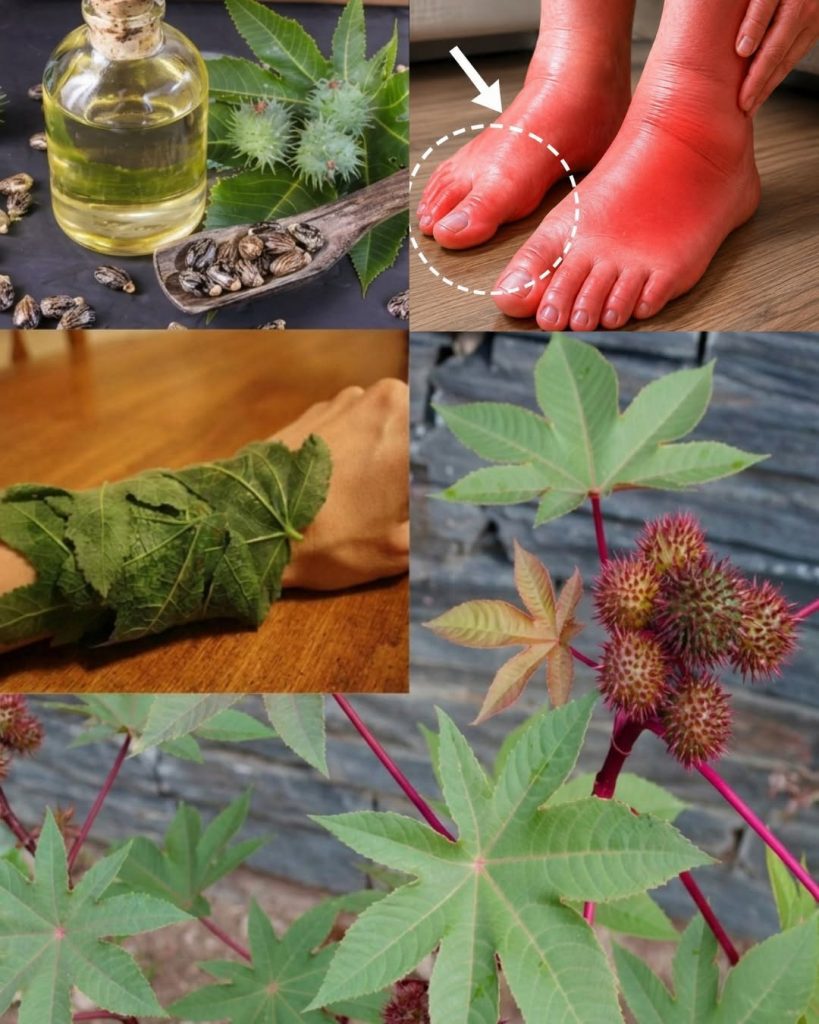
That sudden hot, swollen, red, and painful foot or joint can feel worrying so quickly. Walking becomes difficult, shoes feel tight, and even the brush of bedsheets can cause discomfort. Many people still turn to a gentle, time-honored home tradition to help ease the unease of swollen joints and inflammation: castor oil compresses (sometimes combined with a large plant leaf wrap, as seen in traditional practices).
Important note: This is not a treatment for the underlying cause of swelling, but it can be a soothing, comforting way to support relief while you address factors like dehydration, too much salty food, alcohol, or general inflammation in the body.
Ingredients (Simple & Clear Measurements)
- 1 to 2 tablespoons of castor oil (preferably cold-pressed and hexane-free if possible)
- A clean cotton cloth or thick flannel (about 20 × 20 cm)
- Plastic wrap or a thin plastic bag (to protect clothes and bedding)
- Warm towel or low-heat heating pad (optional)
- Soft bandage or strip of cloth to secure the compress
- Optional traditional addition: One large, clean plant leaf (such as castor leaf) for wrapping
⚠️ Very important safety reminder: Castor seeds are highly toxic if swallowed. Never chew or ingest them, and keep them away from children and pets.
How to Prepare a Castor Oil Compress
- Fold the cotton cloth into two or three layers for better absorption.
- Pour 1–2 tablespoons of castor oil onto the cloth until it’s well saturated but not dripping.
- Have the plastic wrap ready to avoid any mess on clothes or sheets.
- If using a fresh plant leaf, ensure it is clean, pesticide-free, and only apply to intact skin (never on open wounds or cracked areas).
How to Use & Best Time to Apply
- Place the oil-soaked cloth directly over the swollen area (ankle, foot, toe joint, or knee).
- Cover it with plastic wrap to hold in the moisture.
- Gently secure with a bandage or soft cloth.
- For extra comfort, add a warm towel or low-heat heating pad for 15–20 minutes if it feels good.
Best times to try it:
- In the evening when swelling often feels more noticeable and you can rest afterward.
- Before bed if discomfort is affecting your sleep.
- After a warm shower when tissues are more relaxed.
How often? Start with once daily for 2–3 days and then assess how you feel. Many people use it 3–4 times a week for ongoing comfort.
Why Might This Traditional Method Help?
Castor oil is rich in ricinoleic acid, a fatty acid known for its soothing properties when used topically. In simple terms, castor oil compresses may support:
- Gentle movement of fluids and lymph, which can help reduce feelings of puffiness and congestion.
- Calming surface-level discomfort and the sensation of heat or sensitivity.
- Softening tight tissues, potentially making the joint feel more comfortable for movement.
The added gentle warmth can also promote circulation and help the area feel less stiff and more relaxed.
Who Might Benefit Most?
This comforting approach is often used by people experiencing:
- Swollen feet and ankles after salty meals or long periods of standing.
- Joint swelling during times of increased inflammation.
- Morning stiffness that builds overnight.
- Discomfort after physical activity with fluid buildup.
It pairs especially well with supportive habits like staying hydrated, resting enough, and reducing heavy or salty foods.
When Might You Notice Improvement? (Realistic Expectations)
Many people share these gentle observations with regular use:
- After one session (30–60 minutes): A pleasant warmth and the area feeling less tight.
- After 2–3 days: Swelling may look a little less noticeable and movement can feel easier.
- After 1–2 weeks: Fewer episodes of recurring discomfort, especially when combined with lifestyle adjustments.
Results vary, and this is not a quick fix for every situation.
Safety Notes & Simple Adjustments
Do not use castor oil compresses if you have:
- Open wounds, skin infections, or discharge.
- Rashes or known sensitivity to oils.
- Loss of sensation in the area (so you can’t feel heat properly).
Stop immediately and rinse if: redness increases, burning or itching occurs, or symptoms worsen.
Seek medical help right away if:
- Swelling appears suddenly with fever.
- The area becomes very hot or redness spreads quickly.
- You feel generally unwell, have severe pain, or cannot bear weight.
- There is swelling in one leg with calf pain or shortness of breath.
Always listen to your body and adjust as needed.
In Summary
A castor oil compress is a simple, traditional practice that many people find comforting for easing the unease of swollen and inflamed joints. It is not a substitute for professional medical care, but it can be a gentle part of your self-care routine while you work on the root causes.
Save this guide for when you’d like to try it.
Disclaimer: This information is for educational and informational purposes only and is not medical advice, diagnosis, or treatment. Please consult your doctor or healthcare provider for personalized guidance, especially if you have any underlying health conditions.
Have you ever tried a castor oil compress or another traditional remedy for swelling? Share your experience gently in the comments below — we’d love to hear what worked for you! 💛
Keywords for natural wellness seekers: castor oil compress for swollen joints, swollen feet relief, traditional remedy for inflammation, castor oil pack, natural joint comfort, home care for edema.