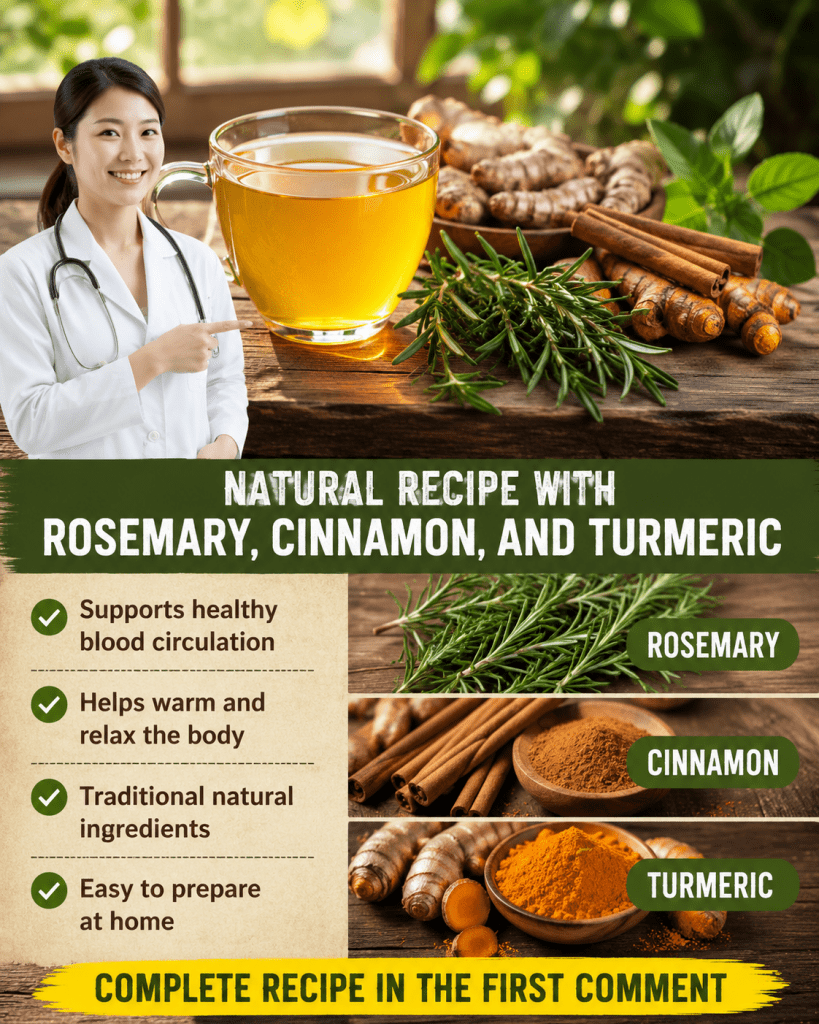
Many people are looking for simple, natural ways to support their health alongside a balanced diet, regular exercise, and medical care. Traditional herbal beverages made with familiar kitchen ingredients have been enjoyed for generations, and one popular combination features cinnamon, turmeric, and rosemary.
These herbs are rich in naturally occurring plant compounds that have been studied for their antioxidant and anti-inflammatory properties. While no herbal drink can cure chronic diseases, this comforting tea may complement a healthy lifestyle and support overall well-being.
Let’s explore what makes this traditional herbal blend so popular, how to prepare it, and what current evidence suggests.
Why Are Cinnamon, Turmeric, and Rosemary Often Combined?
Each ingredient contributes unique plant compounds that have attracted scientific interest.
Together, they provide:
- Natural antioxidants
- Aromatic flavor
- Anti-inflammatory plant compounds
- A warming, comforting herbal tea
This combination is best viewed as part of a healthy lifestyle rather than a treatment for medical conditions.
Key Ingredients and Their Potential Benefits
🌿 Cinnamon
Cinnamon has been used in traditional cooking and herbal practices around the world for centuries.
It naturally contains compounds such as cinnamaldehyde, which have been studied for their potential role in supporting:
- Healthy blood sugar metabolism
- Antioxidant defenses
- Normal inflammatory responses
Some research suggests cinnamon may modestly support blood sugar management in certain individuals, but results are mixed and it should never replace prescribed diabetes treatment.
🌼 Turmeric
Turmeric is well known for its bright golden color and its naturally occurring compound curcumin.
Curcumin has been widely researched for its:
- Antioxidant properties
- Support for healthy inflammatory responses
- Potential role in overall joint comfort
Turmeric is also commonly included in balanced diets that emphasize colorful, plant-based foods.
🌿 Rosemary
Rosemary is a fragrant culinary herb rich in beneficial plant compounds, including rosmarinic acid and carnosic acid.
Traditional uses include supporting:
- General wellness
- Digestive comfort
- Healthy circulation
- Cognitive wellness
Rosemary also contributes antioxidants that help protect cells from oxidative stress.
How to Prepare This Herbal Tea
Ingredients
- 1 cinnamon stick
- 2 small pieces of fresh turmeric, peeled and thinly sliced
- 1 handful of fresh rosemary leaves
- 2 cups (about 500 ml) water
Directions
- Bring the water to a gentle boil.
- Add the cinnamon stick and turmeric slices.
- Simmer for about 10 minutes.
- Add the rosemary and continue simmering for another 5 minutes.
- Strain into a cup.
- Allow it to cool slightly before drinking.
For a naturally sweeter flavor, you may add a small amount of honey after the tea has cooled to a warm—not hot—temperature.
Potential Wellness Benefits
While research continues, the ingredients in this tea may contribute to overall health in several ways.
1. May Support Healthy Blood Sugar Management
Cinnamon has been studied for its potential effects on insulin sensitivity and glucose metabolism.
Although encouraging findings exist, herbal tea alone is not sufficient to manage diabetes.
Healthy eating, physical activity, and prescribed treatment remain the foundations of blood sugar control.
2. Provides Antioxidant Support
All three herbs contain natural antioxidants that help protect cells from oxidative stress.
A diet rich in antioxidant-containing foods has been associated with healthy aging and overall wellness.
3. May Support Joint Comfort
Turmeric’s curcumin has been widely researched for its role in supporting the body’s normal inflammatory processes.
Many people include turmeric-containing foods and beverages as part of a lifestyle that supports joint comfort and mobility.
4. Supports a Healthy Lifestyle for Liver Wellness
The liver naturally performs important detoxification functions without requiring special “cleanses.”
Maintaining liver health depends primarily on:
- Eating a balanced diet
- Maintaining a healthy weight
- Limiting alcohol intake
- Staying physically active
Turmeric and rosemary contribute antioxidant compounds that support overall wellness, but they should not be viewed as treatments for fatty liver disease.
5. May Complement Heart-Healthy Habits
A heart-friendly lifestyle includes:
- Plenty of fruits and vegetables
- Whole grains
- Regular exercise
- Healthy body weight
The antioxidant compounds found in cinnamon, turmeric, and rosemary may complement these healthy habits as part of a balanced diet.
Can This Tea Cure Diabetes or Fatty Liver?
No.
Despite claims found online, there is no herbal tea that can cure diabetes, fatty liver disease, or high blood pressure.
These conditions require proper medical evaluation and individualized treatment.
Herbal beverages may serve as supportive additions to a healthy lifestyle, but they should never replace professional medical care.
Tips for Enjoying This Herbal Tea
To include this tea in your routine:
- Enjoy one cup daily.
- Pair it with balanced meals.
- Stay well hydrated.
- Exercise regularly.
- Prioritize quality sleep.
- Avoid adding large amounts of sugar.
Consistency in healthy habits matters far more than any single beverage.
Important Safety Information
Although these herbs are commonly used in cooking, moderation is important.
Consult a healthcare professional before regular use if you:
- Take blood-thinning medications
- Take diabetes medications
- Are pregnant or breastfeeding
- Have gallbladder disease
- Have chronic liver or kidney disease
Excessive amounts of cinnamon—especially Cassia cinnamon—may expose you to high levels of coumarin, which may not be appropriate for everyone.
Frequently Asked Questions
How often can I drink this tea?
Many healthy adults can enjoy one cup daily as part of a balanced diet. If you’re new to herbal teas, start with smaller amounts.
Can it replace my medications?
No. This herbal tea is intended only as a complementary wellness beverage and should never replace prescribed treatment.
Can I drink it without sugar?
Yes. Drinking it plain allows you to enjoy its natural herbal flavors while avoiding added sugars.
Healthy Habits That Make the Biggest Difference
For lasting wellness, combine herbal teas with evidence-based lifestyle habits:
- Eat plenty of vegetables, fruits, legumes, and whole grains.
- Stay physically active most days of the week.
- Maintain a healthy body weight.
- Limit highly processed foods and sugary drinks.
- Get regular medical checkups.
- Follow your healthcare provider’s recommendations for any chronic condition.
These daily habits have a much greater impact on long-term health than any single herbal recipe.
Final Thoughts
Cinnamon, turmeric, and rosemary create a flavorful traditional herbal tea that offers naturally occurring antioxidants and aromatic plant compounds.
While it is not a cure or treatment for diabetes, high blood pressure, fatty liver disease, or joint conditions, it can be an enjoyable part of a healthy lifestyle when combined with nutritious eating, regular exercise, and appropriate medical care.
Sometimes the greatest benefits come not from miracle remedies, but from consistently choosing simple, wholesome habits every day.
Disclaimer: This article is for informational and educational purposes only. It is not intended to diagnose, treat, cure, or prevent any disease. Always consult a qualified healthcare professional before using herbal products regularly, especially if you have a chronic medical condition, are pregnant or breastfeeding, or take prescription medications.
