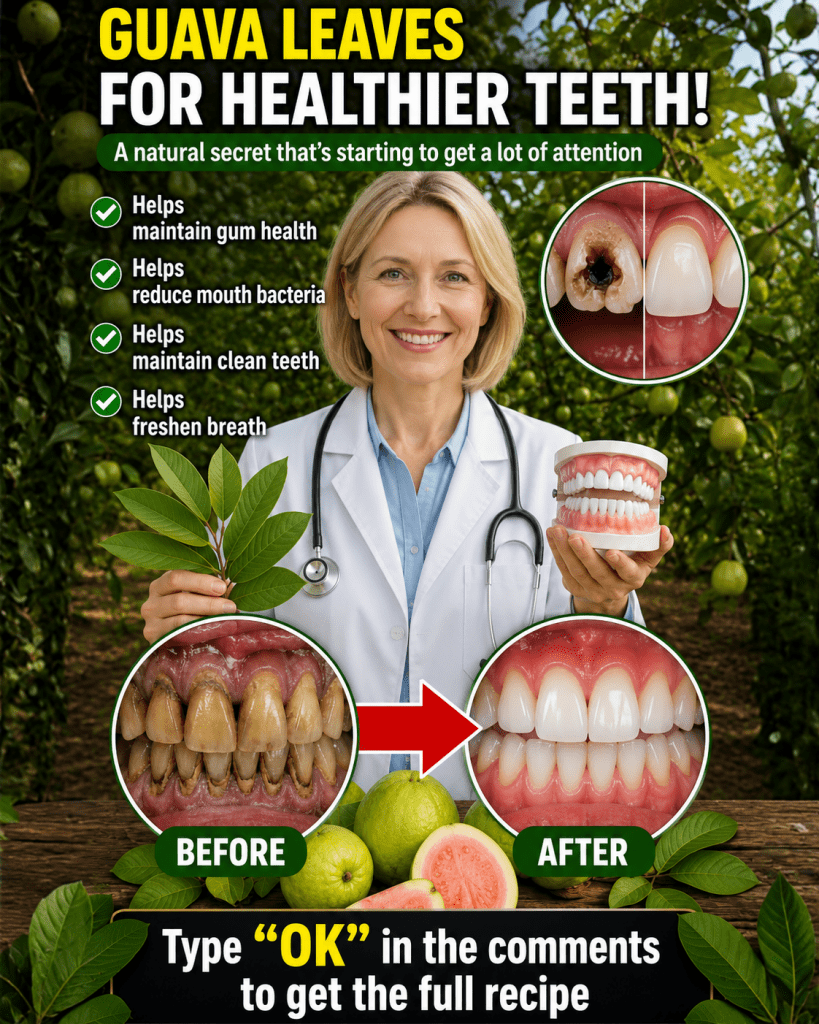
Guava Leaves for Oral Health: Traditional Practices to Support Clean Teeth and Healthy Gums
A Simple Natural Addition to Your Daily Oral Care Routine
Healthy teeth and gums are essential for eating comfortably, speaking clearly, and smiling with confidence. Yet issues like plaque buildup, sensitive teeth, bad breath, and gum discomfort can gradually affect everyday life.
While brushing, flossing, and regular dental checkups remain the foundation of good oral hygiene, many people are also exploring traditional plant-based practices that may complement their daily routine.
One natural ingredient that has been used for generations is the guava leaf. Valued in many parts of Asia, Africa, and Latin America, guava leaves have a long history in traditional wellness practices and continue to attract attention for their naturally occurring plant compounds.
🌿 Why Are Guava Leaves Used for Oral Care?
For generations, guava leaves have been included in traditional oral hygiene routines because they contain naturally occurring compounds such as:
- Flavonoids
- Tannins
- Essential oils
- Natural antioxidants
Researchers continue to study these compounds for their potential antimicrobial and antioxidant properties, which may help support a healthier oral environment when used alongside good dental hygiene.
Although promising, guava leaves should be viewed as a complementary practice rather than a replacement for professional dental care.
🦷 Understanding Tooth Decay
Tooth decay develops gradually through a natural process:
- Food particles remain on the teeth.
- Oral bacteria feed on sugars.
- Acids are produced.
- Tooth enamel slowly weakens over time.
This may contribute to:
- Plaque buildup
- Tooth sensitivity
- Surface stains
- Cavities
- Gum irritation
Daily oral hygiene is the best way to reduce these risks.
🍃 Method 1: Guava Leaf Mouth Rinse
Why It’s Popular
This is one of the most widely used traditional methods because it’s simple, gentle, and easy to include in a daily routine.
Ingredients
- 5–7 fresh or dried guava leaves
- 2 cups of clean water
Preparation
- Wash the leaves thoroughly.
- Bring the water to a boil.
- Add the leaves.
- Simmer for 10–15 minutes.
- Allow the liquid to cool until lukewarm.
- Strain before use.
How to Use
- Rinse your mouth after brushing.
- Swish for 30–60 seconds.
- Spit it out—do not swallow.
- Use once daily if well tolerated.
🌿 Method 2: Chewing Fresh Guava Leaves
Why Some People Like It
Chewing young guava leaves has been practiced traditionally as a quick way to freshen the mouth.
The chewing action may help loosen food particles while naturally mixing the leaf compounds with saliva.
Safe Use
- Choose tender young leaves.
- Wash thoroughly.
- Chew gently for 1–2 minutes.
- Discard the leaves.
- Rinse your mouth with clean water afterward.
Helpful Tips
✔ Avoid chewing aggressively.
✔ Stop immediately if irritation occurs.
✔ Use only occasionally rather than as a daily habit.
🌱 Method 3: Homemade Guava Leaf Powder
Why It’s Convenient
Preparing guava leaf powder allows you to keep a ready-to-use supply without making fresh tea every day.
You’ll Need
- Fresh guava leaves
- Drying tray or clean cloth
- Blender, spice grinder, or mortar
Preparation
- Wash the leaves thoroughly.
- Dry them in a shaded, well-ventilated area for several days.
- Grind into a fine powder.
- Store in an airtight container.
Ways to Use
- Add a very small amount to toothpaste before brushing.
- Mix a pinch with warm water as an occasional mouth rinse.
Use sparingly and discontinue if any irritation develops.
📊 Comparing the Three Methods
| Method | Preparation Time | Convenience | Best For |
|---|---|---|---|
| Guava Leaf Mouth Rinse | Moderate | Easy | Daily oral care |
| Chewing Fresh Leaves | Very Fast | Very Simple | Quick freshness |
| Guava Leaf Powder | Initial preparation | Highly Convenient | Long-term storage |
🔬 What Does Research Say?
Several laboratory studies have explored how guava leaf extracts interact with certain bacteria commonly found in the mouth.
Early findings suggest that guava leaves contain compounds with antimicrobial activity under laboratory conditions. However, researchers also emphasize that more high-quality human studies are needed.
At this time, guava leaves should be considered a supportive addition to good oral hygiene—not a treatment for dental disease.
💡 Everyday Habits for a Healthy Smile
Natural remedies work best when combined with proven oral care habits.
For healthy teeth and gums:
✔ Brush twice daily using fluoride toothpaste.
✔ Floss or clean between your teeth every day.
✔ Limit sugary snacks and drinks.
✔ Rinse your mouth after meals.
✔ Stay hydrated to support saliva production.
✔ Visit your dentist regularly for professional cleanings and checkups.
Consistency matters far more than any single ingredient.
⚠️ Important Safety Tips
Although guava leaves are traditionally used for oral care, keep these precautions in mind:
- Wash fresh leaves thoroughly before use.
- Do not replace prescribed dental treatment with home remedies.
- Stop using them if irritation or an allergic reaction occurs.
- Avoid swallowing concentrated homemade preparations.
- Seek professional dental care if you experience persistent pain, bleeding gums, swelling, or signs of infection.
💚 Final Thoughts
Guava leaves continue to be appreciated in traditional wellness practices because they are simple, inexpensive, and widely available in many tropical regions.
Whether prepared as a mouth rinse, chewed occasionally, or made into a powder, they may serve as a gentle complement to your daily oral hygiene routine when used responsibly.
Remember, lasting oral health comes from consistent daily habits—not quick fixes.
A healthy smile begins with regular brushing, flossing, balanced nutrition, professional dental care, and thoughtful self-care every day.
SEO Keywords
guava leaves for oral care, natural mouth rinse, guava leaf mouthwash, healthy gums naturally, natural dental care, oral hygiene tips, guava leaf benefits, fresh breath naturally, home oral care, healthy smile.