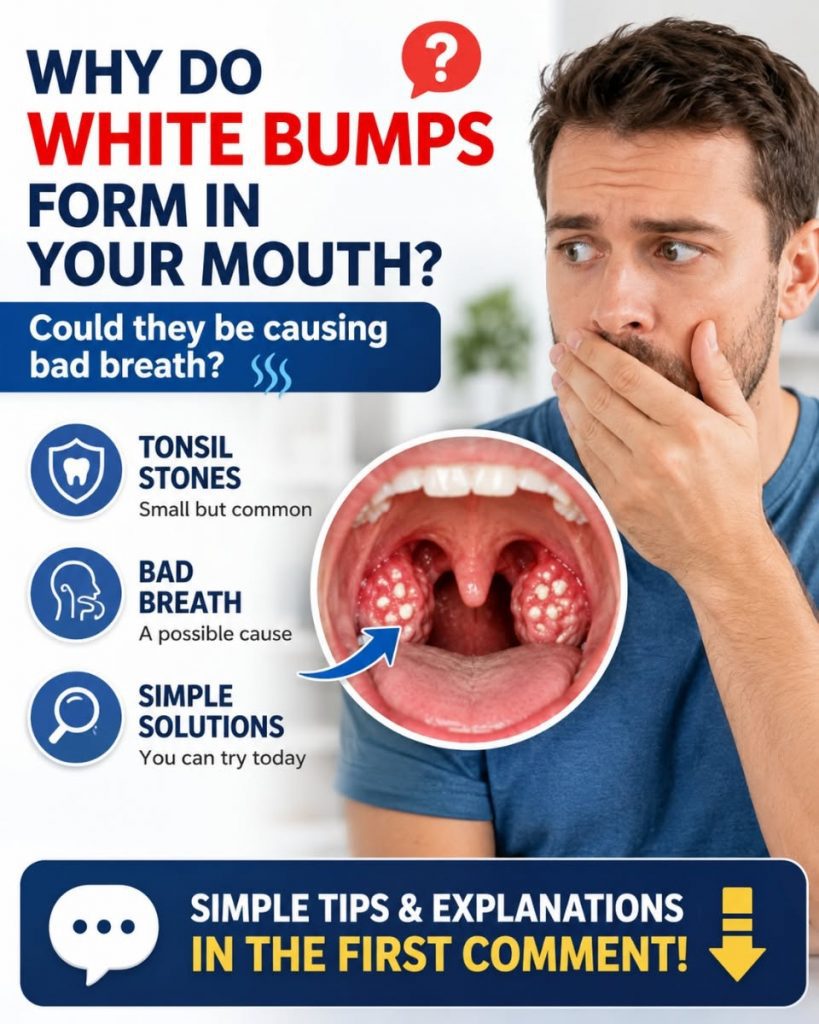
Understanding Tonsil Stones (Tonsilloliths) — A Common Cause of Bad Breath
Have you ever coughed or cleared your throat and suddenly noticed a tiny white or yellowish lump with an incredibly strong odor? For many people, this can feel embarrassing and frustrating — especially when bad breath continues even after brushing, flossing, or using mouthwash.
These little formations are commonly known as tonsil stones, or tonsilloliths. While they are usually harmless, they can become an uncomfortable and persistent source of bad breath and throat irritation.
🤔 What Exactly Are Tonsil Stones?
Tonsil stones are small hardened deposits that form inside the natural crevices of the tonsils, called “crypts.”
They may develop when:
- Food particles become trapped
- Dead cells and mucus collect
- Bacteria feed on this buildup
- Minerals in saliva gradually harden the material
Over time, these substances can form small white or yellowish stones. Some are as tiny as grains of rice, while others may grow larger.
Some people experience them only occasionally, while others notice them regularly.
🤢 Why Do Tonsil Stones Smell So Bad?
One reason tonsil stones attract so much attention is their strong odor.
Certain bacteria inside the stones produce sulfur compounds — the same compounds associated with unpleasant smells like rotten eggs. Even a small tonsil stone may contribute to lingering bad breath for hours.
This is why some people continue struggling with mouth odor despite maintaining good oral hygiene.
🚨 Common Signs of Tonsil Stones
Sometimes tonsil stones are visible, but not always. Common symptoms may include:
- Persistent bad breath
- A strange or metallic taste in the mouth
- Frequent throat clearing
- Mild sore throat
- Small white spots on the tonsils
- Feeling like something is stuck in the throat
- Ear discomfort caused by shared nerve pathways
- Difficulty swallowing in some cases
👥 Who Is More Likely to Get Them?
Tonsil stones are more common in:
- People with larger or deeper tonsil crypts
- Teenagers and young adults
- Individuals with chronic sinus drainage or post-nasal drip
- Those with a history of repeated tonsil infections
🏠 Gentle Ways Some People Manage Tonsil Stones at Home
👉 Careful Removal
If a stone is clearly visible, some people carefully remove it using:
- A clean cotton swab
- A low-pressure oral irrigator
It’s important to be gentle to avoid irritation or bleeding.
Afterward, rinsing with warm salt water may help soothe the area.
🔁 Daily Prevention Habits
Many people find these habits helpful for reducing buildup:
- Gargling with warm salt water regularly
- Using alcohol-free mouthwash
- Staying hydrated
- Cleaning the tongue gently
- Managing excess mucus or sinus drainage
- Using a low-pressure water flosser carefully around the tonsils
Good oral hygiene can support fresher breath and reduce accumulation over time.
🌿 A Simple Natural Mouth Spray Some People Use
Some individuals prefer mild homemade rinses or sprays as part of their oral care routine.
A simple mixture may include:
- 200 ml warm water
- 1 teaspoon salt
- A few drops of food-grade peppermint or grapefruit seed extract
This can be lightly sprayed near the tonsil area a few times daily.
Results vary from person to person, and gentle use is important.
🩺 When Should You See a Healthcare Professional?
Consider medical advice if you experience:
- Large or painful tonsil stones
- Bleeding during removal attempts
- Persistent swelling on one side
- Frequent infections
- Ongoing pain or difficulty swallowing
A healthcare provider may recommend additional options if the problem keeps returning.
📊 Comparing Common Approaches
Mouthwash Alone
- Temporary fresh breath
- Does not remove stones completely
Salt Water + Gentle Irrigation
- Helps support oral cleanliness
- May reduce buildup over time
Medical Procedures
- More permanent solutions in recurring cases
- Usually considered when symptoms are persistent
💡 Final Thoughts
Tonsil stones are surprisingly common, and they do not necessarily mean poor hygiene. In many cases, the structure of the tonsils themselves plays a role.
Simple daily habits — such as staying hydrated, gargling regularly, and maintaining oral cleanliness — may help reduce buildup and improve breath naturally over time.
⚠️ Important Note
This article is for educational purposes only and does not replace professional medical advice. If symptoms persist, worsen, or become painful, consult a qualified healthcare professional.