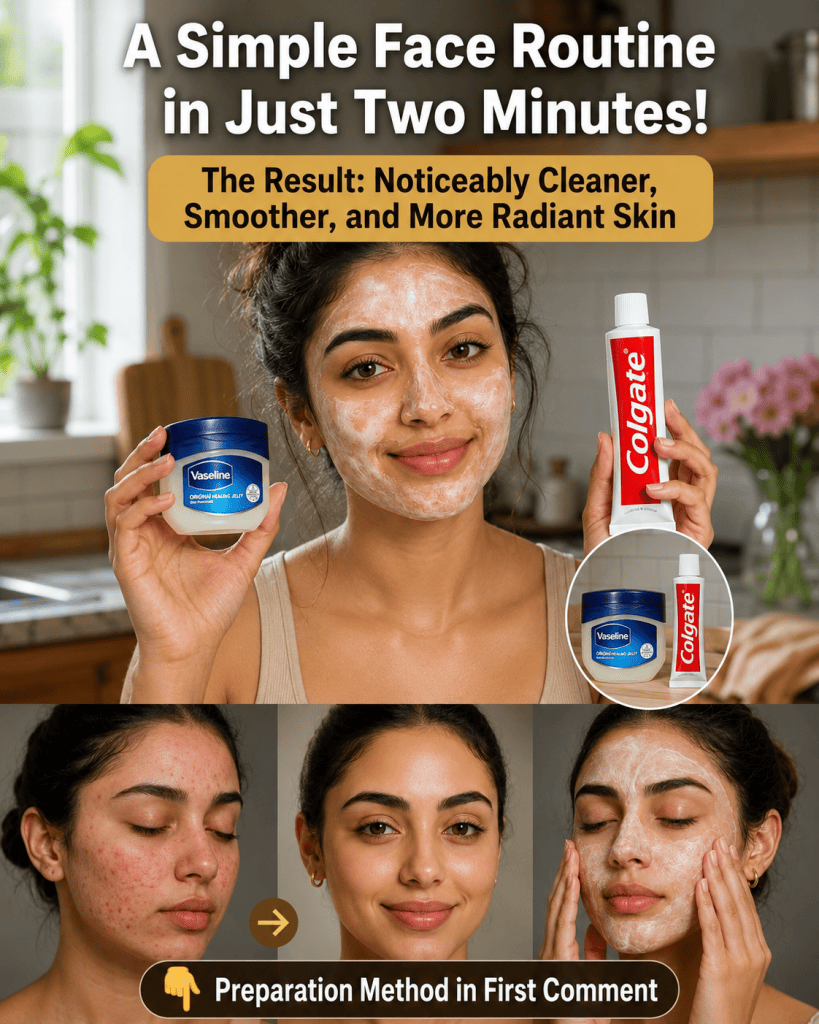
Social media is full of creative skincare hacks, and one of the latest trends combines toothpaste and petroleum jelly (often known by the brand name Vaseline®). Supporters claim this simple mixture can leave skin feeling softer, smoother, and more refreshed using products many people already have at home.
But is this popular beauty trick actually effective—and more importantly, is it safe?
Before trying any DIY skincare remedy, it’s important to understand what each ingredient does, what science says, and which alternatives may be better suited for healthy skin.
Let’s explore the facts.
Why Has This DIY Skincare Hack Become So Popular?
The appeal is easy to understand:
- Both products are inexpensive and widely available.
- The recipe is simple to prepare.
- Social media videos often promise quick cosmetic improvements.
The idea comes from combining two very different products:
- Toothpaste contains cleansing agents and ingredients formulated specifically for cleaning teeth.
- Petroleum jelly creates a protective barrier that helps reduce moisture loss from the skin.
While this combination may sound appealing, dermatologists generally advise caution because products designed for teeth are not necessarily suitable for facial skin.
Understanding the Ingredients
Petroleum Jelly
Petroleum jelly is one of the most trusted skin protectants available.
It helps:
- Lock in moisture
- Protect the skin barrier
- Reduce water loss
- Soften rough, dry areas
It is commonly used on:
- Dry lips
- Hands
- Elbows
- Heels
- Minor areas of dry skin
When used appropriately, petroleum jelly is considered safe for most people.
Toothpaste
Modern toothpaste is designed to clean teeth—not skin.
Depending on the formula, it may contain:
- Mild abrasives
- Fluoride
- Flavoring agents
- Foaming ingredients
- Whitening compounds
- Antibacterial ingredients
These ingredients can sometimes irritate delicate facial skin, especially if left on for extended periods.
Possible Cosmetic Effects People Notice
Some individuals report temporary improvements such as:
1. Softer Feeling Skin
Petroleum jelly helps trap moisture, making dry skin feel smoother and more comfortable.
2. Temporary Surface Freshness
The cleansing ingredients in toothpaste may temporarily remove surface oils from small areas of skin.
However, removing too much natural oil may also contribute to dryness.
3. Improved Appearance of Dry Patches
Because petroleum jelly helps reduce moisture loss, rough areas may appear smoother after use.
4. Short-Term Cosmetic Improvement
Some users notice that their skin looks temporarily refreshed after cleansing and moisturizing.
This does not mean the mixture treats acne, scars, wrinkles, or pigmentation.
Important Facts You Should Know
Current scientific evidence does not support using toothpaste as a treatment for:
- Acne
- Acne scars
- Dark spots
- Wrinkles
- Fine lines
In fact, many dermatologists discourage applying toothpaste to the face because it may cause:
- Dryness
- Redness
- Burning
- Irritation
- Skin barrier damage
These reactions are more likely in people with sensitive skin.
Safer Alternatives for Healthy Skin
Instead of experimenting with toothpaste on your face, consider skincare ingredients with stronger safety profiles.
Aloe Vera Gel
Known for its soothing and hydrating properties.
Fragrance-Free Moisturizers
Designed specifically to support the skin barrier without unnecessary irritation.
Hyaluronic Acid
Helps attract and retain moisture, leaving skin feeling hydrated.
Natural Honey
Often used in DIY skincare for its moisturizing properties.
Choose pure honey and perform a patch test first.
Dermatologist-Recommended Products
If you have acne, dryness, or other ongoing skin concerns, products formulated for your skin type are generally the safest choice.
Skin Care Habits That Really Make a Difference
Healthy skin depends more on consistent daily habits than viral beauty hacks.
Try to:
- Cleanse your face gently twice a day.
- Apply a moisturizer suitable for your skin type.
- Wear sunscreen with SPF 30 or higher every day.
- Drink enough water.
- Eat a balanced diet rich in colorful fruits and vegetables.
- Get adequate sleep.
- Avoid smoking and excessive sun exposure.
Small daily habits often have a greater long-term impact than occasional DIY treatments.
Safety Tips Before Trying Any DIY Remedy
If you decide to test any homemade skincare mixture:
- Perform a patch test on a small area first.
- Wait 24 hours for any reaction.
- Never apply it to broken, irritated, or sunburned skin.
- Stop immediately if you experience burning, itching, redness, or swelling.
People with eczema, rosacea, or very sensitive skin should be especially cautious with DIY remedies.
Frequently Asked Questions
Can toothpaste treat acne?
No. Current scientific evidence does not support toothpaste as an effective acne treatment, and it may worsen irritation.
Is petroleum jelly safe for the face?
For many people, petroleum jelly can be used on dry areas of the face to help reduce moisture loss. However, it should be applied in moderation and on clean skin.
Does petroleum jelly clog pores?
Petroleum jelly is generally considered low-comedogenic, meaning it is unlikely to clog pores for most people. Individual skin responses may vary.
Should people with sensitive skin try this mixture?
Generally, no. Sensitive skin is more likely to become irritated by toothpaste ingredients.
Final Thoughts
The toothpaste and petroleum jelly skincare trend has gained popularity because it uses inexpensive household products. While petroleum jelly is well recognized for helping protect dry skin, toothpaste is formulated for oral hygiene—not facial care—and may cause irritation for many people.
If your goal is healthier, smoother-looking skin, choosing gentle cleansers, effective moisturizers, daily sunscreen, and evidence-based skincare products is a safer and more reliable approach than relying on viral DIY trends.
Disclaimer: This article is intended for educational and informational purposes only. It is not medical advice and should not replace consultation with a qualified dermatologist or healthcare professional. If you have persistent skin conditions, allergies, eczema, rosacea, or severe acne, seek professional guidance before trying any homemade skincare remedy.