Meta Description:
Learn the 10 early warning signs of breast cancer, why early detection matters, and when to seek medical evaluation. Understanding these symptoms may help support earlier diagnosis and better treatment outcomes.
Pay Attention to Breast Changes: Early Signs That Could Indicate Breast Cancer
Many people notice small changes in their breasts and assume they’re simply caused by hormonal fluctuations, stress, aging, or temporary irritation. With busy daily lives, it’s easy to hope that everything will resolve on its own.
However, in some cases, seemingly minor changes can be early warning signs of breast cancer. Recognizing these changes promptly and seeking medical evaluation can make a significant difference.
The encouraging news is that when breast cancer is detected early, treatment is often more effective and outcomes are generally much better. Awareness truly has the potential to save lives.
Whether you’re a woman or a man, understanding these warning signs can help you know when it’s time to speak with a healthcare professional.
Why Early Detection Matters
Breast cancer often begins quietly inside the milk ducts or lobules, sometimes without obvious symptoms.
When breast cancer is diagnosed before it spreads beyond the breast, treatment success rates are significantly higher, and many patients have excellent long-term outcomes.
Regular screening, awareness of your normal breast appearance, and prompt medical evaluation of unusual changes all contribute to earlier diagnosis.
Waiting to see whether symptoms disappear on their own may delay important medical care.
Knowledge and awareness are powerful tools.
10 Warning Signs That Shouldn’t Be Ignored
10. Unexplained Changes in Breast Size or Shape
A sudden change in the size, shape, or position of one breast—without pregnancy, weight changes, or another obvious explanation—deserves attention.
Watch for:
- Changes affecting only one breast
- Changes lasting longer than two weeks
- Changes unrelated to your menstrual cycle
- A feeling of heaviness or firmness
Helpful tip: Consider becoming familiar with your breasts by observing their normal appearance regularly. This can make new changes easier to notice.
9. Skin Dimpling or an Orange Peel Appearance
Skin that begins to look dimpled, puckered, or similar to an orange peel (known as peau d’orange) should be evaluated by a healthcare provider.
This change may occur when cancer affects lymphatic drainage within the breast tissue.
When checking your breasts:
- Stand in front of a mirror.
- Raise both arms overhead.
- Press your hands against your hips.
- Look for any new changes in skin texture or contour.
Any persistent skin changes deserve medical assessment.
8. Persistent Itching, Redness, or Irritation
An itchy breast that remains irritated for several weeks—especially if accompanied by redness, warmth, or swelling—should not be ignored.
Although these symptoms are often caused by harmless skin conditions, they can occasionally be associated with inflammatory breast cancer, a rare but aggressive type of breast cancer.
Prompt evaluation is important.
7. A Hard Lump or Thickened Area
One of the most recognized warning signs is a lump that is:
- Hard
- Irregularly shaped
- Firmly attached to surrounding tissue
- Usually painless
Keep in mind that most breast lumps are not cancer, but every new lump should be examined by a healthcare professional.
6. Persistent Breast or Nipple Pain
Breast pain is common and is usually not related to cancer.
However, pain that:
- Persists for several weeks
- Is limited to one specific area
- Is unrelated to the menstrual cycle
should be evaluated by your healthcare provider.
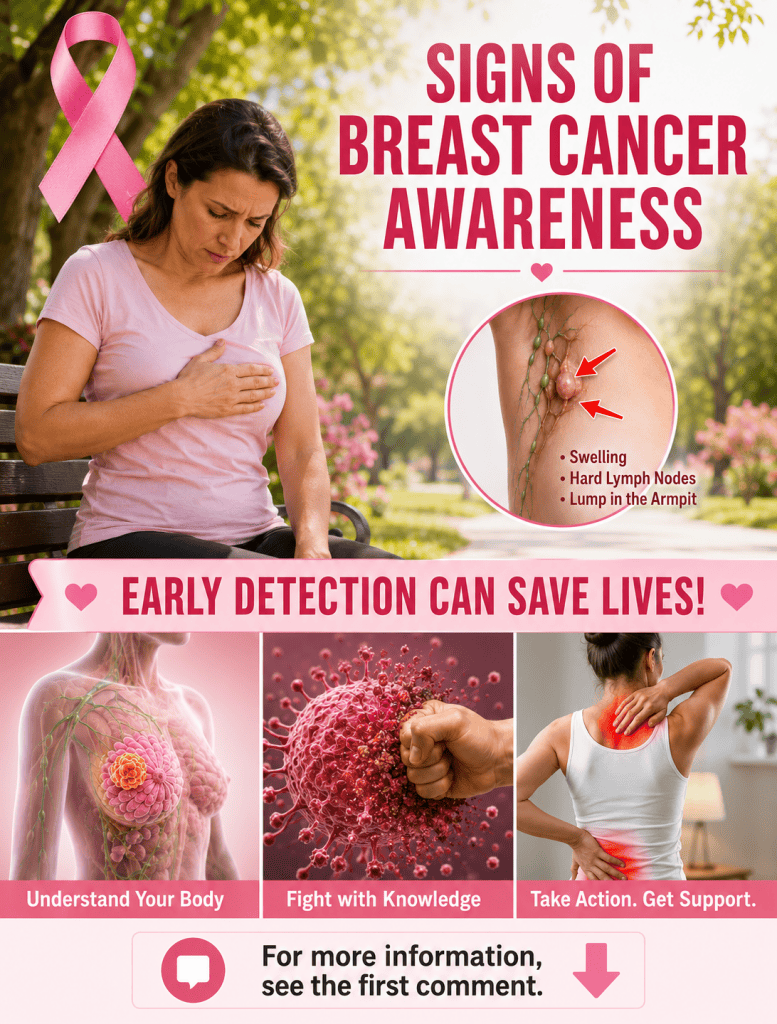
5. Unexplained Swelling of the Breast or Armpit
Breast cancer does not always present as a clearly defined lump.
Sometimes the first noticeable symptom is:
- Swelling of part or all of one breast
- Swollen lymph nodes in the armpit
These changes warrant medical attention, particularly if they persist.
4. A Newly Inverted Nipple
If a nipple that has always pointed outward suddenly begins turning inward, this change should be evaluated.
While not always caused by cancer, new nipple inversion should never be ignored.
3. Redness, Flaking, or Thickened Skin Around the Nipple
Persistent redness, scaling, crusting, or thickened skin around the nipple or areola may be associated with Paget disease of the breast, a rare condition that is often linked to an underlying breast cancer.
These symptoms can resemble eczema, making medical evaluation especially important.
2. Unusual Nipple Discharge
Any nipple discharge that occurs without breastfeeding deserves attention.
Especially concerning types include:
- Bloody discharge
- Clear discharge that appears spontaneously
- Persistent discharge from one breast
Although many causes are benign, evaluation is recommended.
1. Swollen Lymph Nodes Under the Arm or Near the Collarbone
Enlarged, firm lymph nodes beneath the arm or near the collarbone may indicate that disease has spread beyond the breast tissue.
While swollen lymph nodes can result from infections or other conditions, persistent enlargement should be assessed promptly.
A Simple Breast Health Plan
Taking care of your breast health doesn’t have to be complicated.
Consider these healthy habits:
- Become familiar with the normal look and feel of your breasts.
- Schedule routine clinical breast exams as recommended.
- Follow your healthcare provider’s recommendations for mammography or other screening tests.
- Keep track of any new or unusual changes.
- Discuss your family history of breast or ovarian cancer with your healthcare provider.
Regular screening remains one of the most effective tools for early detection.
Who May Have a Higher Risk?
Certain factors may increase breast cancer risk, including:
- Age over 40
- A family history of breast cancer
- Inherited BRCA1 or BRCA2 gene mutations
- Dense breast tissue
- Certain hormonal or reproductive factors
Having risk factors does not mean you will develop breast cancer, but it may influence your recommended screening schedule.
When Should You Seek Medical Care?
Contact a healthcare professional promptly if you notice:
- A new breast lump that persists
- Bloody nipple discharge
- Rapid swelling, redness, or warmth of the breast
- Persistent skin changes
- Enlarged lymph nodes together with breast changes
- A newly inverted nipple
Early evaluation can lead to earlier diagnosis if treatment is needed.
Frequently Asked Questions
When should mammograms begin?
For people at average risk, many medical organizations recommend discussing screening around age 40, with the exact schedule based on individual risk factors and shared decision-making with a healthcare provider.
People at higher risk may need earlier or additional screening.
Can men develop breast cancer?
Yes.
Although much less common than in women, men can develop breast cancer. Any persistent breast lump or nipple change in men should also be evaluated.
Does every breast lump mean cancer?
No.
Most breast lumps are benign, such as cysts or fibroadenomas.
However, every new or persistent lump should be examined by a qualified healthcare professional.
Final Thoughts
Understanding these ten warning signs of breast cancer empowers you to take an active role in your health.
Most breast changes are not caused by cancer, but recognizing persistent or unusual symptoms—and seeking timely medical evaluation—can lead to earlier diagnosis when treatment is often most successful.
Stay aware of your body, attend recommended screenings, and encourage your loved ones to do the same.
Early detection doesn’t guarantee prevention, but it can significantly improve treatment options and outcomes.
Disclaimer
This article is intended for educational and informational purposes only and does not replace professional medical advice, diagnosis, or treatment. If you notice any unusual breast changes or symptoms, consult a qualified healthcare professional promptly. Routine breast cancer screening and regular medical checkups remain essential components of early detection.