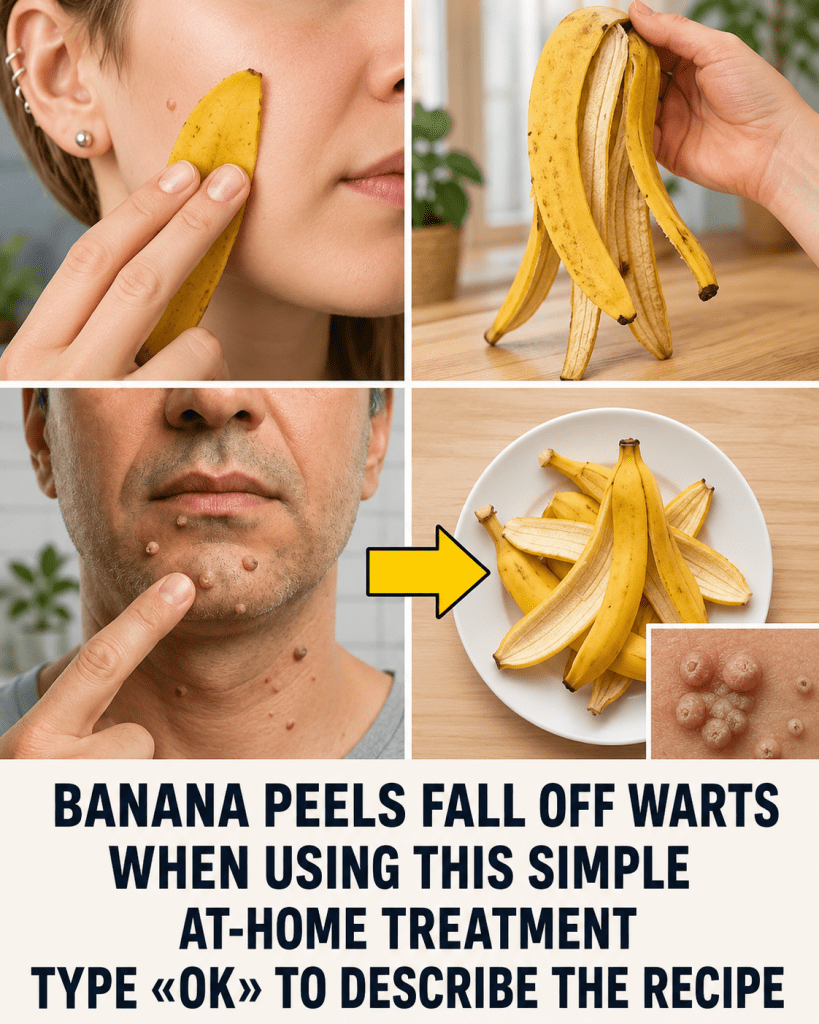
Could a Simple Banana Peel Become Part of Your Skin Care Routine?
Imagine looking at your skin and noticing a small wart that has been there for months—or even years. It may not be dangerous, but it can still be frustrating. Whether it appears on your hands, feet, neck, or another visible area, a wart can affect how comfortable and confident you feel.
Many people search for gentle, affordable ways to care for their skin at home. Among the most commonly discussed traditional remedies is something surprisingly simple: the peel of a ripe banana.
While banana peel is not a medical treatment and should not be viewed as a cure, it has been used in home-care traditions for generations. Some people enjoy incorporating it into their skincare routine because of its natural moisture and plant compounds.
Let’s explore why this humble kitchen ingredient continues to attract attention.
What Causes Warts?
Warts are small skin growths commonly associated with certain strains of the human papillomavirus (HPV). The virus can enter the skin through tiny cuts or abrasions and may lead to the development of these rough, raised bumps.
Warts can appear on:
- Hands and fingers
- Feet and soles
- Neck and face
- Arms and legs
Many warts eventually disappear on their own over time, although the process can take months or even years.
Why Do People Use Banana Peel?
The inside of a ripe banana peel contains naturally occurring plant compounds, including:
- Phenolic compounds
- Antioxidants
- Potassium
- Natural enzymes
- Moisture-rich fibers
Although scientific evidence remains limited regarding banana peel for wart removal, some people believe these properties may help support the skin’s natural condition and comfort.
9 Potential Benefits of Using Banana Peel as Part of a Skin-Care Routine
9. Helps Soften Rough Skin
The inner white portion of a banana peel is naturally moist. Some users report that regular application may help soften dry or rough areas around a wart.
8. Provides Overnight Moisture
Keeping skin hydrated can support overall skin comfort. Banana peel naturally contains moisture that may help prevent excessive dryness.
7. Rich in Antioxidants
Banana peel contains antioxidant compounds that help protect plant tissues. These compounds are often discussed in relation to maintaining healthy-looking skin.
6. Gentle on the Skin
Many people appreciate banana peel because it is a simple, natural material that is generally well tolerated when used externally on healthy skin.
5. Budget-Friendly
Unlike specialized products, ripe bananas are inexpensive and readily available in most households.
4. Creates a Protective Covering
When secured with a bandage, the peel may help create a moist environment that some people find beneficial for skin care.
3. Encourages a Relaxing Evening Ritual
Applying a banana peel before bed can become a calming self-care habit that promotes mindfulness and consistency.
2. Contains Natural Nutrients
Potassium and other naturally occurring nutrients in banana peel contribute to its popularity in traditional beauty routines.
1. May Improve Confidence Through Consistent Self-Care
Many people feel better simply by taking positive steps toward caring for their skin. Consistency and attention to skin health can contribute to greater confidence over time.
How to Use Banana Peel Safely
What You’ll Need
- One very ripe banana
- Medical tape or a small bandage
- Mild soap and water
Step-by-Step Instructions
- Wash the area gently with soap and water.
- Pat the skin completely dry.
- Cut a small piece of ripe banana peel.
- Place the white inner side against the skin.
- Secure it with tape or a bandage.
- Leave it in place overnight.
- Remove it in the morning and cleanse the area.
- Repeat daily if desired.
Helpful Tips
- Choose a ripe banana with soft, mature peel.
- Use a fresh piece each night.
- Maintain good skin hygiene.
- Stop use if irritation occurs.
- Avoid applying to broken or infected skin.
Important Considerations
Although banana peel is commonly discussed in traditional home care, it is not a proven medical treatment for warts.
Consult a healthcare professional if:
- A wart changes color, size, or shape.
- It becomes painful or bleeds.
- You have diabetes or circulation problems.
- The wart is located in a sensitive area.
- You are unsure whether the growth is actually a wart.
Medical treatments such as salicylic acid, cryotherapy, and professional dermatological procedures remain the standard evidence-based options.
Frequently Asked Questions
How long does it take to notice changes?
Results vary widely. Many people report using the method consistently for several weeks before noticing any difference.
Is banana peel safe for everyone?
Most people tolerate external use well, but discontinue use if irritation develops.
Can banana peel replace medical treatment?
No. It should be considered a traditional home-care practice rather than a replacement for professional medical advice or treatment.
Why do people continue using it?
Many individuals appreciate its simplicity, affordability, and long history in traditional household remedies.
Final Thoughts
Banana peel remains one of the most talked-about traditional home remedies for skin care. While scientific evidence does not currently confirm that it removes warts, many people enjoy using it as part of a gentle self-care routine.
If you decide to try it, keep your expectations realistic, prioritize skin hygiene, and consult a healthcare professional whenever necessary.
Sometimes the simplest routines are not about quick fixes—but about taking small, consistent steps toward caring for yourself every day.
Disclaimer: This article is for educational purposes only and does not constitute medical advice. Always consult a qualified healthcare professional before trying any home remedy, especially if you have an underlying medical condition or concerns about a skin growth.