Meta Description:
Can dandelion root eliminate cancer cells in just 48 hours? Learn what laboratory research actually found, what it means for human health, and how dandelion may fit into a healthy lifestyle—without replacing medical care.
Can This Plant Help Fight Cancer Cells Within 48 Hours? Myth or Scientific Fact?
Cancer remains one of the most challenging health conditions worldwide, affecting millions of people and their families every year. Beyond the physical effects of treatment, it often brings emotional stress, uncertainty, and difficult decisions.
Because of this, it’s understandable that many people search for natural ways to support their health. One plant that has attracted growing scientific interest is dandelion (Taraxacum officinale).
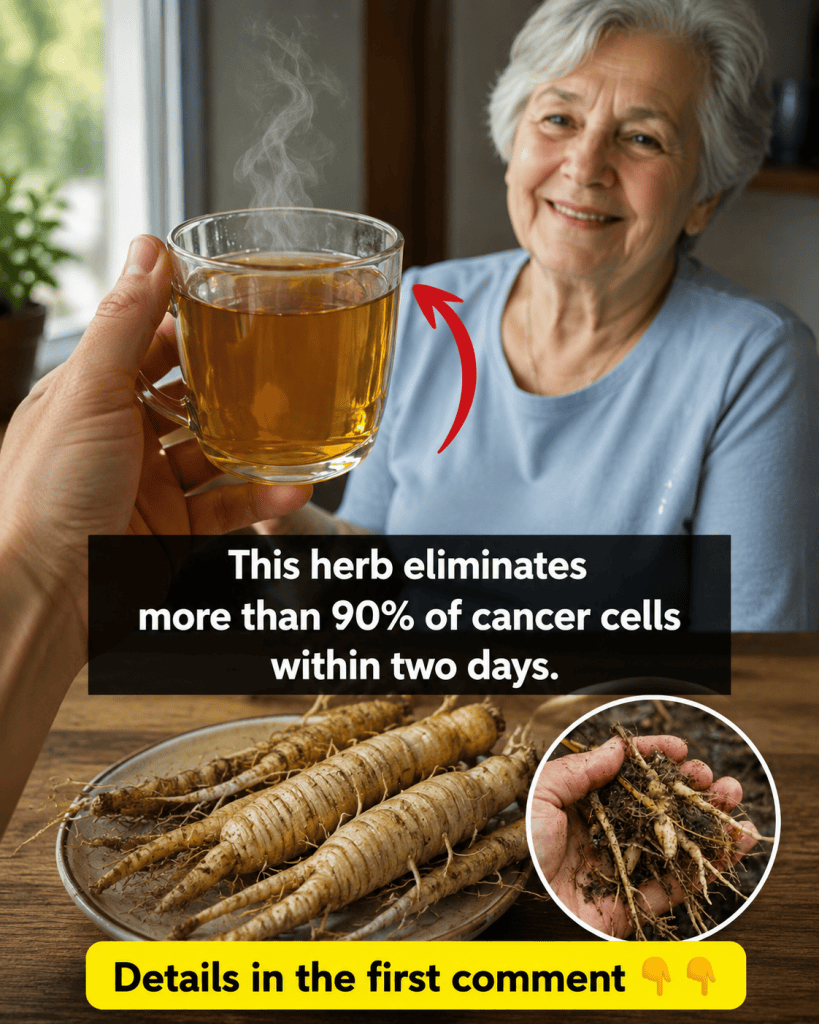
Online headlines often claim that dandelion root can “kill cancer cells within 48 hours.” But how accurate is that statement?
The answer is more nuanced than many social media posts suggest.
Let’s explore what current research actually shows.
What Is Dandelion?
Dandelion (Taraxacum officinale) is the familiar wildflower with bright yellow blossoms that later transform into fluffy white seed heads.
Although many people consider it a common weed, dandelion has been used in traditional herbal practices for centuries to support:
- Digestive wellness
- Liver function
- Normal fluid balance
- General well-being
Its leaves and roots contain naturally occurring nutrients, including:
- Vitamin A
- Vitamin C
- Vitamin K
- Potassium
- Iron
- Polyphenols
- Antioxidants
In recent years, researchers have become particularly interested in dandelion root extract because of its biological activity observed in laboratory studies.
What Does the Science Actually Say?
Laboratory (In Vitro) Research
Several laboratory studies have investigated how dandelion root extract interacts with cancer cells grown in controlled laboratory environments.
Some research has found that dandelion root extract can trigger apoptosis, also known as programmed cell death, in certain cancer cell lines, including:
- Colon cancer cells
- Melanoma cells
- Leukemia cells
One frequently cited laboratory study reported that dandelion root extract affected a large percentage of colon cancer cells within approximately 48 hours under laboratory conditions.
However, it’s essential to understand what this means.
These experiments were performed in petri dishes—not in people.
Laboratory findings help researchers understand biological mechanisms, but they do not prove that the same effects occur in the human body.
Why Laboratory Results Don’t Automatically Apply to Humans
Cells growing in a laboratory are exposed directly to concentrated extracts under carefully controlled conditions.
The human body is much more complex.
Many factors influence whether a plant compound can have similar effects in people, including:
- Digestion
- Absorption
- Metabolism
- Dosage
- Distribution throughout the body
- Individual health conditions
Because of these differences, promising laboratory findings require further research before they can be translated into medical recommendations.
Animal Research
Animal studies have also explored dandelion root extract.
Some experiments suggest it may help slow the growth of certain tumors in research models.
Scientists believe this activity may result from the combined action of numerous naturally occurring compounds found in the root rather than a single active ingredient.
Even so, animal studies are considered an intermediate step and cannot confirm effectiveness in humans.
Large, well-designed clinical trials are still needed.
Potential Wellness Benefits Beyond Cancer Research
Although cancer-related claims require much more research, dandelion has been traditionally used for several other purposes.
May Support Liver Function
Dandelion has long been used in traditional herbal practices to support normal liver function and healthy digestion.
Rich in Antioxidants
Its natural antioxidants may help protect cells from oxidative stress, which plays a role in normal aging and overall wellness.
May Support Healthy Fluid Balance
Traditionally, dandelion has been used as a mild natural diuretic that may help support normal fluid balance.
May Help Support a Healthy Inflammatory Response
Some naturally occurring plant compounds found in dandelion have demonstrated anti-inflammatory activity in laboratory studies.
Research in humans, however, is still developing.
Comparing Dandelion with Other Popular Herbs
| Herb | Traditional Wellness Use | Key Natural Compounds | Current Research Focus |
|---|---|---|---|
| Dandelion | Digestive and liver support | Vitamins, antioxidants, polyphenols | Laboratory studies on cellular activity |
| Turmeric | Supports a healthy inflammatory response | Curcumin | Inflammation and metabolic health |
| Ginger | Digestive comfort | Gingerols | Digestive health and antioxidant activity |
Each herb contributes differently to a balanced lifestyle, but none should be viewed as a cure for serious diseases.
How to Prepare Dandelion Root Tea
If you’d like to enjoy dandelion as a traditional herbal beverage, here’s a simple preparation.
Ingredients
- 1–2 teaspoons dried dandelion root
- 1 cup of water
Directions
- If using fresh roots, wash them thoroughly and chop into small pieces.
- Bring the water to a gentle boil.
- Add the dandelion root.
- Simmer for 5–10 minutes.
- Strain before serving.
- Add a small amount of honey if desired.
Many people enjoy one or two cups daily as part of a balanced diet.
Important Safety Considerations
Although dandelion is commonly consumed as a food and herbal tea, it may not be suitable for everyone.
Use caution if you:
- Take diuretic medications
- Use blood-thinning medications
- Have allergies to plants in the daisy (Asteraceae) family
- Have chronic medical conditions
- Are pregnant or breastfeeding
Always discuss herbal supplements with your healthcare provider before adding them to your routine.
Common Misconceptions
Myth: Dandelion cures cancer.
Fact: There is currently no scientific evidence showing that dandelion cures cancer in humans.
Myth: Dandelion root can replace chemotherapy.
Fact: No herbal tea or plant extract should replace evidence-based cancer treatments prescribed by qualified medical professionals.
Myth: Laboratory results prove clinical effectiveness.
Fact: Laboratory studies are valuable for generating research questions, but human clinical trials are required before medical conclusions can be drawn.
Frequently Asked Questions
Can dandelion cure cancer?
No. At present, there is no reliable clinical evidence showing that dandelion treats or cures cancer in humans.
Why do some articles mention “48 hours”?
That time frame comes from laboratory experiments in which cancer cells grown outside the body responded to dandelion root extract under controlled conditions. These findings cannot be directly applied to people.
Can I drink dandelion tea every day?
Many healthy adults enjoy dandelion tea in moderation. If you take medications or have underlying health conditions, consult your healthcare provider first.
Where can I buy dandelion root?
Dried dandelion root is commonly available from reputable natural food stores, herbal suppliers, and trusted online retailers.
Final Thoughts
Scientific interest in dandelion continues to grow, and laboratory research has produced intriguing findings regarding its biological activity.
However, it’s important to distinguish early laboratory discoveries from proven medical treatments.
Dandelion tea can be a pleasant addition to a healthy lifestyle, offering antioxidants and traditional wellness benefits. But it should never be promoted as a cure for cancer or used in place of professional medical care.
The strongest foundation for long-term health remains:
- A balanced diet
- Regular physical activity
- Quality sleep
- Routine medical care
- Following evidence-based treatment plans when needed
Small, consistent habits often provide the greatest long-term benefits.
Disclaimer
This article is provided for educational and informational purposes only and is not intended as medical advice. It should not be used to diagnose, treat, cure, or prevent any disease. Always consult a qualified healthcare professional before using herbal products or dietary supplements, especially if you have a medical condition, are undergoing cancer treatment, or take prescription medications.