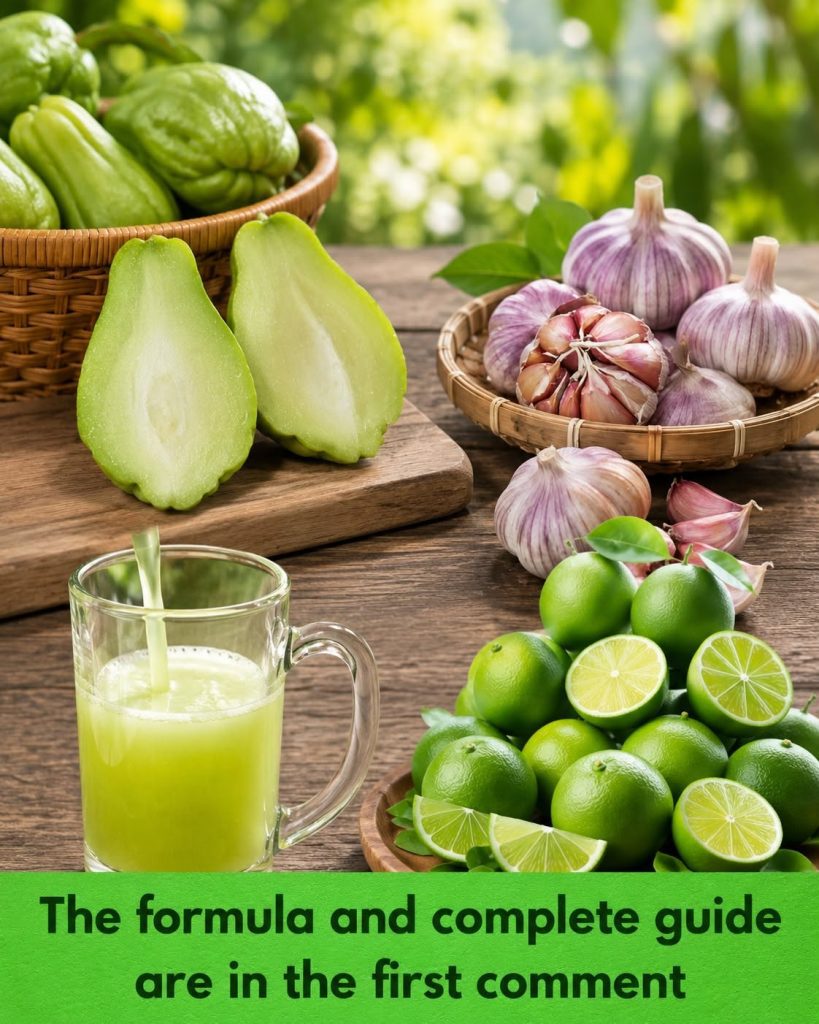
Chayote: A Simple Garden Vegetable with Remarkable Nutritional Value
Chayote (Sechium edule), sometimes called vegetable pear, mirliton, or tayota, is a member of the gourd family that has been enjoyed for generations in many parts of the world. Known for its mild flavor, high water content, and impressive nutrient profile, chayote is often included in healthy eating plans and traditional wellness practices.
Rich in vitamins, minerals, fiber, and natural plant compounds, chayote has long been used in homemade drinks, teas, and simple preparations that support overall well-being. While it is not a cure for any disease, it can be a nutritious addition to a balanced lifestyle.
In this article, you’ll discover several traditional ways people use chayote, along with its nutritional benefits and practical recipes you can try at home.
Why Chayote Is Valued in Traditional Wellness
Chayote is naturally:
✅ Low in calories
✅ High in water content
✅ A source of vitamin C and vitamin B6
✅ Rich in potassium and magnesium
✅ A good source of dietary fiber
✅ Packed with natural antioxidants
These nutrients help support hydration, digestive wellness, and overall nutritional balance.
Recipe 1: Refreshing Chayote Juice for Everyday Wellness 🥤
This simple juice is popular among people looking for a light, refreshing drink to include in a healthy routine.
Ingredients
- 2 medium chayotes, washed and peeled
- 1 cup water (250 ml)
- Juice of 1 lemon
- 1 teaspoon honey (optional)
- 3 celery leaves (optional)
Directions
- Peel and chop the chayotes into small pieces.
- Place them in a blender.
- Add water and lemon juice.
- Blend until smooth.
- Add honey if desired.
- Serve immediately.
Suggested Use
Many people enjoy one glass in the morning as part of a balanced breakfast routine.
Recipe 2: Chayote Leaf Tea for Daily Balance 🍵
In many traditional communities, chayote leaves are brewed into a mild herbal tea.
Ingredients
- 5 fresh chayote leaves
- 1 liter water
- Honey or stevia (optional)
Directions
- Wash the leaves thoroughly.
- Bring water to a boil.
- Add the leaves.
- Simmer gently for 10 minutes.
- Remove from heat and allow to cool slightly.
- Strain and serve.
Suggested Use
Enjoy one cup in the morning and another in the evening as part of a relaxing wellness routine.
Recipe 3: Traditional Chayote Compress for Tired Muscles 🌿
This traditional external preparation has been used in some regions as a soothing home remedy.
Ingredients
- 1 raw chayote
- 2 tablespoons olive oil
- Clean cotton cloth
Directions
- Grate the chayote into a soft paste.
- Mix with olive oil.
- Place the mixture onto a clean cloth.
- Apply gently to the desired area.
Suggested Use
Leave in place for 20–30 minutes before removing.
Potential Benefits of Chayote as Part of a Healthy Lifestyle
Because of its nutritional profile, chayote may help support:
1. Healthy Digestion
Its fiber content can contribute to digestive comfort and regularity.
2. Hydration
With more than 90% water content, chayote helps contribute to daily fluid intake.
3. Heart-Friendly Nutrition
Potassium and antioxidants are important nutrients commonly associated with cardiovascular wellness.
4. Weight Management
Low in calories and naturally filling, chayote can fit into many balanced eating plans.
5. Immune Support
Vitamin C contributes to normal immune system function.
6. Healthy Skin
Antioxidants help protect cells from oxidative stress and support healthy-looking skin.
7. Everyday Energy
B vitamins and minerals play important roles in normal energy metabolism.
8. Blood Sugar-Friendly Eating
Its fiber content and low calorie density make it a popular choice in balanced diets.
9. Urinary Tract and Kidney Wellness
Traditionally, chayote has been appreciated for its natural water-rich properties.
10. Overall Nutritional Support
The combination of vitamins, minerals, and antioxidants makes chayote a valuable addition to everyday meals.
Nutritional Profile of Chayote
| Nutrient | Highlights |
|---|---|
| Water | Approximately 90% |
| Vitamin C | Supports immune health |
| Vitamin B6 | Supports energy metabolism |
| Folate | Important for cellular health |
| Potassium | Helps maintain normal body functions |
| Magnesium | Supports muscles and nerves |
| Calcium | Important for bones |
| Iron | Supports healthy blood function |
| Fiber | Promotes digestive wellness |
| Antioxidants | Includes flavonoids and carotenoids |
Helpful Tips for Enjoying Chayote
- Add sliced chayote to soups and stews.
- Blend it into smoothies.
- Enjoy it steamed as a side dish.
- Use it in fresh salads.
- Brew leaves into herbal tea when traditionally used in your region.
Important Notes
⚠️ Chayote is a nutritious food, not a medical treatment.
⚠️ Excessive consumption may cause digestive discomfort in some individuals.
⚠️ People taking medications for blood pressure or blood sugar should consult a healthcare professional before making significant dietary changes.
⚠️ Avoid use if you have a known allergy to plants in the gourd family.
Final Thoughts
Chayote is far more than a simple vegetable. Its rich nutritional profile, versatility in the kitchen, and long history in traditional wellness practices make it a valuable addition to a healthy lifestyle.
Whether enjoyed as a refreshing juice, a soothing herbal tea, or incorporated into everyday meals, chayote offers a simple and affordable way to support overall well-being.
Small daily habits often make the biggest difference—and adding more nutrient-rich foods like chayote to your routine may be one of the easiest places to start. 🌿✨
👇 Have you ever tried chayote juice or tea? Share your experience in the comments!