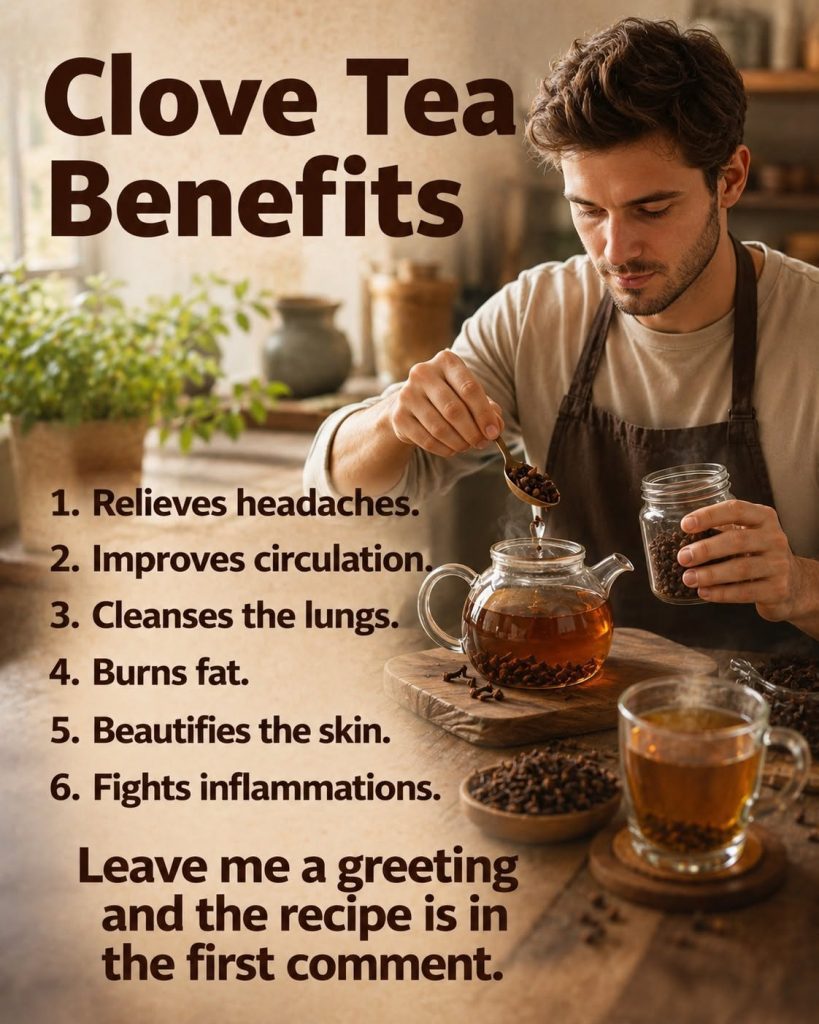
While clove tea is not a miracle remedy and should not replace medical care, it may be a gentle addition to a balanced lifestyle.
🌱 What Makes Clove Tea Special?
Cloves are small, but they contain a variety of natural compounds such as:
- Eugenol
- Polyphenols
- Flavonoids
- Natural antioxidants
- Trace minerals
These components are traditionally associated with digestive comfort, oral care support, and general wellness.
Possible Benefits of Clove Tea
🦷 May Support Oral Comfort
Cloves have long been used in traditional practices related to oral care. Eugenol is widely known for its soothing properties and is often associated with dental applications.
Traditionally, warm clove infusions have been used as part of mouth-rinsing routines for temporary comfort.
🍽️ May Help Support Digestion
Clove tea is commonly consumed after meals because it may help promote digestive comfort and reduce occasional bloating.
Many people enjoy it after heavier meals as part of a calming routine.
🛡️ Rich in Antioxidants
Cloves naturally contain antioxidants that help protect plant compounds from oxidation. Antioxidant-rich foods and beverages can support overall wellness when included in a varied diet.
🌿 Traditionally Used During Seasonal Discomfort
Warm herbal drinks often become popular during colder seasons. Clove tea is sometimes combined with ginger, lemon, or cinnamon for a comforting experience.
⚖️ May Support Healthy Metabolic Balance
Some emerging studies have explored the relationship between clove compounds and metabolic health, although more research is still needed.
Clove tea should be viewed as supportive only — never as a replacement for professional treatment.
🍵 Traditional Clove Tea Recipe (Step by Step)
Ingredients
- 5 whole cloves (preferably organic)
- 250 ml filtered water
- 1 slice lemon (optional)
- 1 teaspoon raw honey (optional)
Preparation
Step 1: Light Toasting
Place cloves in a dry pan over low heat.
Toast gently for about 1 minute, stirring continuously until their aroma becomes stronger.
This traditional step is believed to help release essential oils.
Step 2: Infusion
- Bring water to a boil.
- Remove from heat.
- Add toasted cloves.
- Cover and steep for 7–10 minutes.
Step 3: Finish
Strain carefully.
Add lemon or honey if desired.
Serve warm.
🌟 Popular Variations
Immune-Support Inspired Blend
Add:
- 2 black peppercorns
- 1 cm fresh ginger slice
This creates a warmer and more aromatic infusion.
Relaxing Evening Blend
Add:
- 1 cinnamon stick
- 1 teaspoon chamomile flowers
Perfect for a cozy nighttime routine.
💡 Traditional Ways People Use Clove Tea
✔ After meals for digestive comfort
✔ As part of seasonal wellness rituals
✔ Warm mouth rinses for temporary oral freshness
✔ Combined with ginger during colder months
These uses come from traditional practices and personal routines and are not medical treatments.
⚠️ Important Precautions
Clove tea is generally enjoyed in moderation, but a few points are worth remembering:
- Avoid excessive intake (many people limit it to 2–3 cups daily)
- Pregnant individuals should consult a healthcare professional before using concentrated herbal preparations
- People taking blood-thinning medications should seek medical advice
- Those with specific health conditions should speak with a professional before adding herbal remedies regularly
🌍 Interesting Facts About Cloves
✨ Cloves originated from Indonesia and became one of history’s most valued spices.
✨ In ancient cultures, cloves were prized for their aroma and freshness.
✨ Clove oil later became well known in dental care traditions.
🫙 How to Store Cloves Properly
To preserve flavor and aroma:
- Keep whole cloves in an airtight container
- Store away from moisture and direct light
- Best used within up to 1 year
Final Thoughts 🌿
Clove tea combines tradition, warmth, and a rich aromatic experience in one simple cup. Whether enjoyed after meals, during cool evenings, or as part of a mindful wellness routine, it offers a gentle way to explore herbal traditions.
Remember: natural does not always mean risk-free. Use moderately and enjoy it as part of an overall healthy lifestyle.