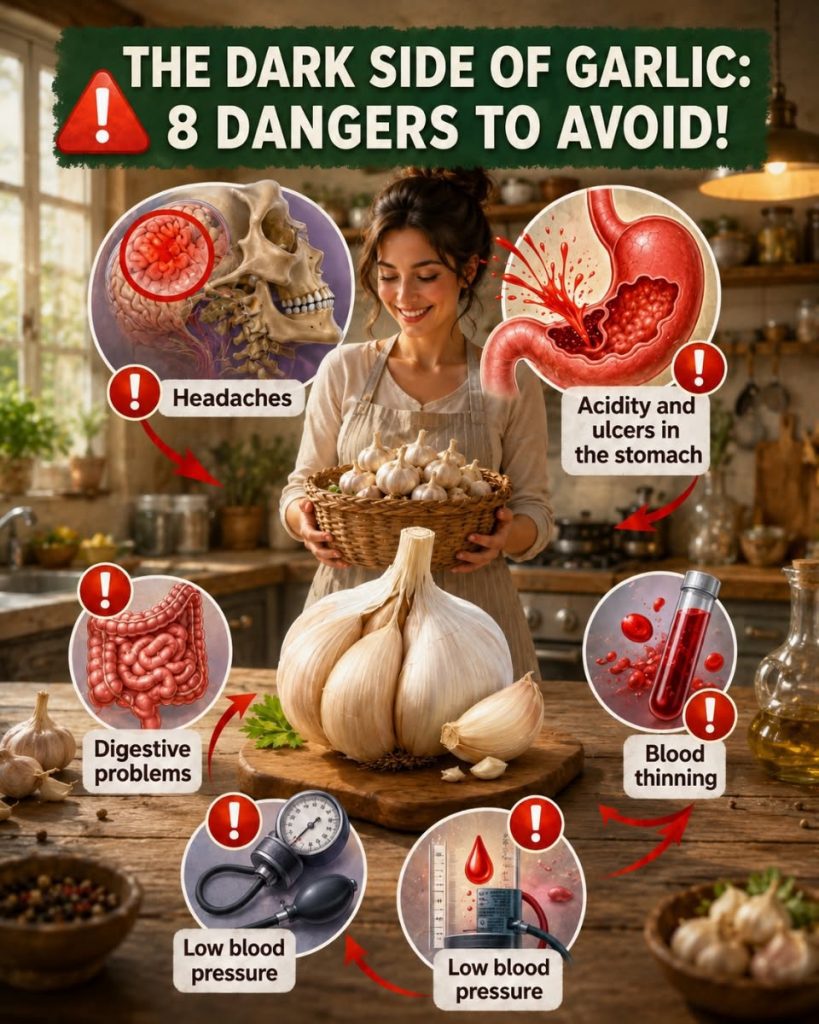
But here’s something many people don’t realize:
Sometimes the problem isn’t garlic itself — it’s how it’s being used.
That burning sensation in the chest, stomach discomfort, bloating, or lingering bad breath after a garlic-heavy meal can quickly turn enjoyment into frustration. In many cases, a few simple habits may reduce garlic’s potential benefits while increasing unpleasant side effects.
The good news? Small adjustments can help you enjoy garlic more comfortably while preserving its natural compounds.
In this article, you’ll discover the 8 most common garlic mistakes, smarter ways to use it, and one surprisingly simple preparation tip that may help maximize its beneficial compounds.
Why Garlic Deserves a Place in Your Kitchen
Garlic adds rich flavor and aroma to countless dishes, but its popularity goes beyond taste alone.
Garlic naturally contains sulfur compounds such as allicin, which are widely studied for their antioxidant and wellness-supporting properties. Research discussed by organizations like the National Institutes of Health and health-focused nutrition sources suggests that garlic may help support general health as part of a balanced lifestyle.
Garlic is traditionally associated with:
- Supporting immune function
- Contributing to heart wellness
- Providing antioxidant compounds
- Enhancing flavor naturally without excess salt
However, improper use may lead to digestive discomfort, strong odor, or reduced potency — causing many people to avoid it altogether.
Understanding a few common mistakes can help you use garlic more effectively and comfortably.
The 8 Most Common Garlic Mistakes
1. Eating Raw Garlic on an Empty Stomach
Some people consume raw garlic first thing in the morning believing it increases its effectiveness.
For sensitive individuals, however, this may irritate the stomach lining and lead to:
- Nausea
- Acid reflux
- Burning sensations
- Stomach discomfort
This is especially common among people with reflux or sensitive digestion.
A gentler option:
Try consuming garlic together with meals instead of on an empty stomach.
2. Using Too Much Garlic
More garlic does not necessarily mean more benefits.
Excessive intake may contribute to:
- Gas
- Bloating
- Heartburn
- Digestive discomfort
- Loose stools
Moderation is usually the smarter approach. Many sources commonly suggest that 1–2 cloves per day is enough for most people.
3. Cooking Garlic Over Very High Heat
Garlic burns quickly.
Adding it to extremely hot oil at the beginning of cooking may cause it to become bitter while reducing heat-sensitive compounds such as allicin.
Better approach:
Add garlic closer to the end of cooking whenever possible.
This helps preserve flavor and some of its naturally occurring compounds.
4. Swallowing Whole Garlic Cloves
Many people swallow garlic cloves whole hoping to avoid the strong taste or odor.
However, whole cloves may not properly activate allicin.
The beneficial compounds form when garlic is crushed, chopped, or minced.
Smarter method:
Crush or chop garlic before consuming or cooking it.
5. Ignoring Possible Reactions
Although uncommon, some individuals may react poorly to garlic.
Possible signs include:
- Itching
- Skin irritation
- Headaches
- Digestive upset
- Unusual discomfort after eating garlic
If symptoms repeatedly appear after consuming garlic, it may be wise to reduce intake and seek professional guidance.
6. Consuming Large Amounts Alongside Certain Medications
Garlic may influence blood clotting mechanisms.
Because of this, people taking anticoagulant or blood-thinning medications should use caution with large amounts of garlic.
Important:
If you regularly use medications, especially blood thinners, speak with a healthcare professional before making major dietary changes.
7. Using Old or Sprouted Garlic
Older garlic bulbs or heavily sprouted cloves often develop a more bitter flavor and may feel harsher on digestion.
Best choice:
Use fresh, firm garlic bulbs without soft spots or large sprouts.
Fresh garlic usually provides better flavor and cooking quality.
8. Expecting Garlic to Do Everything Alone
Garlic can support wellness — but it is not a miracle solution.
No single ingredient can replace:
- Balanced nutrition
- Regular movement
- Sleep
- Hydration
- Healthy daily habits
Garlic works best as part of an overall healthy lifestyle.
Quick Summary: Smarter Garlic Habits
| Common Mistake | Better Habit |
|---|---|
| Eating garlic on an empty stomach | Consume with meals |
| Using excessive amounts | Stick to moderation |
| Cooking on very high heat | Add later during cooking |
| Swallowing cloves whole | Crush or chop first |
| Ignoring reactions | Pay attention to your body |
| Combining large amounts with blood thinners | Use caution and moderation |
| Using old garlic | Choose fresh cloves |
| Expecting miracle effects | Maintain balanced habits |
The Surprisingly Simple Garlic Tip
Here’s something many people don’t know:
👉 After crushing or chopping garlic, let it rest for about 10–15 minutes before cooking.
Why?
This resting period allows an enzyme called alliinase to help convert alliin into allicin more effectively.
Cooking garlic immediately or exposing it to intense heat too soon may interrupt part of this process.
The result:
- Better flavor
- More aroma
- Improved preservation of garlic’s natural compounds
It’s a simple habit that may help you get more from your garlic.
Important Precautions
Garlic is generally well tolerated in moderate amounts, but a few precautions are important:
- Use cautiously if you have reflux or a sensitive stomach
- Avoid excessive intake before surgeries
- Pregnant or breastfeeding individuals should seek professional guidance when making major dietary changes
- Start with small amounts and observe how your body responds
When to Seek Professional Advice
Consider speaking with a healthcare professional if you experience:
- Persistent digestive discomfort
- Unusual symptoms after consuming garlic
- Concerns about medication interactions
- Ongoing reflux or stomach irritation
Professional guidance is especially important if you have existing health conditions or use prescription medications.
Final Thoughts
Garlic can be a flavorful and valuable part of a healthy routine when used wisely.
By avoiding these 8 common mistakes, you may enjoy garlic more comfortably while preserving many of its naturally occurring compounds.
Sometimes, the smallest kitchen habits make the biggest difference.
Frequently Asked Questions
How much garlic is generally considered reasonable per day?
Many sources commonly mention about 1–2 fresh cloves daily for most adults, though tolerance varies from person to person.
Does cooking destroy all garlic benefits?
Not necessarily. Adding garlic later in the cooking process may help preserve more of its natural compounds compared to prolonged high heat cooking.
Can garlic interact with medications?
Yes. Garlic may interact with certain medications, especially blood thinners. Professional guidance is recommended.
Disclaimer:
This article is for informational and educational purposes only and does not replace professional medical advice. Always consult a qualified healthcare professional before making significant dietary changes, especially if you have medical conditions or take medications.