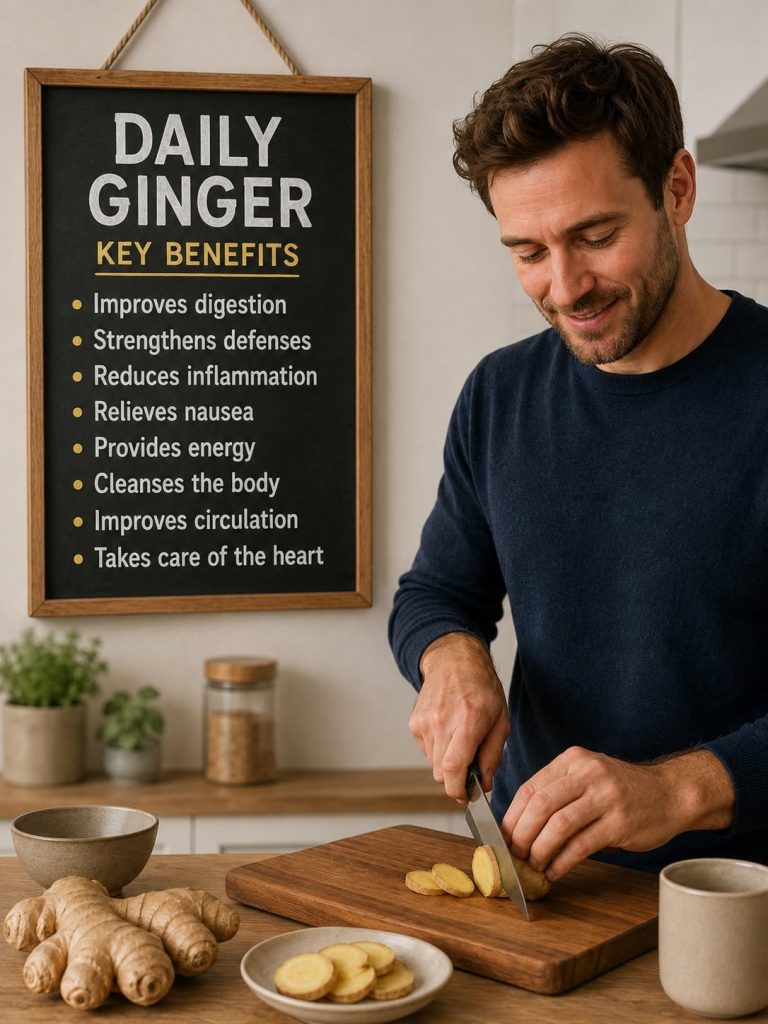
Ginger has been valued for centuries in traditional wellness practices. Today, modern research continues to explore its naturally occurring compounds, especially gingerol, known for its antioxidant properties and its role in supporting overall wellness.
But here’s something many people overlook:
👉 It’s not only what you take — it’s also when you take it.
The timing of ginger consumption may influence how it fits into your daily routine and how you experience its supportive effects.
In this guide, discover 4 key moments when ginger may be especially helpful.
🌱 Why Does Timing Matter?
Ginger can play different roles depending on when you enjoy it during the day. It is commonly used to support:
✅ Digestive comfort
✅ Daily energy levels
✅ General metabolism
✅ Occasional nausea relief
✅ Seasonal wellness routines
Its traditional use is often linked to digestion, circulation support, and overall balance.
⏰ 1. In the Morning on an Empty Stomach: To Start the Day Gently
Many people enjoy ginger first thing in the morning, often as a warm infusion with lemon.
This habit may help:
🌿 Wake up the digestive system
🌿 Support natural metabolism
🌿 Provide a refreshing start to the day
🌿 Add antioxidant-rich ingredients to your routine
A simple morning ginger drink can become a calming ritual before breakfast.
Easy idea:
- 1 cup warm water
- A few slices of fresh ginger
- Juice of half a lemon
- Optional: a small amount of honey
👉 Ideal for those looking for a fresh and energizing morning habit.
🍽️ 2. Before Meals: For Digestive Support
Taking ginger shortly before meals is a common traditional practice.
It may help support:
✔️ Comfortable digestion
✔️ Reduced feelings of heaviness after eating
✔️ A balanced digestive routine
✔️ Better meal enjoyment
Many people prefer ginger tea 15–20 minutes before meals.
Simple options include:
- Fresh ginger infusion
- Ginger water
- Small slices of fresh ginger in warm water
This gentle habit may be especially appreciated after richer meals.
🤢 3. During Occasional Nausea or Digestive Discomfort
Ginger is widely known for its traditional use during moments of stomach uneasiness.
People often use it for:
• Motion discomfort during travel
• Morning queasiness
• Temporary digestive upset
• General stomach discomfort
Small amounts are usually preferred.
Some studies have explored quantities around 1–1.5 g, though individual needs may vary.
⚠️ If symptoms persist or special circumstances apply, professional advice is always recommended.
🌙 4. During Tired Periods or Seasonal Changes (But Not Right Before Bed)
When energy feels low or during colder seasons, ginger is often included in warming drinks.
It may support:
🍵 Everyday wellness routines
🍵 Comfort during seasonal changes
🍵 General vitality
🍵 Natural antioxidant intake
However:
⚠️ Ginger can feel mildly stimulating for some individuals, so it may be better earlier in the evening rather than immediately before sleep.
A warm ginger drink with lemon and honey is a popular choice.
✨ General Wellness Benefits Often Associated with Ginger
Regardless of timing, ginger is appreciated for being:
🌿 Rich in antioxidant compounds
🌿 Traditionally used to support digestion
🌿 Associated with circulation support
🌿 Included in many immune-friendly routines
🌿 Part of active lifestyle habits
Research also continues to explore its potential role in supporting exercise recovery and metabolic wellness.
Remember: ginger is a supportive ingredient, not a miracle solution.
⚠️ Important Notes Before Adding More Ginger
Even natural ingredients deserve balance.
Ginger may not suit everyone.
Keep in mind:
❗ Large amounts may cause stomach discomfort in some people
❗ Excess intake is not always better
❗ Ginger may interact with certain medications
❗ People with medical concerns should seek personalized advice
Moderation is usually the best approach.
🚫 Common Myths About Ginger
❌ “You can take it anytime and get the same effect.”
Timing may influence how it fits into your routine.
❌ “More ginger means better results.”
Balance matters.
❌ “It works like a miracle cure.”
No — ginger is best viewed as a supportive wellness ingredient.
💡 Tips to Get the Most from Ginger
✔️ Choose fresh ginger whenever possible
✔️ Pair it with lemon or honey for flavor and comfort
✔️ Stay consistent rather than using large amounts occasionally
✔️ Adjust timing based on your personal goals
🌿 Final Thoughts: The Secret May Be in the Timing
Ginger is more than a kitchen ingredient. When used thoughtfully, it can become part of a gentle daily wellness routine.
Whether your goal is to support digestion, feel more refreshed, or simply enjoy a comforting natural drink, these 4 strategic moments may help you build a more intentional habit.
Small changes in timing can sometimes make everyday routines feel very different.