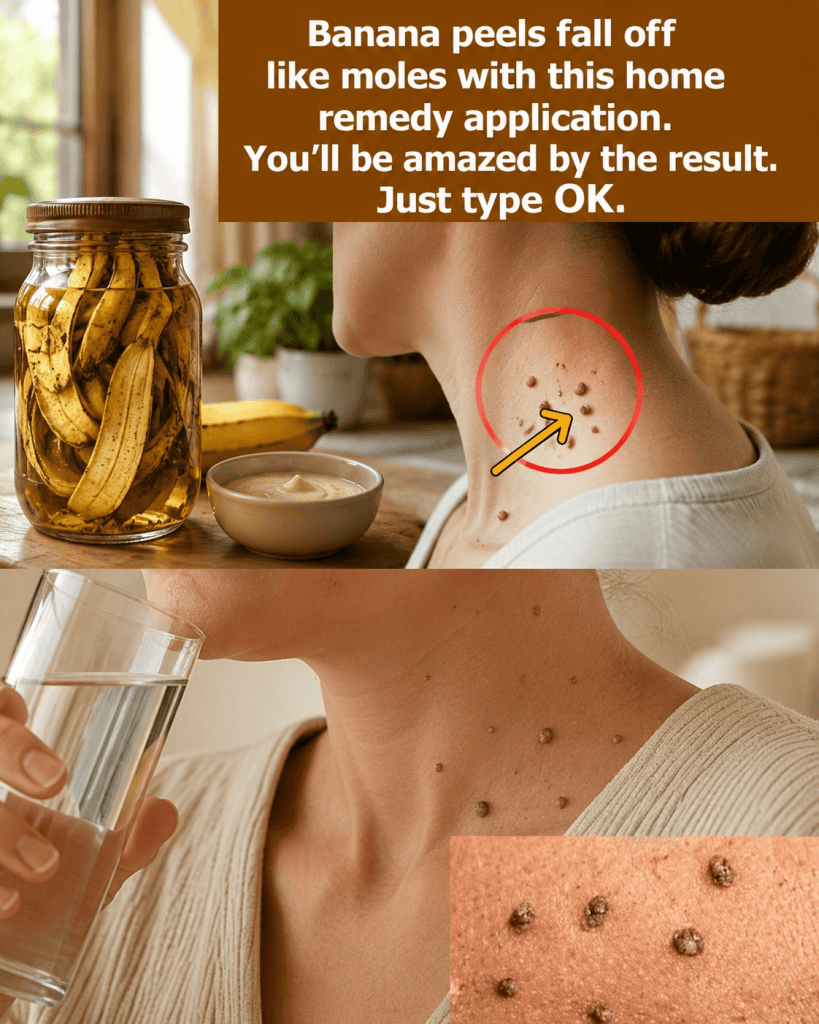
Discover Gentle, Traditional Approaches to Everyday Skin Care 🍌🌿
Warts are small skin growths that many people experience at some point in life. Although they are usually harmless, they can sometimes be bothersome because of their appearance or location.
For generations, traditional home care has included natural ingredients such as banana peel, garlic, apple cider vinegar, and tea tree oil. While scientific evidence supporting these remedies is limited, many people continue to use them as part of their personal skincare routines.
In this guide, you’ll learn how banana peel has traditionally been used for skin care, explore other popular home remedies, understand what causes warts, how they are linked to the human papillomavirus (HPV), and when professional medical advice is recommended.
What Are Warts?
Warts are small, rough skin growths that develop on the outer layer of the skin. They vary in size, texture, and appearance and commonly occur on:
- Hands
- Fingers
- Feet
- Neck
- Face
They develop when certain strains of the human papillomavirus (HPV) enter the skin through tiny cuts or breaks, causing skin cells to grow more quickly than usual.
Most warts are harmless and often resolve over time, although they may be cosmetically bothersome or uncomfortable depending on their location.
Common Types of Warts
Common Warts
Usually found on the hands and fingers.
Typical features:
- Rough texture
- Raised surface
- Rounded appearance
Plantar Warts
Develop on the soles of the feet.
They may feel uncomfortable because body weight presses them inward while walking.
Flat Warts
These are:
- Smaller
- Smoother
- Often found on the face or arms
Filiform Warts
Long, narrow warts that most commonly appear around:
- The face
- Eyelids
- Neck
Why Banana Peel Has Been Used in Traditional Skin Care
Banana peel has long been included in folk skincare practices because it naturally contains several beneficial plant compounds.
Banana peel contains:
- Natural antioxidants
- Potassium
- B vitamins
- Vitamin C
- Phenolic compounds
These nutrients may help support skin hydration and contribute to maintaining healthy-looking skin.
It is important to note that there is no strong clinical evidence showing banana peel removes warts, but many people enjoy using it as part of traditional home care.
Traditional Banana Peel Method
You’ll Need
- A piece of ripe banana peel
- A small bandage or medical tape
Preparation
- Wash the peel thoroughly.
- Cut a piece large enough to cover the wart.
How to Use
- Place the inner side of the peel against the wart.
- Secure it with a bandage.
- Leave it in place for several hours or overnight.
- Remove it the next morning.
- Wash the area with lukewarm water.
Some people repeat this routine regularly as part of their personal skincare practice.
Banana Peel and Garlic Remedy
Garlic has been widely used in traditional wellness practices because it contains naturally occurring sulfur compounds.
Ingredients
- One piece of banana peel
- One garlic clove
- Small bandage
Directions
- Crush the garlic into a paste.
- Spread a small amount onto the inside of the banana peel.
- Place it over the wart.
- Secure with a bandage.
- Leave it on for 20–30 minutes.
- Remove and wash the skin thoroughly.
If irritation occurs, discontinue use immediately.
Banana Peel and Apple Cider Vinegar
Apple cider vinegar is another popular traditional ingredient used in home skincare routines.
Ingredients
- Banana peel
- 1 teaspoon apple cider vinegar
- Cotton pad
Directions
- Moisten the cotton pad with apple cider vinegar.
- Place it inside the banana peel.
- Apply to the affected area.
- Secure with a bandage.
- Leave for 15–20 minutes.
- Rinse with lukewarm water.
Avoid prolonged contact, especially if you have sensitive skin.
Banana Peel with Tea Tree Oil
Tea tree oil is commonly included in traditional skincare because of its cleansing properties.
Ingredients
- Banana peel
- 2 drops diluted tea tree oil
Instructions
- Apply the diluted tea tree oil to the inside of the peel.
- Place it over the wart.
- Leave for approximately 20 minutes.
- Wash the area with lukewarm water.
Always dilute essential oils according to product directions before applying them to the skin.
Skin Care Tips When You Have Warts
Good daily skin care can help reduce irritation and lower the chance of spreading warts.
Helpful habits include:
- Keep the skin clean and dry.
- Avoid picking or scratching warts.
- Do not share towels, razors, or nail tools.
- Wear sandals in public showers and swimming pool areas.
- Support your overall health with a balanced diet and adequate rest.
Why Do Warts Develop?
Warts develop after certain types of HPV enter the skin through tiny cuts or abrasions.
Once inside, the virus can stimulate rapid growth of skin cells, creating the raised bump recognized as a wart.
Not everyone exposed to HPV develops warts, as immune responses vary from person to person.
Factors That May Increase the Risk
Several factors may make wart development more likely:
- A weakened immune system
- Direct skin-to-skin contact with an infected person
- Warm, damp environments such as swimming pools or locker rooms
- Small cuts or damaged skin
- Sharing personal hygiene items
Are Warts Contagious?
Yes.
HPV can spread through:
- Direct skin contact
- Shared personal items
- Moist public surfaces
Avoid scratching or picking at warts, as this may spread the virus to other areas of your body.
When Should You See a Healthcare Professional?
Consult a healthcare provider if a wart:
- Changes rapidly in size, shape, or color
- Becomes painful or bleeds
- Appears on the face, genitals, or another sensitive area
- Persists despite appropriate care
- Causes uncertainty about the diagnosis
A healthcare professional can confirm whether the growth is actually a wart and recommend appropriate treatment if necessary.
Important Safety Tips
Before trying any home remedy:
- Perform a patch test on a small area of skin.
- Do not apply remedies to open wounds.
- Avoid excessive or prolonged use of strong ingredients.
- Stop immediately if redness, burning, or irritation develops.
- Follow the instructions on essential oil products, including proper dilution.
Natural ingredients can affect people differently.
Final Thoughts
Warts are a common skin condition experienced by people of all ages.
Traditional skincare practices have long included natural ingredients such as banana peel, garlic, apple cider vinegar, and tea tree oil. While these remedies remain popular, scientific evidence supporting their effectiveness for wart removal is limited.
Understanding the role of HPV, practicing good skin hygiene, and seeking professional advice when needed are the most reliable ways to care for your skin.
Healthy skin is best supported through consistent care, sensible hygiene, and evidence-based medical guidance when appropriate.
Frequently Asked Questions
Does banana peel remove warts?
There is currently limited scientific evidence that banana peel removes warts. Some people use it as a traditional home remedy, but results vary.
Can I use garlic directly on my skin?
Garlic may irritate or even burn sensitive skin if applied directly. If you choose to use it, limit contact time and discontinue use if irritation develops.
Are all warts caused by HPV?
Yes. Warts are caused by certain strains of the human papillomavirus (HPV).
Can warts disappear on their own?
Many common warts resolve naturally over time as the immune system responds, although the process can take months or longer.
Important Disclaimer
This article is provided for educational and informational purposes only. The natural remedies described are based on traditional skincare practices and should not be considered proven medical treatments for warts. If you have persistent, painful, rapidly changing, or unusual skin growths, seek evaluation from a qualified healthcare professional for an accurate diagnosis and appropriate care.
