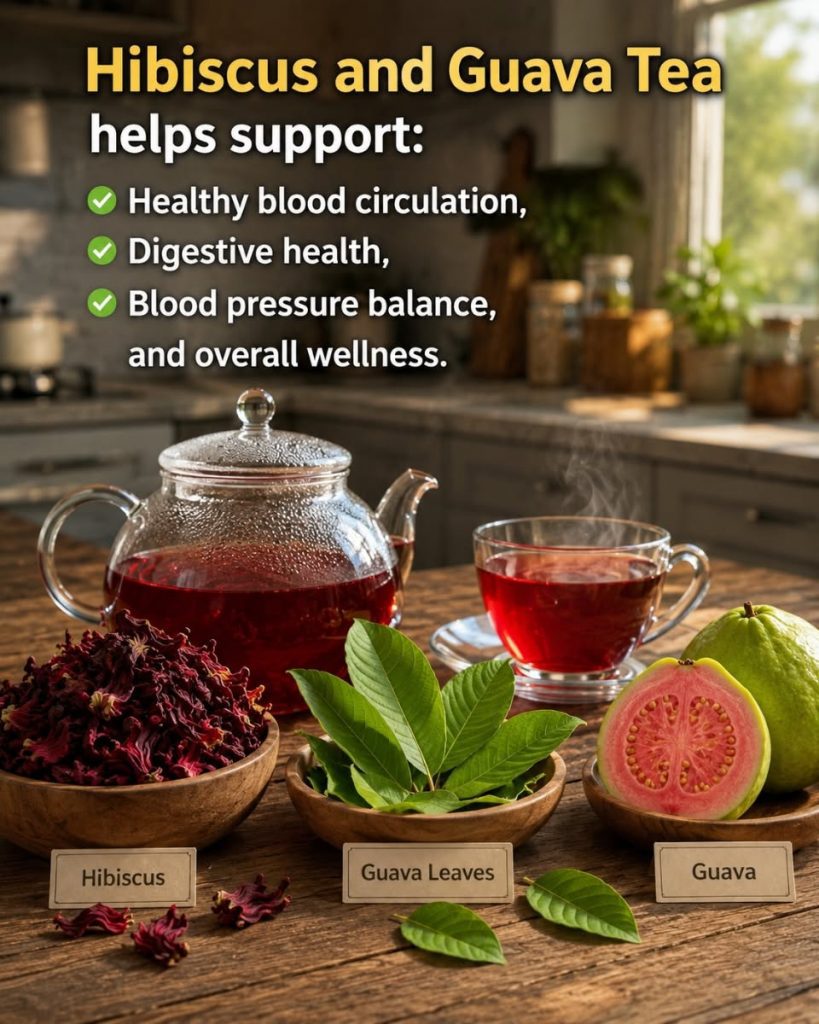
Why This Combination Is So Popular
🌿 Guava (Fruit & Leaves)
Guava is naturally rich in vitamin C, fiber, and plant compounds that support overall wellness. In light tea preparations, guava adds a soft tropical flavor and a naturally refreshing sensation.
Many people enjoy guava drinks as part of routines focused on hydration, digestive comfort, and balanced nutrition.
🌺 Hibiscus Flowers
Hibiscus tea is appreciated worldwide for its tart, cranberry-like flavor and beautiful ruby-red color. It contains natural polyphenols and antioxidants that make it a favorite in wellness-focused lifestyles.
Served hot or cold, hibiscus tea can be both refreshing and comforting.
🍃 Bay Leaves (Optional)
Bay leaves add a subtle herbal depth that enhances the aroma and gives the tea a more traditional, earthy character.
✨ Cloves (Optional)
Cloves bring a warm, spiced flavor often associated with comforting homemade tea rituals. Their rich aroma pairs beautifully with hibiscus and guava.
A Gentle Wellness Reminder
This drink is not intended to cure, treat, or prevent disease. However, it may be a pleasant addition to a colorful, plant-rich lifestyle that supports hydration and mindful daily habits.
Nutritional Highlights of This Tea
🍋 Naturally Rich in Antioxidants
The combination of guava and hibiscus provides vitamin C and plant-based antioxidants that contribute to a bright and nourishing beverage.
🌱 Fiber Support
Guava naturally contains dietary fiber, which may help support feelings of fullness and comfortable digestion when included in a balanced diet.
💧 Refreshing Hydration
This tea can be especially enjoyable in the morning or during warm weather as part of a hydration-friendly routine.
🌸 Aromatic Herbal Experience
Bay leaves and cloves create a cozy flavor profile that makes the tea feel comforting and easy to enjoy regularly.
Tropical Guava & Hibiscus Tea Recipe (2–3 Servings)
Ingredients
- 3 ripe guavas, washed and chopped
- A generous handful of hibiscus flowers (fresh or dried)
- 4 bay leaves (optional)
- 3–5 whole cloves (optional)
- 500 ml filtered water
How to Prepare
- Add the guava, hibiscus flowers, bay leaves, and cloves to a non-reactive pot such as stainless steel or glass.
- Pour in the filtered water.
- Bring to a gentle boil.
- Reduce heat and simmer for 10–15 minutes with the lid partially covered.
- Strain the mixture using a fine mesh strainer.
- Gently press the fruit to extract more flavor and natural juice.
- Serve warm in the morning or chill and enjoy over ice throughout the day.
Flavor Variations
🍋 For a Fresh Citrus Twist
Add a few drops of lemon juice before serving.
🌺 For a Milder Taste
Reduce the hibiscus amount by half.
🔥 For a Warmer Herbal Flavor
Add a thin slice of fresh ginger while simmering.
Simple Daily Routine Ideas
Morning Option
Enjoy one cup on an empty stomach or around 30 minutes before breakfast.
Trial Period
Try it consistently for 7–15 days while observing how you feel overall.
Maintenance Routine
Many people enjoy it 3–5 times per week depending on personal preference.
Hydration Tip
Continue drinking plenty of water throughout the day for balanced hydration.
Practical Storage Tip
If preparing a larger batch, store the tea in a sealed glass container in the refrigerator and consume within 24 hours for the freshest flavor.
Gentle Benefits People Often Enjoy
- A refreshing and light feeling in the morning
- A colorful source of natural antioxidants
- Support for a comfortable digestive routine
- Hydration that may contribute to feeling energized
- A pleasant taste that makes healthy habits easier to maintain
Important Precautions
- People with low blood pressure or those taking blood pressure medication may wish to moderate hibiscus intake.
- If you take blood thinners or diabetes medication, consult a healthcare professional before regular use.
- During pregnancy or breastfeeding, avoid highly concentrated herbal preparations unless advised by a qualified professional.
- Those sensitive to oxalates or prone to kidney stones should enjoy guava in moderation.
- If you have a sensitive stomach, start with small amounts or skip the cloves and bay leaves initially.
Frequently Asked Questions
Can I Make This Tea Without Guava Leaves?
Yes. The guava fruit alone provides a pleasant flavor and works very well.
Can I Sweeten It?
It is best enjoyed without added sugar. If desired, a small amount of honey can be added once the tea cools slightly.
Can It Be Served Cold?
Absolutely. Prepare a double batch and serve it chilled with ice and fresh guava slices.
How Often Can I Drink It?
For many people, enjoying it 3–5 times per week is a comfortable and balanced approach, while paying attention to personal response.
🌺🍵 A warm cup of herbal tea may not be a miracle solution — but it can become a calming daily ritual that supports mindful wellness, hydration, and enjoyment of natural ingredients.