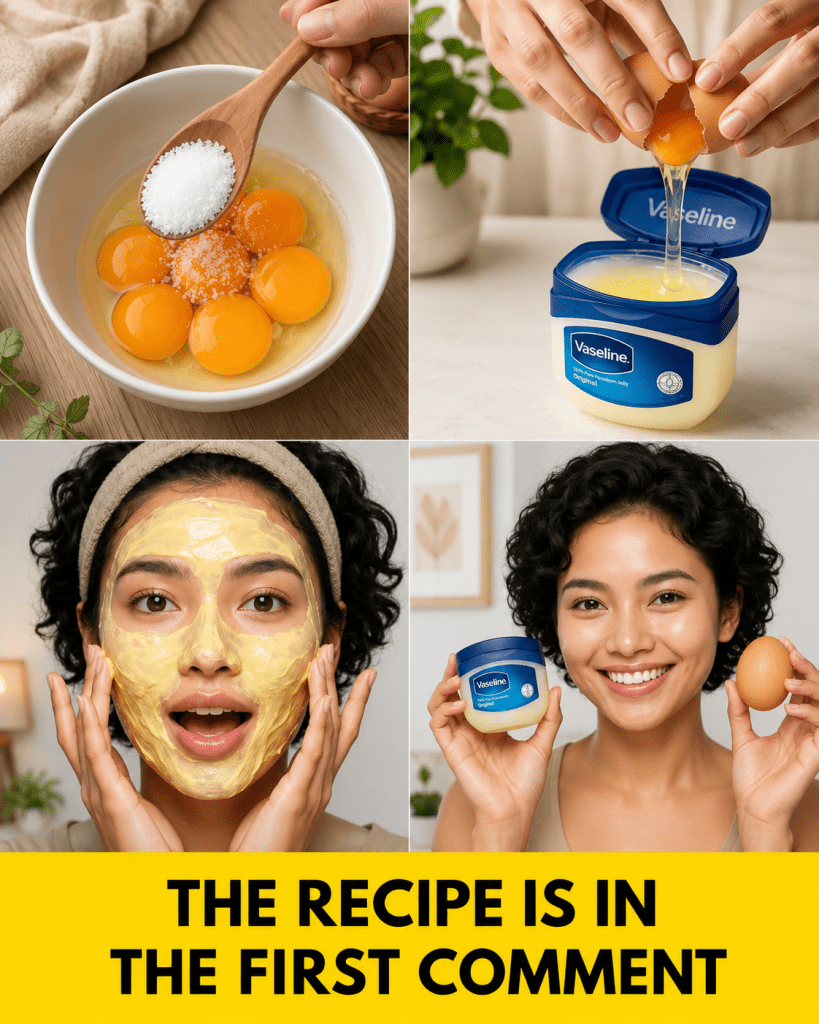
Could the Secret to Healthier-Looking Skin Already Be in Your Kitchen?
Many people enjoy exploring simple home beauty routines that use everyday ingredients. Among the combinations that continue to attract attention is the blend of petroleum jelly and egg, two ingredients often used in traditional DIY skincare recipes.
While this mixture is not a replacement for professional skincare products or dermatological treatments, some people appreciate it for its moisturizing properties and its ability to temporarily leave the skin feeling smoother, softer, and refreshed.
In this article, you’ll discover how petroleum jelly and egg are commonly used in homemade face masks, their potential cosmetic benefits, practical recipes, and important precautions to keep in mind.
Why Petroleum Jelly and Egg Are Popular in DIY Beauty Care
The beauty industry offers countless products designed to hydrate and improve the appearance of the skin. However, simple home remedies continue to remain popular because they are affordable and easy to prepare.
The Moisturizing Benefits of Petroleum Jelly
Petroleum jelly has been used for decades as a skincare staple because it:
- Helps reduce moisture loss from the skin
- Creates a protective barrier on the skin’s surface
- Softens dry and rough areas
- Helps skin feel smoother and more supple
- Supports the skin’s natural moisture retention
The Cosmetic Properties of Eggs
Eggs are frequently included in homemade beauty recipes because they contain proteins and nutrients that may help improve the appearance of the skin.
Egg Whites
- Provide a temporary tightening sensation
- May help skin appear smoother
- Can give the appearance of refined pores for a short period
Egg Yolks
- Contain vitamins such as A, D, and E
- Help nourish and soften the skin
- Contribute to a more hydrated appearance
Why Use Them Together?
Petroleum jelly helps lock in moisture, while eggs are often used to create a temporary firming effect. Together, they may leave the skin looking refreshed, hydrated, and smoother after use.
DIY Vaseline and Egg Face Mask Recipes
1. Nourishing Mask for Dry Skin
This mask is ideal for skin that often feels dry or tight.
Ingredients
- 1 egg yolk
- 1 teaspoon petroleum jelly
- 1 teaspoon honey
Directions
- Combine all ingredients in a small bowl.
- Mix until smooth.
- Apply to clean skin.
- Leave on for 15–20 minutes.
- Rinse with lukewarm water.
Suggested Use
Apply up to three times per week as part of a regular skincare routine.
2. Smoothing Face Mask
Designed for those who enjoy a lightweight mask that leaves the skin feeling refreshed.
Ingredients
- 1 egg white
- 1 teaspoon petroleum jelly
- ½ teaspoon lemon juice (optional)
Directions
- Whisk the egg white until slightly foamy.
- Add petroleum jelly and lemon juice.
- Apply a thin layer to the face and neck.
- Leave on for 15–20 minutes.
- Rinse thoroughly with lukewarm water.
Suggested Use
Use up to twice weekly.
3. Bright-Looking Skin Mask
A simple recipe often used in home beauty routines.
Ingredients
- 1 egg white
- 1 teaspoon petroleum jelly
- ½ teaspoon turmeric powder
Directions
- Mix all ingredients until combined.
- Apply evenly to the face.
- Leave on for approximately 15 minutes.
- Rinse with cool water.
Suggested Use
Use once or twice weekly depending on skin tolerance.
Potential Cosmetic Benefits of Consistent Use
As with most skincare routines, consistency is often more important than expecting immediate results.
Supports Skin Hydration
Petroleum jelly helps reduce moisture loss, allowing skin to feel softer and more comfortable.
Temporary Firming Sensation
Egg whites may create a short-term tightening effect that some people enjoy before special occasions.
Smoother Appearance
Well-hydrated skin often appears more even and supple.
Healthy-Looking Glow
The nourishing components found in egg yolks may contribute to a fresher-looking complexion.
Adjusting the Recipe for Different Skin Types
Every skin type has unique needs.
For Dry Skin
Focus on recipes that include egg yolk and moisturizing ingredients such as honey.
For Oily Skin
Many people prefer egg white-based masks and avoid using excessive amounts of petroleum jelly.
For Mature Skin
Some DIY enthusiasts combine petroleum jelly with egg white and cosmetic collagen products as part of their beauty routine.
For Uneven-Looking Skin
Some home recipes include small amounts of lemon juice, although caution is recommended because lemon may irritate sensitive skin.
Always observe how your skin responds and discontinue use if irritation occurs.
Important Precautions
Although petroleum jelly and eggs are commonly used in DIY beauty treatments, it is important to take a few precautions:
- Do not use if you are allergic to eggs.
- Perform a patch test before first use.
- Avoid applying to irritated, damaged, or broken skin.
- People with very oily skin may find petroleum jelly too heavy.
- Use fresh eggs and clean utensils when preparing homemade masks.
- Discontinue use if redness, itching, or discomfort develops.
Frequently Asked Questions
Does this mask work like Botox?
No. Botox is a medical cosmetic procedure that works very differently. Egg white masks may create a temporary tightening sensation, but they do not provide the same effects as cosmetic injections.
Can petroleum jelly reduce wrinkles?
Petroleum jelly does not remove wrinkles, but by helping skin retain moisture, it may temporarily make fine lines appear less noticeable.
How often can I use the mask?
Most people choose to use these masks one to three times per week, depending on their skin type and comfort level.
Is it suitable for sensitive skin?
Sensitive skin may react differently. A patch test is strongly recommended before applying any homemade skincare mixture to the face.
Final Thoughts
The combination of petroleum jelly and egg remains one of the most talked-about DIY beauty recipes because it is simple, inexpensive, and easy to prepare at home. While it should not be viewed as a substitute for professional skincare treatments, it may serve as a gentle addition to a well-balanced beauty routine for those who enjoy natural home care practices.
Disclaimer
This article is intended for informational and educational purposes only. It does not replace professional medical advice, diagnosis, or treatment. If you have sensitive skin, allergies, or any dermatological condition, consult a qualified healthcare or skincare professional before trying homemade beauty treatments. Results may vary from person to person.