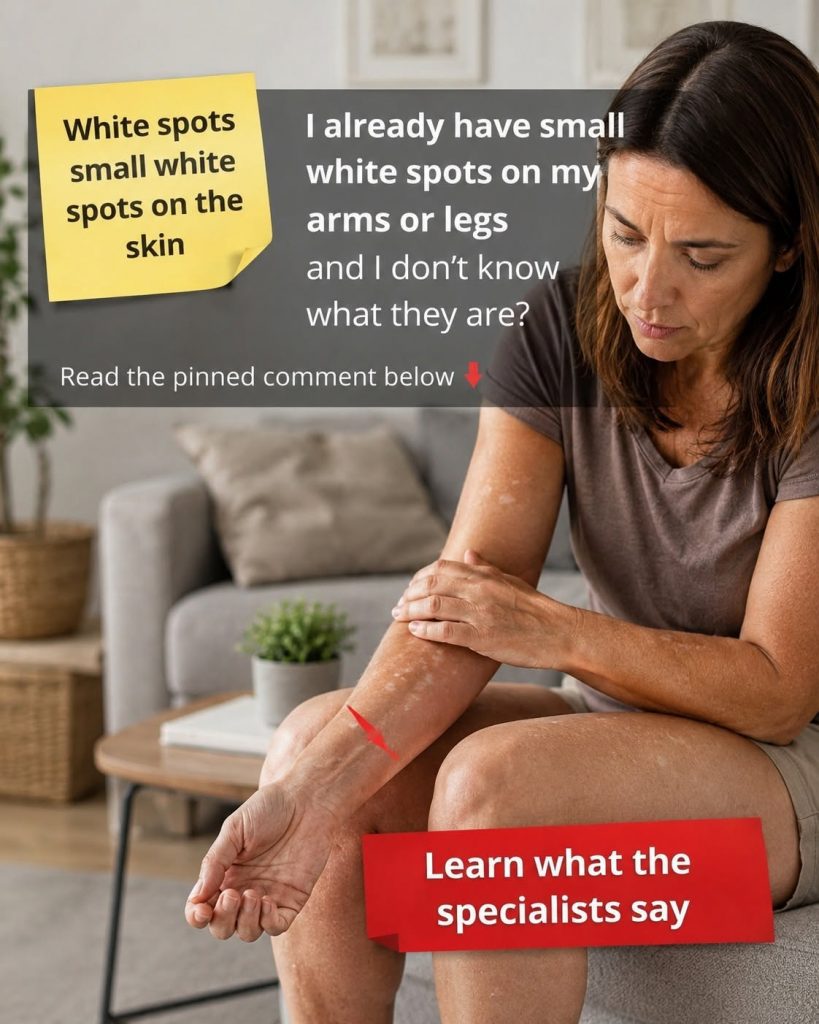
8 Hidden Causes You Shouldn’t Ignore After 50
(And the gentle approaches that may help support healthier-looking skin)
You notice a tiny white spot on your arm or leg.
At first, you think:
“It’s probably just from the sun.”
“Maybe it’s nothing serious.”
So you ignore it.
But over time, more spots begin to appear — on the chest, back, hands, or even the face.
While some white spots are harmless and related to natural aging, others may reflect deeper changes inside the body, including nutritional imbalances, skin conditions, hormonal shifts, or changes in pigmentation that deserve attention.
Understanding the possible causes early may help you care for your skin more effectively and know when professional guidance is important.
8 Common Causes of White Spots After 50
1. Tinea Versicolor – A Common Fungal Cause
One of the most frequent causes of pale or white patches is a mild overgrowth of natural skin yeast called Malassezia.
This condition may interfere with normal melanin production, creating lighter areas on the skin.
Common signs:
- Light, pinkish, or slightly brown patches
- Usually appears on the chest, back, shoulders, or arms
- May become more noticeable in warm or humid weather
- Sometimes associated with mild flaking
This condition is common and often manageable with appropriate skin care and medical guidance.
2. Idiopathic Guttate Hypomelanosis (IGH) – “Sun Spots”
These are tiny white spots that often develop after years of sun exposure.
They are especially common after age 50 and tend to appear gradually.
Usually found on:
- Forearms
- Shins
- Legs
- Hands
These spots are generally harmless, but protecting the skin from excessive sun exposure may help reduce further changes.
3. Pityriasis Alba – Dryness-Related Light Patches
This mild skin condition is linked to dryness and low-grade inflammation.
The skin temporarily loses some pigment, leaving lighter patches behind.
Common areas:
- Face
- Arms
- Upper body
Because the spots may resemble vitiligo, many people become concerned unnecessarily.
Gentle moisturization and skin protection often help improve the appearance over time.
4. Nutritional Deficiencies
Copper, Vitamin B12, and Vitamin D
Skin pigmentation depends on several nutrients working together properly.
Low levels of certain vitamins and minerals may affect melanin production and skin health.
Possible links include:
- Copper deficiency → reduced melanin formation
- Low Vitamin B12 → may affect nerves and pigmentation
- Low Vitamin D → may influence immune and skin balance
Some studies suggest these deficiencies are more common in people experiencing changes in skin pigmentation later in life.
A balanced diet and proper medical evaluation may help identify underlying issues.
5. Post-Inflammatory Hypopigmentation
Sometimes white spots appear after the skin heals from:
- Eczema
- Psoriasis
- Irritation
- Scratches or injuries
- Skin inflammation
As the skin repairs itself, pigment may not fully return immediately.
This process can become more noticeable with age, when skin regeneration naturally slows down.
6. Lichen Sclerosus – Especially Important for Women
This condition causes thin, pale, sensitive patches of skin, often in intimate areas.
It is believed to involve immune-related mechanisms and should not be ignored.
Symptoms may include:
- White or shiny patches
- Skin discomfort
- Itching or sensitivity
- Fragile skin
Early medical care may help reduce discomfort and prevent complications.
7. Vitiligo – An Autoimmune Condition
Vitiligo occurs when the immune system mistakenly attacks pigment-producing cells.
Typical signs:
- Clearly defined white patches
- Often symmetrical
- Common on hands, face, elbows, and knees
Although vitiligo is not dangerous, early support and professional care may help stabilize the condition for some individuals.
8. Long-Term Use of Strong Skin Products or Medications
Some creams and treatments may gradually affect pigmentation when used excessively or without supervision.
Examples include:
- Strong corticosteroid creams
- Harsh whitening products
- Certain medicated topical treatments
Professional guidance is important before using powerful skin products for extended periods.
White Spot Warning Guide
| Cause | Common Areas | Attention Level | Can It Improve? |
|---|---|---|---|
| Tinea versicolor | Chest, back, arms | Low | Often yes |
| Sun-related white spots (IGH) | Shins, forearms | Low | Prevention helps |
| Nutritional deficiency | Various areas | Moderate | Often yes |
| Vitiligo | Face, hands, body | Higher | Partial improvement possible |
| Lichen sclerosus | Intimate area | Higher | With treatment |
What Should You Do If You Notice White Spots?
Pay attention to changes
Consider taking photos occasionally to monitor:
- Growth
- Spread
- Texture changes
- Symmetry
Watch for warning signs
Seek professional evaluation if you notice:
- Intense itching
- Skin thinning
- Rapid spreading
- Pain or irritation
- Spots appearing in intimate areas
Consider medical testing
Some healthcare professionals may recommend checking:
- Copper levels
- Vitamin B12
- Vitamin D
- Thyroid function
Visit a dermatologist
A proper diagnosis is important because many white spots look similar but have different causes.
The Encouraging News
Many white spots can improve, stabilize, or become less noticeable depending on the cause.
Examples:
- Fungal-related spots → may respond to proper topical care
- Nutritional causes → may improve with guided dietary support
- Sun-related spots → may benefit from consistent skin protection
- Vitiligo → early attention may help manage progression
Real-Life Experiences
Margaret, 68
Margaret noticed pale patches across her chest. After medical evaluation, low copper and Vitamin B12 levels were identified. With nutritional adjustments and professional guidance, her skin appearance improved gradually over several months.
John, 72
John developed small white spots on his arms. A dermatologist identified a fungal-related cause, and topical treatment helped improve the condition within weeks.
Your Skin May Be Sending Signals
White spots are not always just cosmetic.
Sometimes, they can reflect changes happening beneath the surface.
A careful observation.
A simple check-up.
A small lifestyle adjustment.
These steps may support both your skin health and your overall well-being.
Take a closer look at your skin tomorrow.
Sometimes the body gives quiet signals before larger problems appear.
Frequently Asked Questions
When should I be concerned?
If the spots spread quickly, itch intensely, become painful, thin the skin, or appear in intimate areas, it’s best to seek medical advice.
Can diet help?
In some cases, yes. Nutrients like copper, Vitamin B12, antioxidants, and balanced protein intake may support healthy skin function.
Is it always vitiligo?
No. Many white spots are linked to fungal changes, sun exposure, dryness, or nutritional imbalances rather than vitiligo.
Important Notice
Persistent or changing skin spots should always be evaluated by a qualified healthcare professional.
This article is for educational purposes only and does not replace medical diagnosis, treatment, or professional advice.