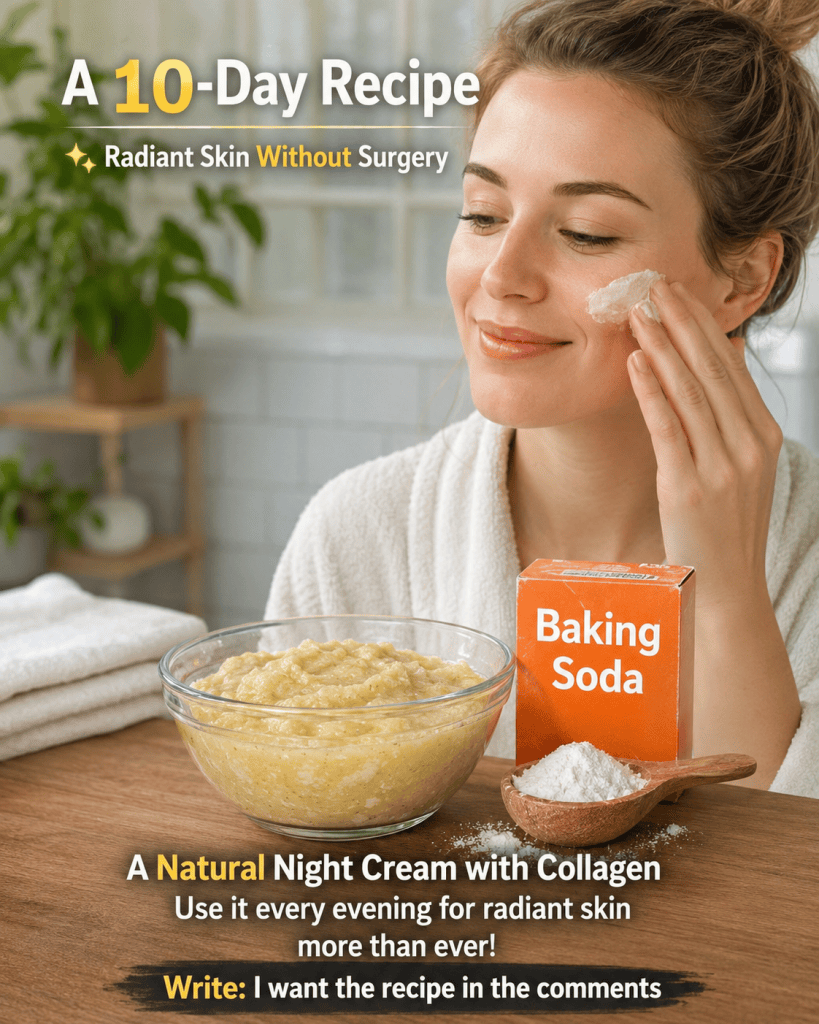
A Simple Evening Ritual That May Help Your Skin Feel Fresh and Smooth
Imagine ending your day with a few quiet minutes of self-care, then waking up to skin that feels softer, smoother, and refreshed. No complicated beauty routine. No cabinet full of expensive products. Just a few simple ingredients and a relaxing nighttime ritual.
As we get older, especially after our 40s, many people notice changes in their skin. It may feel drier, lose some of its natural glow, or develop a rougher texture. Daily exposure to sunlight, pollution, stress, and natural aging can all contribute to these changes.
While no home remedy can stop the aging process, gentle exfoliation combined with proper moisturization may help improve the appearance and feel of your skin over time.
One household ingredient that occasionally appears in DIY skincare routines is baking soda (sodium bicarbonate). When used carefully and infrequently, it may help remove surface dead skin cells. However, because baking soda is alkaline and can disrupt the skin’s natural barrier, it should always be used with caution and is not suitable for everyone.
Let’s explore a balanced approach.
Why Skin Changes With Age
As we age, several natural changes occur:
- Skin cell turnover slows down.
- Natural collagen production gradually decreases.
- Moisture retention becomes less efficient.
- Environmental exposure accumulates over time.
These changes may contribute to:
- Rough skin texture
- Uneven-looking skin tone
- Fine lines becoming more noticeable
- Dull complexion
- Dryness
A consistent skincare routine that includes cleansing, moisturizing, sun protection, and occasional gentle exfoliation can help support healthy-looking skin.
Can Baking Soda Help?
Baking soda has a naturally fine texture that some people use as a mild physical exfoliant.
Potential benefits may include:
✅ Helping remove surface dead skin cells
✅ Leaving skin feeling temporarily smoother
✅ Helping skin appear brighter immediately after exfoliation
However, it’s important to understand that baking soda has a relatively high pH compared to healthy skin. Frequent use may disrupt the skin barrier, leading to dryness or irritation—especially for people with sensitive skin.
For this reason, dermatologists generally recommend using it sparingly, if at all, and always following with a moisturizer.
Why Nighttime Is a Good Time for Skincare
Your skin naturally undergoes repair processes while you sleep.
During the night:
- Skin loses less moisture when properly moisturized.
- Natural repair processes continue.
- Overnight products have time to remain on the skin without interference from makeup or sunscreen.
An evening skincare routine can be a relaxing habit that supports healthy-looking skin over time.
Potential Benefits of Gentle Exfoliation
When performed occasionally and followed by proper hydration, gentle exfoliation may help:
- Remove dead skin cells
- Improve skin texture
- Enhance the appearance of brightness
- Allow moisturizers to spread more evenly
- Leave skin feeling smoother
Results vary from person to person, and consistency is usually more important than intensity.
Three Simple DIY Nighttime Recipes
1. Basic Moisturizing Scrub
Ingredients
- 1 teaspoon baking soda
- 1 tablespoon coconut oil, olive oil, or sweet almond oil
Directions
Mix into a smooth paste.
Apply gently using light circular motions for about 30 seconds.
Leave on for no more than 5–10 minutes before rinsing thoroughly with lukewarm water.
Finish with your favorite moisturizer.
2. Aloe Vera Soothing Mask
Ingredients
- ½ teaspoon baking soda
- 1 tablespoon pure aloe vera gel
- 1 teaspoon honey
Directions
Mix well until smooth.
Apply a thin layer.
Leave on for about 5–10 minutes.
Rinse thoroughly and moisturize afterward.
This combination may provide a soothing, hydrating feel for some skin types.
3. Yogurt Brightening Mask
Ingredients
- ½ teaspoon baking soda
- 1 tablespoon plain unsweetened yogurt
Directions
Mix into a creamy consistency.
Apply evenly.
Leave on for approximately 10 minutes.
Rinse gently and apply moisturizer.
The lactic acid naturally found in yogurt provides mild exfoliating properties in addition to hydration.
Helpful Skincare Tips
To help protect your skin:
✔ Always perform a patch test 24 hours before first use.
✔ Limit use to once a week, or at most twice weekly if your skin tolerates it well.
✔ Moisturize immediately after rinsing.
✔ Wear sunscreen every morning.
✔ Avoid the eye area and lips.
✔ Never scrub aggressively.
Gentle care is usually more beneficial than harsh exfoliation.
Choosing the Right Recipe
| Recipe | Best For | Main Benefit |
|---|---|---|
| Oil Blend | Normal to dry skin | Softness and moisture |
| Aloe Vera Mask | Dry or easily irritated skin | Hydration and soothing feel |
| Yogurt Mask | Dull-looking skin | Gentle exfoliation and refreshed appearance |
Important Precautions
Baking soda is not recommended for everyone.
Avoid using it if you:
- Have eczema
- Have rosacea
- Have very sensitive skin
- Have open cuts or irritated skin
- Are experiencing an active acne flare with inflamed lesions
Stop using the mixture immediately if you notice:
- Burning
- Persistent redness
- Itching
- Excessive dryness
If irritation continues, consult a dermatologist.
Healthy Habits for Naturally Radiant Skin
Beautiful skin depends on more than one ingredient.
Support your skin by:
- Drinking enough water
- Eating colorful fruits and vegetables
- Sleeping 7–9 hours each night
- Managing stress
- Avoiding smoking
- Using sunscreen daily
- Following a consistent skincare routine
Healthy lifestyle habits often have a greater long-term impact than any DIY treatment.
Frequently Asked Questions
Can I use baking soda every night?
No.
Because baking soda may disrupt the skin’s natural protective barrier, daily use is generally not recommended.
How soon might I notice results?
Some people notice smoother-feeling skin immediately after gentle exfoliation, while improvements in overall texture or appearance typically require consistent skincare over several weeks.
Is this suitable for sensitive skin?
Not always.
People with sensitive or reactive skin may experience irritation. A patch test is essential, and gentler exfoliating ingredients may be a better option for many individuals.
Final Thoughts
A thoughtful nighttime skincare routine can be a relaxing way to care for your skin. While baking soda has been used in some DIY beauty recipes as an occasional exfoliant, it should always be used carefully and in moderation.
Pair gentle exfoliation with daily moisturization, sun protection, healthy nutrition, and adequate sleep to help your skin look and feel its best over time.
Healthy skin is built through consistent care—not quick fixes.
Disclaimer
This article is for educational and informational purposes only and should not be considered medical advice. Home skincare remedies may not be appropriate for everyone. Baking soda can irritate or damage the skin barrier in some individuals. Always perform a patch test before trying a new skincare ingredient, discontinue use if irritation occurs, and consult a qualified dermatologist if you have sensitive skin or any underlying skin condition.
