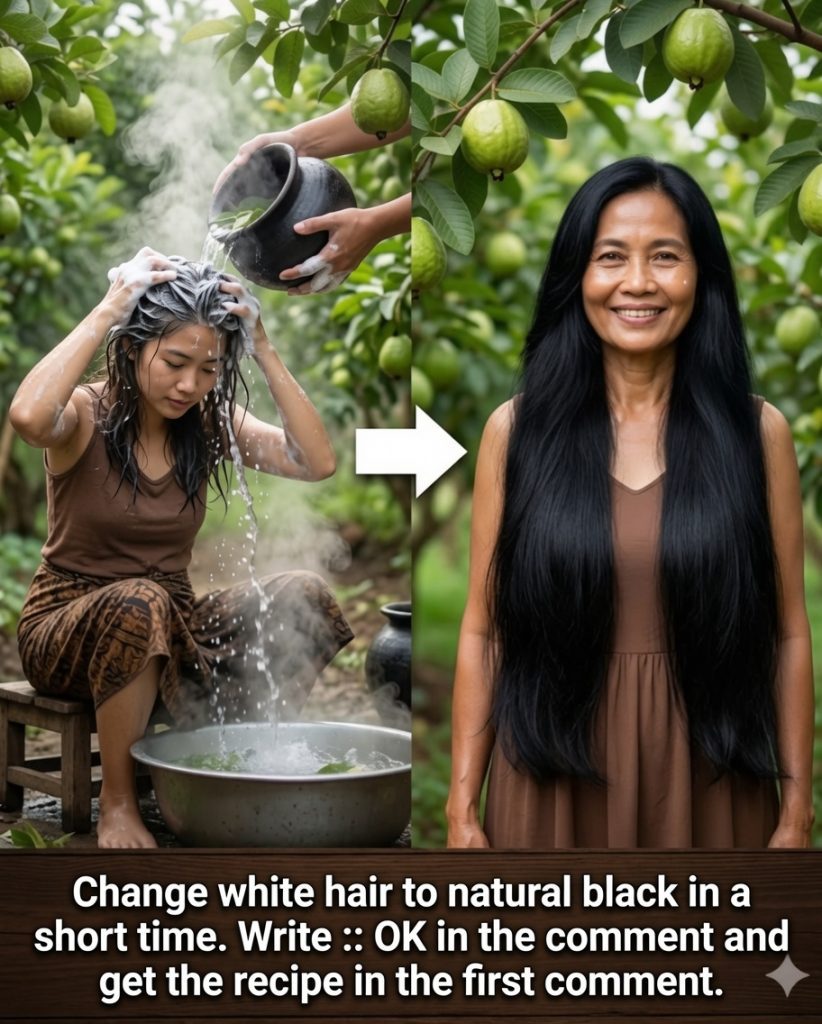
Meta Description: Discover how guava leaves have traditionally been used in natural hair care. Learn how to prepare a simple DIY hair rinse, explore its potential benefits, and find tips for maintaining healthy-looking hair.
🌱 Can Guava Leaves Help Support Healthy Hair?
Gray hair is a natural part of aging, but many people look for gentle, plant-based ways to care for their hair without relying solely on chemical dyes.
One traditional remedy that has gained attention is the guava leaf hair rinse.
For generations, guava leaves have been used in herbal beauty routines because they contain naturally occurring antioxidants, vitamins, and plant compounds that may help support scalp health and improve the appearance of hair.
While no natural remedy has been scientifically proven to restore gray hair to its original color, guava leaves may help nourish the scalp, strengthen hair, and leave it looking shinier and healthier.
🌿 Why Does Hair Turn Gray?
Hair gets its color from melanin, a natural pigment produced inside hair follicles.
As we age, melanin production gradually declines, causing hair to become gray or white.
Several factors may contribute to this process, including:
Natural aging
Genetics
Oxidative stress
Long-term emotional stress
Nutritional deficiencies such as vitamin B12, iron, or copper
Certain medical conditions
Although gray hair cannot always be prevented, healthy lifestyle habits may help support overall hair health.
🍃 Why Are Guava Leaves Used in Traditional Hair Care?
Guava leaves contain several naturally occurring compounds that have attracted interest in both traditional herbal practices and scientific research.
They naturally provide:
Antioxidants
Vitamin C
B vitamins
Polyphenols
Tannins
Plant compounds with antimicrobial properties
Traditionally, guava leaves have been used to:
Support scalp health
Help reduce excess scalp oil
Strengthen the appearance of hair
Promote shinier, healthier-looking strands
Some people also believe the tannins in guava leaves may subtly deepen hair’s appearance over time, although scientific evidence supporting this effect remains limited.
🍵 Recipe 1: Traditional Guava Leaf Hair Rinse
Ingredients
A generous handful of fresh or dried guava leaves
1 liter (about 4 cups) of water
Instructions
Wash the leaves thoroughly.
Bring the water to a boil.
Add the guava leaves.
Simmer gently for 15–20 minutes.
Allow the mixture to cool until warm.
Strain before use.
How to Use
Wash your hair with your usual shampoo.
Slowly pour the cooled rinse over your scalp and hair.
Gently massage your scalp for about five minutes.
Leave the rinse in your hair instead of rinsing it away with clean water.
Use three or four times per week if it suits your hair and scalp.
💧 Recipe 2: Concentrated Guava Leaf Hair Tonic
Ingredients
Two handfuls of guava leaves
500 ml water
Optional: 1 tablespoon coconut oil or castor oil
Instructions
Simmer the leaves in water until the liquid reduces by about half.
Strain the mixture.
Add the oil if desired.
Allow it to cool completely.
How to Use
Apply a small amount directly to the scalp in the evening.
Massage gently and leave it on overnight if your scalp tolerates it.
🌿 Recipe 3: Guava Leaf & Rosemary Hair Mask
Rosemary has long been included in traditional hair care routines because it is believed to support healthy-looking hair.
Ingredients
Soft boiled guava leaves
2 tablespoons cooled rosemary infusion
1 teaspoon honey
Directions
Blend or mash the softened guava leaves into a paste.
Mix with the rosemary infusion and honey.
Apply to damp hair.
Leave on for approximately 30 minutes.
Rinse thoroughly.
Many people enjoy this treatment because it may leave hair feeling:
Softer
Shinier
Better conditioned
Easier to manage
🌿 Additional Tips for Healthy Hair
Healthy hair depends on more than topical treatments alone.
Daily habits that support healthy hair include:
✅ Eat enough protein.
✅ Include foods rich in vitamin B12, iron, zinc, and copper.
✅ Stay hydrated.
✅ Manage stress through exercise, meditation, or relaxation techniques.
✅ Limit excessive heat styling and harsh chemical treatments.
✅ Massage your scalp regularly to encourage healthy circulation.
Small, consistent habits often make a bigger difference than occasional intensive treatments.
⚠️ What Can You Realistically Expect?
Natural hair care works gradually.
Using guava leaf rinses regularly may help:
Support a healthier scalp
Improve hair softness
Enhance shine
Reduce the appearance of dryness
Strengthen the look and feel of hair
However, there is no reliable scientific evidence that guava leaves can permanently reverse gray hair or restore natural pigment.
Think of this remedy as part of a nourishing hair care routine rather than a replacement for professional treatments.
🌟 Final Thoughts
Guava leaves have earned a respected place in traditional herbal hair care because of their rich antioxidant content and long history of use.
Although they are unlikely to turn white hair black again, they may help improve the overall appearance, strength, and condition of your hair when combined with balanced nutrition, gentle hair care, and healthy daily habits.
Healthy, vibrant hair is usually the result of patience, consistency, and overall wellness—not a single miracle ingredient.
Frequently Asked Questions
Can guava leaves naturally reverse gray hair?
There is currently no strong scientific evidence that guava leaves can restore natural hair pigment. They may, however, help support scalp health and improve the appearance of healthy hair.
How often should I use a guava leaf rinse?
Many people use it two to four times per week as part of their regular hair care routine, depending on their hair type and scalp sensitivity.
Is a patch test necessary?
Yes. Even natural ingredients may cause irritation in some individuals. Test a small amount on your skin before applying it more broadly.
Disclaimer: This article is intended for educational purposes only. It is not medical advice and should not be considered a treatment for gray hair or hair loss. If you experience sudden hair loss, scalp irritation, or other persistent hair concerns, consult a qualified healthcare professional or dermatologist.
