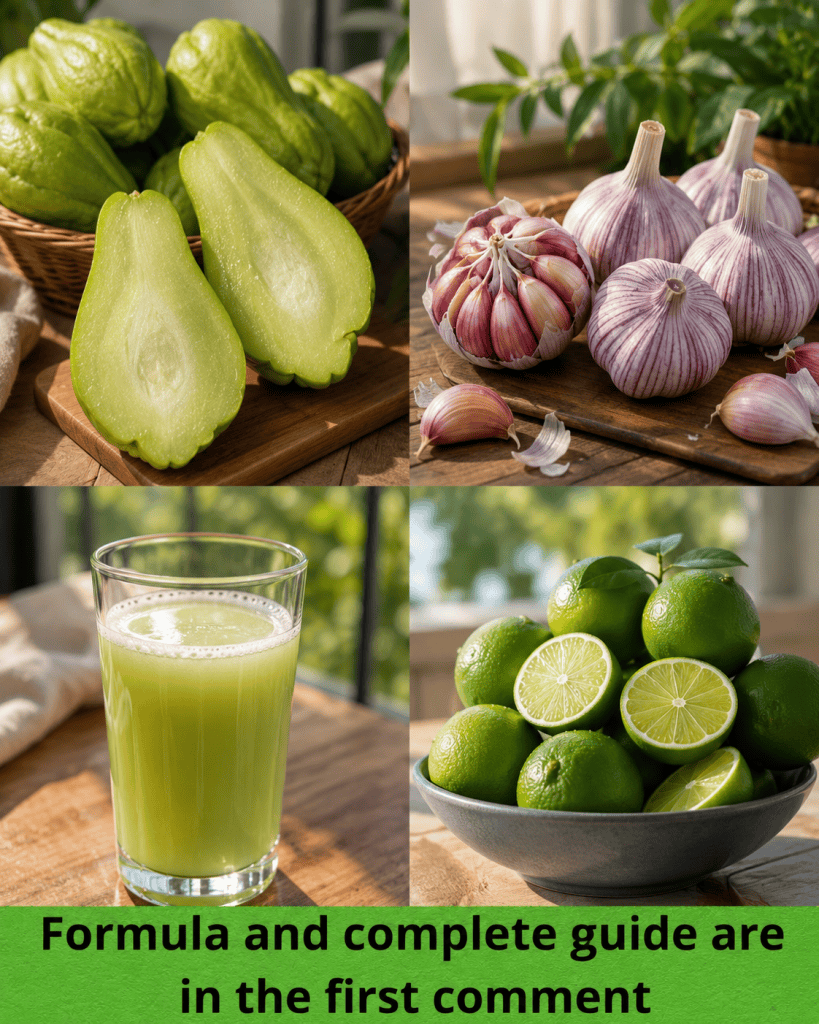
Chayote (Sechium edule), also known as tayota in the Dominican Republic, is a mild-flavored vegetable from the squash family that has been enjoyed for generations in both traditional cooking and herbal wellness practices.
Rich in water, vitamins, minerals, fiber, and natural antioxidants, chayote is an excellent addition to a balanced diet. Beyond its nutritional value, many cultures have traditionally used both the fruit and leaves to support overall well-being.
While chayote is not a medicine or cure, its impressive nutrient profile makes it a valuable part of a healthy lifestyle that supports hydration, digestion, circulation, and everyday comfort.
In this guide, you’ll discover simple ways to prepare chayote juice, herbal tea, and a traditional cooling compress, along with the science behind this versatile vegetable.
Why Chayote Is a Nutritional Powerhouse
Despite being low in calories, chayote is packed with nutrients.
It naturally contains:
- About 90% water
- Vitamin C
- Vitamin B6
- Folate
- Potassium
- Magnesium
- Calcium
- Iron
- Dietary fiber
- Flavonoids
- Carotenoids
- Other beneficial antioxidants
These nutrients help support many normal body functions, from hydration and digestion to cardiovascular wellness.
Potential Health Benefits of Chayote
When enjoyed as part of a balanced diet, chayote may help support:
- Healthy hydration
- Digestive wellness
- Healthy circulation
- Joint and muscle comfort
- Normal fluid balance
- Immune function
- Heart health
- Healthy blood pressure already within the normal range
- Healthy skin
- Weight management
- Normal cholesterol levels as part of a healthy lifestyle
- Healthy urinary function
- General vitality
These benefits come from its overall nutritional value rather than any single “active ingredient.”
Recipe 1: Refreshing Chayote Juice for Everyday Wellness 🥤
This refreshing drink combines hydrating vegetables with citrus for a light, nutrient-rich beverage.
Ingredients
- 2 medium chayotes, peeled and chopped
- 1 cup (250 ml) water
- Juice of 1 fresh lemon
- 1 teaspoon honey (optional)
- 3 fresh celery leaves (optional)
Directions
- Wash and peel the chayote.
- Cut into small pieces.
- Add the chayote, water, lemon juice, and celery leaves to a blender.
- Blend until smooth.
- Stir in honey if desired.
- Serve immediately.
Suggested Serving
Many people enjoy one glass in the morning as part of a balanced breakfast.
Whole fruits and vegetables retain more fiber than strained juices, so avoid straining whenever possible.
Recipe 2: Chayote Leaf Herbal Tea 🍵
In many traditional wellness practices, chayote leaves are brewed into a mild herbal infusion.
Ingredients
- 5 fresh chayote leaves
- 1 liter (4 cups) water
- Honey or stevia (optional)
Directions
- Wash the leaves thoroughly.
- Bring the water to a boil.
- Add the leaves.
- Reduce heat and simmer for about 10 minutes.
- Remove from heat and let steep.
- Strain before serving.
Sweeten lightly if desired.
Suggested Serving
Enjoy one cup in the morning and another later in the day if it fits your dietary preferences.
Because research on chayote leaf tea remains limited, avoid excessive consumption.
Recipe 3: Traditional Cooling Chayote Compress 🌿
Some traditional wellness practices use freshly grated chayote as a cooling compress.
Ingredients
- 1 raw chayote
- 2 tablespoons olive oil
- Clean cotton cloth
Directions
- Grate the chayote finely.
- Mix with olive oil.
- Place the mixture inside a clean cloth.
- Apply gently to the desired area for about 20–30 minutes.
This traditional practice may provide a cooling sensation, but scientific evidence supporting its effectiveness is limited.
Do not apply to broken or irritated skin.
How Chayote Supports Overall Wellness
Rich in Water
Chayote’s high water content helps support healthy hydration and contributes to normal fluid balance.
Excellent Source of Vitamin C
Vitamin C helps support:
- Normal immune function
- Collagen production
- Healthy skin
- Protection against oxidative stress
Naturally High in Fiber
Fiber contributes to:
- Healthy digestion
- Regular bowel movements
- Greater fullness after meals
- A healthy gut microbiome
Potassium for Heart Health
Potassium helps support:
- Healthy muscle function
- Fluid balance
- Normal nerve function
- Healthy blood pressure already within the normal range
Natural Antioxidants
Flavonoids and carotenoids help protect cells from oxidative stress associated with everyday living.
Nutrition at a Glance
| Nutrient | Role in the Body |
|---|---|
| Water | Supports hydration |
| Vitamin C | Immune support and collagen production |
| Vitamin B6 | Energy metabolism and nervous system function |
| Folate | Healthy cell growth |
| Potassium | Fluid balance and heart health |
| Magnesium | Muscle and nerve function |
| Calcium | Bone health |
| Iron | Healthy red blood cells |
| Fiber | Digestive health |
| Antioxidants | Help protect cells from oxidative stress |
Healthy Habits That Complement Chayote
For the best results, combine nutritious foods like chayote with healthy lifestyle habits:
- Drink plenty of water
- Stay physically active
- Eat a variety of fruits and vegetables
- Limit highly processed foods
- Get adequate sleep
- Manage stress
- Maintain regular medical checkups
No single food can replace these important daily habits.
Important Safety Considerations
Although chayote is considered a healthy vegetable for most people, keep these precautions in mind:
- Excessive consumption may cause digestive discomfort in some individuals because of its fiber content.
- People who take blood pressure or diabetes medications should consult their healthcare provider before making significant dietary changes.
- Those with allergies to squash-family vegetables should avoid chayote.
- Herbal remedies should never replace prescribed medical treatment.
Frequently Asked Questions
Is chayote good for inflammation?
Chayote contains antioxidants and plant compounds that are being studied for their role in supporting the body’s normal response to inflammation. It is best viewed as part of an overall healthy diet rather than a treatment.
Can chayote lower blood pressure?
Its potassium content may support cardiovascular health as part of a balanced diet. However, chayote is not a substitute for prescribed treatment for hypertension.
Is chayote juice better than eating the whole vegetable?
Whole chayote provides more fiber, while juice offers a refreshing option. Whenever possible, include the fiber by blending rather than straining.
Can I drink chayote tea every day?
Occasional use is common in traditional practices. If you plan to consume herbal teas regularly, especially if you have a medical condition or take medications, consult your healthcare provider.
Final Thoughts
Chayote is much more than an inexpensive vegetable. Its combination of hydration, fiber, vitamins, minerals, and antioxidants makes it an excellent addition to a balanced eating pattern.
Whether enjoyed as a refreshing juice, incorporated into nourishing meals, or brewed into a traditional herbal tea, chayote can help support overall wellness alongside healthy daily habits.
The greatest benefits come not from one single recipe, but from consistently choosing nutritious foods as part of a balanced lifestyle.
Disclaimer: This article is for informational and educational purposes only. Chayote and chayote leaf tea are not intended to diagnose, treat, cure, or prevent any disease. If you have chronic health conditions, are pregnant or breastfeeding, or take prescription medications—especially for blood pressure or diabetes—consult a qualified healthcare professional before making significant dietary changes or using herbal preparations regularly.
