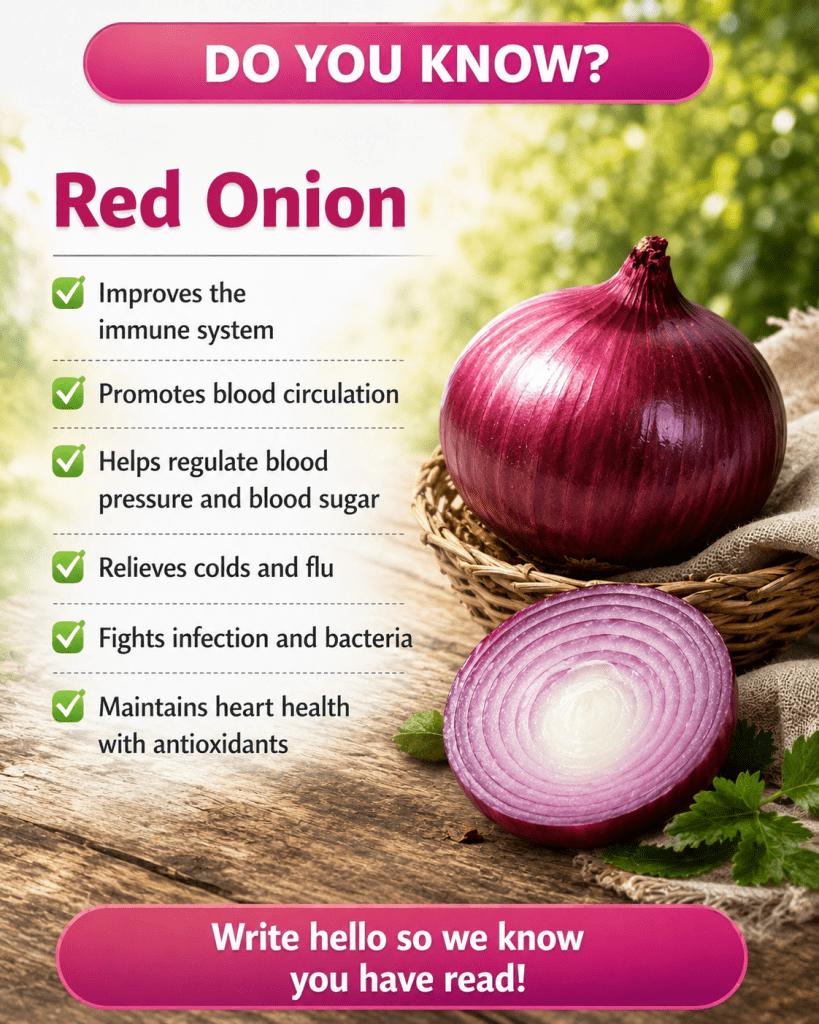
Why Red Onions Deserve a Place in Your Daily Diet
Red onions are more than just a flavorful addition to salads, sandwiches, and cooked meals. Known for their vibrant purple-red color and slightly sweet taste, they are packed with naturally occurring plant compounds that may support overall health when included as part of a balanced diet.
For centuries, onions have been valued in traditional diets around the world. Today, modern research continues to explore the potential benefits of the antioxidants, fiber, and plant nutrients found in red onions.
Let’s take a closer look at why this humble vegetable has earned its reputation as a nutritious everyday food.
What Makes Red Onions Special?
The impressive nutritional profile of red onions comes from several naturally occurring compounds:
Anthocyanins
These are the antioxidant pigments responsible for the deep purple-red color of red onions. Anthocyanins help protect cells from oxidative stress caused by free radicals.
Quercetin
Red onions are one of the richest dietary sources of quercetin, a plant flavonoid that has been studied for its antioxidant and anti-inflammatory properties.
Sulfur Compounds
Naturally occurring sulfur compounds contribute to the distinctive aroma of onions and are believed to play a role in supporting the body’s natural defense systems.
Fiber and Prebiotics
Red onions contain dietary fiber and prebiotic compounds that help nourish beneficial gut bacteria and support digestive health.
Potential Health Benefits of Red Onions
1. May Support Heart Health ❤️
Red onions contain antioxidants that may help support cardiovascular wellness as part of a healthy lifestyle.
Research suggests that diets rich in fruits and vegetables containing flavonoids may contribute to healthy blood circulation and support normal blood pressure levels already within a healthy range.
Adding red onions to meals is a simple way to increase your intake of these beneficial plant compounds.
2. May Help Support Healthy Blood Sugar Balance
Some studies have explored the relationship between onion consumption and healthy glucose metabolism.
The fiber and plant compounds found in red onions may help support balanced blood sugar management when combined with a nutritious diet and regular physical activity.
However, red onions should not be considered a replacement for professional medical care or prescribed treatments.
3. Supports the Body’s Natural Defense System
Red onions provide antioxidants that help protect cells from oxidative stress.
Their combination of vitamin C, quercetin, and sulfur-containing compounds may contribute to overall immune system function and everyday wellness.
4. Provides Natural Anti-Inflammatory Plant Compounds
Quercetin has attracted attention because of its potential role in supporting the body’s natural inflammatory response.
Including a variety of colorful vegetables, including red onions, can help provide a wide range of protective plant nutrients.
5. Promotes Digestive Wellness
Healthy digestion starts with healthy gut bacteria.
The prebiotic fibers found in red onions help feed beneficial microorganisms in the digestive tract, supporting a balanced gut environment.
A healthy digestive system may contribute to improved nutrient absorption and overall well-being.
6. Rich in Protective Antioxidants
Antioxidants play an important role in protecting cells from everyday oxidative stress.
The anthocyanins that give red onions their vibrant color are among the same types of antioxidants found in berries, red cabbage, and other colorful plant foods.
7. May Help Support Healthy Skin and Hair
A diet rich in antioxidants can help support healthy aging by protecting cells from environmental stressors.
The nutrients found in red onions may contribute to overall skin and hair health when consumed as part of a nutrient-rich eating pattern.
How to Enjoy Red Onions for Maximum Nutrition
Many people prefer consuming red onions raw because certain plant compounds may be better preserved.
Here are a few simple ways to add them to your meals:
🥗 Add thin slices to fresh salads
🥑 Combine with avocado, lemon, and herbs
🌮 Use as a topping for wraps and sandwiches
🥒 Mix into cucumber and tomato salads
🫙 Prepare quick pickled onions using vinegar
🥤 Blend small amounts into vegetable juices and smoothies
If cooking red onions, gentle cooking methods may help preserve more of their natural nutrients compared to prolonged high-heat cooking.
Are There Any Side Effects?
Red onions are generally safe for most people when consumed as part of a normal diet.
Some individuals may experience:
• Mild gas or bloating
• Digestive discomfort if eaten in large amounts
• Rare allergic reactions
People with sensitive digestive systems may prefer starting with smaller portions.
Final Thoughts
Red onions are a simple yet nutritious food that can add both flavor and valuable plant nutrients to your meals.
Rich in antioxidants, fiber, anthocyanins, quercetin, and sulfur compounds, they may support heart health, digestive wellness, immune function, and overall vitality when included in a balanced lifestyle.
Rather than relying on a single “superfood,” consider red onions as one piece of a healthy dietary pattern filled with colorful vegetables, fruits, whole grains, and lean proteins.
Have you added red onions to your daily meals? Whether you enjoy them raw, pickled, or lightly cooked, this colorful vegetable can be a delicious way to support everyday wellness naturally.