Meta Description:
Discover three traditional ways to use guava leaves to support oral hygiene, freshen breath, and promote healthy gums. Learn what research says, how to prepare them safely, and when to see a dentist.
Guava Leaves: A Traditional Herbal Ally for Oral Care
When most people think of guava, they picture the sweet tropical fruit. However, the leaves of the guava tree have also been valued in traditional herbal practices for generations.
Rich in natural plant compounds with antioxidant and antibacterial properties, guava leaves have long been used as a simple home remedy to help support healthy gums, freshen breath, and promote overall oral hygiene.
While guava leaves cannot cure tooth decay or replace professional dental treatment, they may serve as an affordable addition to a healthy oral care routine.
Let’s explore three easy ways to use guava leaves safely at home.
Why Guava Leaves Have Attracted Scientific Interest
Guava leaves contain several naturally occurring compounds, including:
- Flavonoids
- Tannins
- Quercetin
- Polyphenols
- Essential plant antioxidants
Laboratory studies suggest these compounds may help:
- Support a healthy balance of oral bacteria
- Reduce oxidative stress
- Promote gum health
- Calm minor oral irritation
Although research continues, these findings help explain why guava leaves have remained popular in traditional medicine.
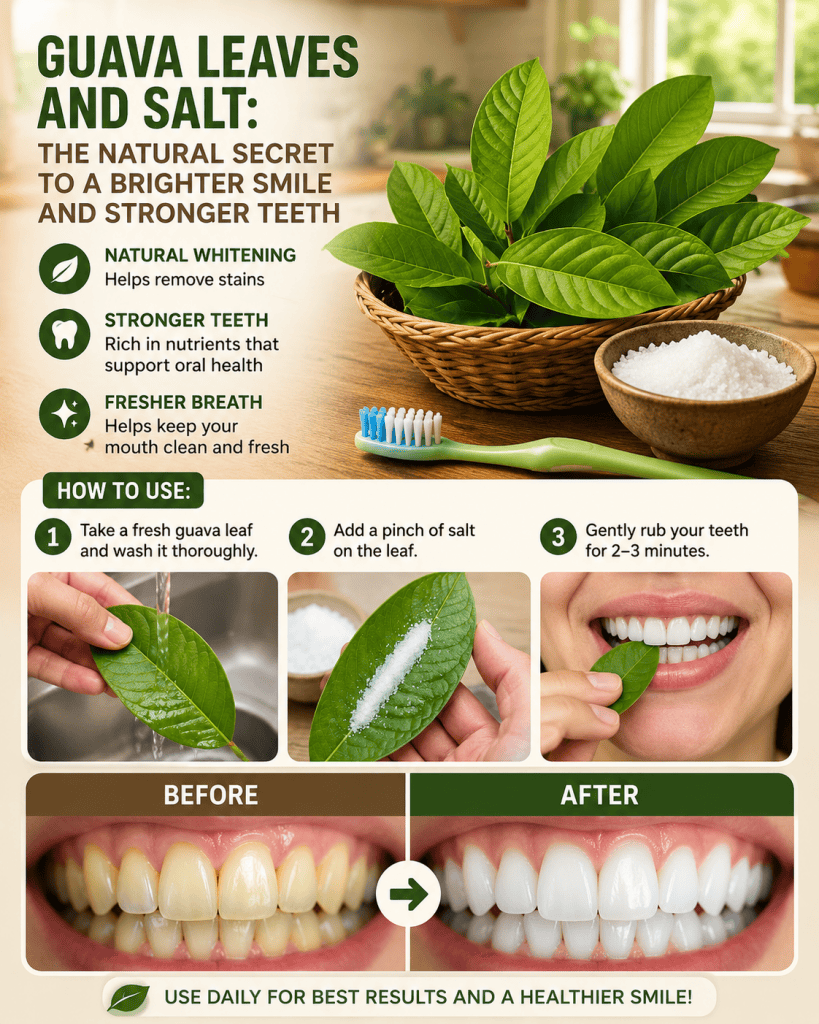
1. Chewing Fresh Guava Leaves
One of the oldest traditional methods is also the simplest.
What You’ll Need
- 2–3 young, clean guava leaves
Directions
- Wash the leaves thoroughly under running water.
- Chew them slowly for several minutes.
- Allow the natural juices to mix with your saliva.
- Spit out the leaves when finished.
Why It May Help
Chewing releases beneficial plant compounds that may help:
- Support oral cleanliness
- Freshen breath
- Promote healthy gums
- Soothe minor mouth discomfort
The chewing action itself also increases saliva production, which naturally helps protect teeth by washing away food particles and neutralizing acids.
2. Homemade Guava Leaf Mouth Rinse
If chewing leaves isn’t your preference, a warm herbal rinse is another traditional option.
Ingredients
- 5–7 fresh guava leaves
- 1 cup (250 ml) water
Instructions
- Bring the water to a boil.
- Add the guava leaves.
- Simmer for about 10 minutes.
- Strain the liquid.
- Let it cool until comfortably warm.
- Rinse your mouth for 30–60 seconds before spitting it out.
Use once or twice daily as part of your regular oral hygiene routine.
Potential Benefits
A guava leaf rinse may help:
- Support healthy gums
- Freshen breath
- Reduce the buildup of odor-causing bacteria
- Leave the mouth feeling clean and refreshed
Remember, this rinse should complement—not replace—daily brushing and flossing.
3. Guava Leaf and Salt Paste
Another traditional remedy involves making a simple herbal paste.
Ingredients
- A few fresh guava leaves
- A small pinch of salt
- A few drops of clean water (if needed)
Directions
- Crush the leaves into a smooth paste using a mortar and pestle or blender.
- Mix in a small pinch of salt.
- Gently apply the paste to the gums or the area around a sensitive tooth using a clean finger.
- Leave it in place for about five minutes.
- Rinse thoroughly with warm water.
Why It May Work
This traditional preparation combines:
- The natural antibacterial compounds found in guava leaves
- The cleansing properties of salt
Some people use it to help:
- Soothe mild gum irritation
- Reduce temporary gum discomfort
- Support overall oral cleanliness
Avoid applying the paste to open wounds or severely inflamed areas unless advised by a dental professional.
Can Guava Leaves Cure Tooth Decay?
This is one of the most common misconceptions online.
The answer is no.
Once a cavity forms, the damaged tooth structure cannot be repaired by herbs or home remedies alone.
Only a dentist can properly diagnose and treat tooth decay through appropriate procedures such as fillings or other restorative treatments.
Guava leaves may help support oral hygiene and comfort, but they cannot reverse cavities.
Daily Habits That Protect Your Teeth
Healthy teeth depend on consistent daily care.
Experts recommend:
- Brushing twice a day with fluoride toothpaste
- Cleaning between teeth with floss or interdental brushes
- Limiting sugary snacks and drinks
- Drinking plenty of water
- Scheduling regular dental checkups
- Replacing your toothbrush every three to four months
Traditional herbal remedies work best when combined with these evidence-based habits.
When Should You See a Dentist?
Home care is not enough if you experience:
- Persistent tooth pain
- Swelling of the gums or face
- Bleeding that doesn’t improve
- Loose teeth
- Pus around the gums
- Sensitivity that continues for several days
- Visible cavities
Prompt dental care helps prevent small problems from becoming larger ones.
Frequently Asked Questions
Can guava leaves whiten teeth?
There is no strong scientific evidence that guava leaves whiten teeth. They may help improve oral cleanliness, which can make teeth appear healthier.
Can I use guava leaf mouthwash every day?
Many people use it occasionally as part of their oral care routine. If irritation develops, discontinue use and consult a healthcare professional.
Are guava leaves safe?
Fresh, clean guava leaves are generally considered safe for occasional traditional use in oral care. Avoid using leaves that may have been treated with pesticides or contaminated.
Can guava leaves replace toothpaste?
No. Fluoride toothpaste remains one of the most effective ways to prevent tooth decay.
Final Thoughts
Guava leaves have earned a place in traditional oral care thanks to their natural antibacterial and antioxidant compounds. Whether used by chewing fresh leaves, preparing a gentle mouth rinse, or making a simple herbal paste, they may help support fresh breath, healthy gums, and everyday oral hygiene.
However, it’s important to keep expectations realistic. Guava leaves are not a cure for cavities or serious dental disease. For the best long-term oral health, combine traditional herbal practices with brushing, flossing, a balanced diet, and regular dental checkups. A healthy smile is built through consistent daily care—not quick fixes.
